
Planting
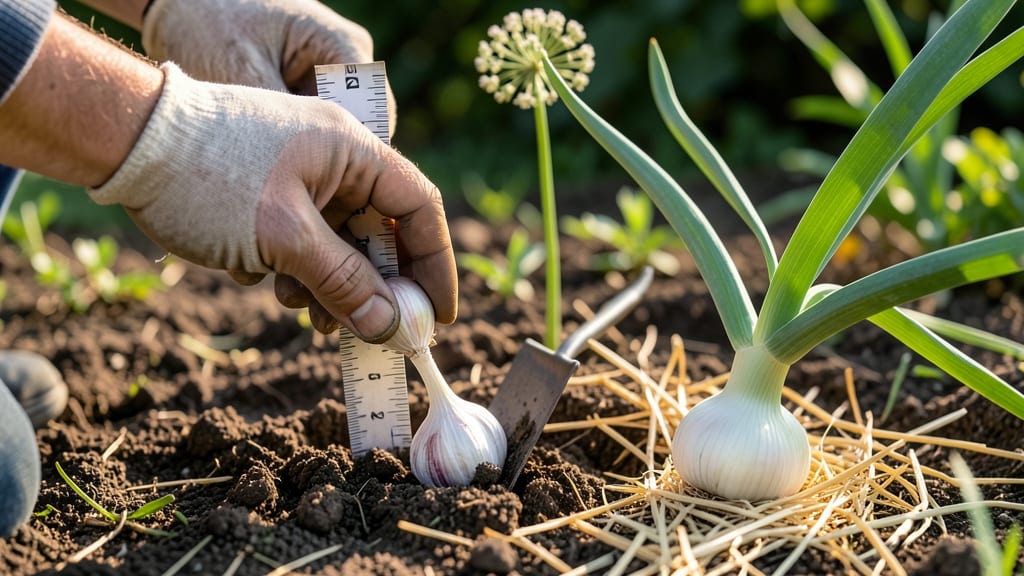
Planting garlic cloves at 2 inches deep is the key to strong roots, plump bulbs, and a harvest worth bragging about 🧄 — and getting it wrong can mean wasted effort (or worse, rot).
If you’ve ever dug up garlic only to find small, weak bulbs—or worse, moldy cloves—you know how much a difference just an inch can make. Too shallow, and the roots struggle; too deep, and the clove rots before sprouting.
The 2-inch rule balances everything perfectly, but soil type, climate, and even garlic variety can tweak that number.
Whether you’re growing hardneck or softneck varieties, the right depth keeps moisture and nutrients where they matter most: at the base of the clove. Below, I’ll walk you through exactly how to plant for your soil, when to adjust, and the 3 mistakes that turn good cloves into gardening losses.
Ready to go from guessing to growing? You’ll leave here knowing not just how deep to plant, but why it works—and how to troubleshoot if things go sideways.

The perfect garlic planting depth: why 2 inches works best
When you plant garlic cloves at the wrong depth, you risk two major problems: rotting from too much moisture or stunted growth from poor root development. The 2-inch rule isn't arbitrary—it's rooted in how garlic naturally stores energy in its bulb.
Planting at this depth creates the perfect balance for root expansion and bulb formation while keeping the clove stable in the soil.
The pointy end of your garlic clove should always face upward—this is where the sprout emerges. When planted at 2 inches deep, the clove has enough soil coverage to anchor itself while leaving room for roots to spread horizontally before the bulb begins forming.
This depth also prevents the clove from being exposed to temperature fluctuations that can stress young plants.
From a scientific perspective, garlic bulbs form when the plant redirects energy from leaf growth to underground storage. The 2-inch depth ensures the clove sits just below the soil's active root zone, where moisture and nutrients are most abundant.
Shallower planting can lead to excessive leaf growth at the expense of bulb size, while deeper planting risks anaerobic conditions that promote rot.
Soil temperature plays a crucial role in why 2 inches works best. Garlic needs consistent soil temps between 50-65°F to germinate properly. Planting too shallow can expose the clove to surface temperature swings, while planting too deep delays germination until soil temps stabilize at the 2-inch level. This is why fall planting (4-6 weeks before frost) works so well—the clove sits at the ideal depth for winter dormancy.
Another key factor is disease resistance. The 2-inch depth keeps the base of the clove just above the water table in most soils, reducing exposure to fungal pathogens like white rot or basal rot.
These diseases thrive in waterlogged conditions, which are more likely when cloves are planted too deep or in heavy clay soils. Proper depth ensures good air circulation around the clove while maintaining moisture retention.
| Factor | 2-Inch Depth Benefit | What Happens If Wrong? |
|---|---|---|
| Root Development | Horizontal spread before bulb formation | Shallow: Weak roots; Deep: Restricted growth |
| Bulb Formation | Optimal energy redirection underground | Shallow: Small bulbs; Deep: Poor development |
| Disease Resistance | Avoids waterlogged conditions | Deep: Rot risk; Shallow: Fungal exposure |
| Temperature Stability | Consistent 50-65°F zone | Shallow: Temp stress; Deep: Slow germination |
| Nutrient Access | Access to subsoil minerals | Too deep: Limited nutrient reach |
For hardneck varieties, which produce scapes and larger cloves, the 2-inch depth is especially critical. These types need the extra stability to support their vertical growth habit and scape production.
If planted too shallow, hardneck garlic often produces more leaves than bulbs, while deeper planting can stunt the scape development entirely. The same rule applies to softneck varieties, though they're slightly more forgiving with depth variations.
One common misconception is that larger cloves need deeper planting. In reality, clove size doesn't affect depth—what matters is the soil type. In sandy soils, you might increase depth slightly to 2.5 inches to retain moisture, while in clay soils, sticking to 2 inches prevents waterlogging.
Always loosen the soil to a depth of 4-6 inches before planting to encourage root penetration.
To achieve perfect 2-inch depth, use a simple trick: place your garlic clove next to a standard ruler or even a quarter (which is roughly 25mm thick). The top of the clove should align with the 2-inch mark when pressed into the soil.
This visual cue eliminates guesswork and ensures consistency across your entire garlic bed. For container growing, use the same depth measurement from the top of the pot's soil line.
Remember that consistent moisture at planting time is just as important as depth. Water the soil to <
Adjusting garlic planting depth for different soil types and climates
Your garlic cloves need the right planting depth to thrive, but soil type and climate play a huge role in fine-tuning that 2-inch rule. In sandy soil, for example, cloves dry out faster, while clay soil holds too much moisture if planted too deep.
Let's break down how to adjust for your growing conditions.
Climate also matters—cold winters require deeper planting to protect roots, while hot summers may need shallower depths to prevent overheating. Understanding these adjustments ensures your garlic develops larger bulbs and stronger stems for harvest.
Here’s how to modify planting depth based on your soil type and regional climate:
For sandy soil, I always plant garlic slightly shallower to keep roots moist without risking rot. In my clay-heavy garden, I add compost to improve drainage before adjusting depth to 2.5 inches—this combo prevents waterlogging while encouraging bulb growth.
If you’re in a hot, dry climate, like the Southwest U.S., mulch after planting to lock in moisture. For cold Northern gardens, deeper planting (up to 3 inches) protects cloves from harsh winters.
Always test your soil’s moisture retention first—stick your finger in after watering. If it feels dry at 2 inches, go shallower.
Remember, hardneck varieties often handle deeper planting better than softneck types, which prefer shallower depths for tender bulbs. Adjust based on your specific garlic type and local conditions to maximize your harvest’s size and quality.