
Planting
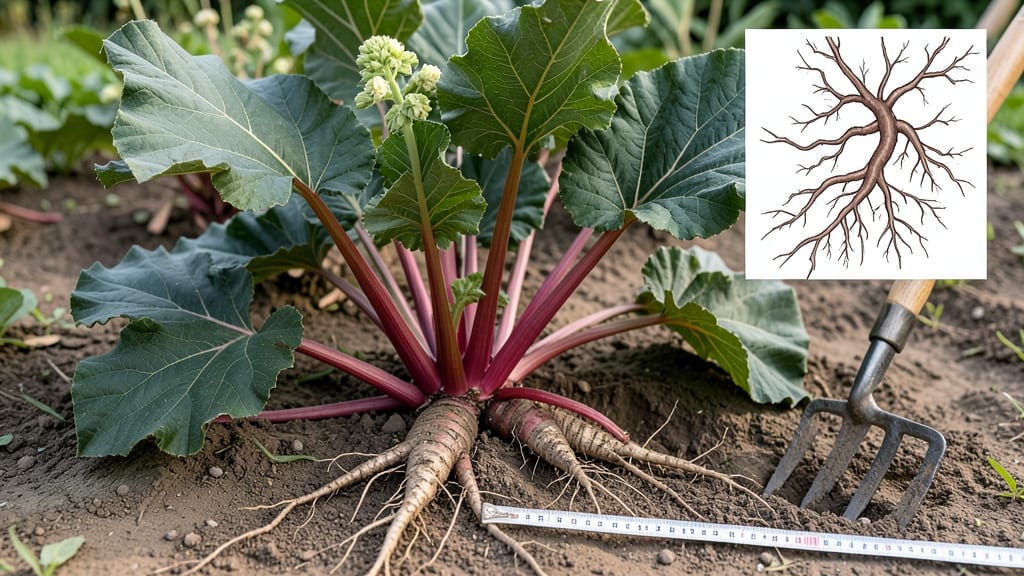
Rhubarb roots grow 12 to 18 inches deep — far deeper than most gardeners realize, which explains why aggressive weeding or shallow digging can stun your plants for years.
If you’ve ever wondered why your rhubarb plants keep producing fewer stalks each year—or how to avoid accidentally damaging them while weeding—understanding rhubarb root depth is the key to long-term success.
These roots spread 2 to 3 feet wide, too, so crowding plants too close means fighting for nutrients and space.
Knowing how deep rhubarb roots go isn’t just about avoiding mistakes—it’s about maximizing your harvest. The deeper the roots, the more resilient the plant, especially in Zone 6a where cold snaps can stress shallow systems.
Below, I’ll show you how to plant, divide, and maintain rhubarb without disturbing its root network.
You’ll also discover the best soil prep for encouraging strong root growth, when to safely transplant established plants, and how to spot signs of root damage before it’s too late.
Rhubarb root depth explained: how deep roots grow and why it matters
Understanding rhubarb root depth is crucial for any gardener looking to maximize yields and plant longevity. Rhubarb plants develop a complex root system that extends deeper than most gardeners realize, which directly impacts how you plant, harvest, and maintain them.
The primary taproot can reach 12–18 inches deep, while secondary roots spread horizontally to absorb nutrients efficiently.
When I first planted rhubarb in my garden, I didn’t realize how delicate the roots were until I accidentally nicked them while weeding too close to the base.
This mistake led to stunted growth for that season—a lesson that taught me how vital it is to respect the rhubarb root system. The deeper the roots, the more stable and productive your plant will be, especially in drought-prone conditions or heavy soils.
| Root Type | Depth Range | Function | Care Tip |
|---|---|---|---|
| Primary Taproot | 12–18 inches | Anchors plant; stores nutrients | Avoid deep digging near roots |
| Secondary Lateral Roots | 6–12 inches deep | Absorb water/nutrients | Mulch to protect shallow roots |
| Crown Roots | 2–4 inches deep | Produces stalks; sensitive | Keep soil loose around crown |
The primary taproot of rhubarb is the most critical component, extending deep to access moisture and nutrients from lower soil layers. This depth allows rhubarb to thrive in dry climates where other shallow-rooted plants might struggle.
The secondary lateral roots, which spread horizontally and vertically, create a network that supports the plant’s nutrient uptake and stability.
One common misconception is that rhubarb roots are shallow, like many annual vegetables. However, their deep-rooted nature means you should never dig deeper than 12 inches around the plant, even when dividing or transplanting.
Disturbing the taproot can shock the plant and reduce its ability to produce harvestable stalks for up to two years.
If you’re planning to divide rhubarb plants, timing is everything. The best time to dig is in early spring or fall, when the plant is dormant.
Use a sharp spade to cut through the roots at a 12–15 inch depth, ensuring each section retains some of the taproot and lateral roots. This minimizes stress and gives the new plant the best chance to establish itself.
Another reason root depth matters is its impact on harvest yield. A healthy, undisturbed root system produces more edible stalks per season. In my garden, the rhubarb plants with the deepest roots consistently outperform those that were transplanted or crowded.
For example, a well-established rhubarb plant can yield 50–100 stalks per season, while a stressed or root-damaged plant might produce only half that amount.
To protect your rhubarb’s roots, focus on soil health and mulching. A thick layer of organic mulch (like straw or wood chips) helps retain moisture and prevents soil compaction, which can suffocate the shallow lateral roots.
Avoid heavy foot traffic near the plant, as compacted soil restricts root growth and reduces nutrient absorption.
When planting new rhubarb crowns, place them 2–3 inches below the soil surface. This depth encourages the roots to grow downward naturally rather than spreading outward, which can lead to overcrowding. Space plants 3–4 feet apart to give their roots room to expand without competing for nutrients.
Finally, understanding rhubarb root depth helps you troubleshoot common issues like yellowing leaves or poor stalk production. If your plant suddenly struggles, check for root damage or soil compaction.
Amending the soil with compost and ensuring proper drainage can often revive a struggling rhubarb plant by giving its roots the environment they need to thrive.
By respecting the rhubarb root system and its depth, you’ll enjoy healthier plants, bigger harvests, and fewer gardening headaches. Whether you’re a beginner or a seasoned gardener, these insights will help you cultivate rhubarb like a pro. 🌱
How to dig rhubarb without damaging roots: safe harvesting techniques
Digging up rhubarb might seem simple, but overzealous pruning or deep excavation can harm those delicate roots. When done correctly, you’ll preserve your plant’s health and ensure a bountiful harvest for years. The key? Knowing how deep rhubarb roots go and when to handle them.
Rhubarb roots spread 12–18 inches deep, with the bulk of the root system concentrated in the top 12–15 inches. The crown—the thick, woody base where stalks emerge—is especially sensitive. Disturbing it too much can stunt growth or even kill the plant. That’s why timing and technique matter.
Digging deeper than 12–15 inches risks severing critical roots. The primary root system sits just below the crown, while lateral roots spread horizontally. Over-digging can cause root stress, leading to fewer stalks and slower regrowth.
Always use a sharp spade and angle it 1–2 inches away from the crown to avoid cutting into the root ball.
Timing is everything. The best time to divide or transplant rhubarb is in early fall or late winter, when the plant is dormant. This gives roots time to recover before spring growth.
Avoid disturbing rhubarb during active harvest season (April–June), as the plant needs all its energy to produce stalks.
Start by loosening the soil around the plant with a garden fork, working it in gently to a depth of 10–12 inches. Then, use a sharp spade to carefully lift the root ball.
If dividing, separate crowns with clean cuts, ensuring each piece has at least 3–4 healthy stalks and a portion of the root system.
After digging, replant the divided sections 2–3 feet apart in well-draining soil with a 2-inch layer of compost mixed in. Water deeply to settle the roots, and avoid harvesting for 4–6 weeks to allow recovery. Mulch the area to retain moisture and protect roots from temperature swings.
Watch for signs of root stress, like yellowing leaves or stunted stalks, which may indicate over-digging or poor soil conditions. If you notice these, adjust your care routine—focus on consistent watering and light fertilization to encourage regrowth.
With the right technique, your rhubarb will thrive for decades, rewarding you with juicy stalks year after year. Happy digging—and remember, patience is key when it comes to these hardy perennials! 🌱