
Planting
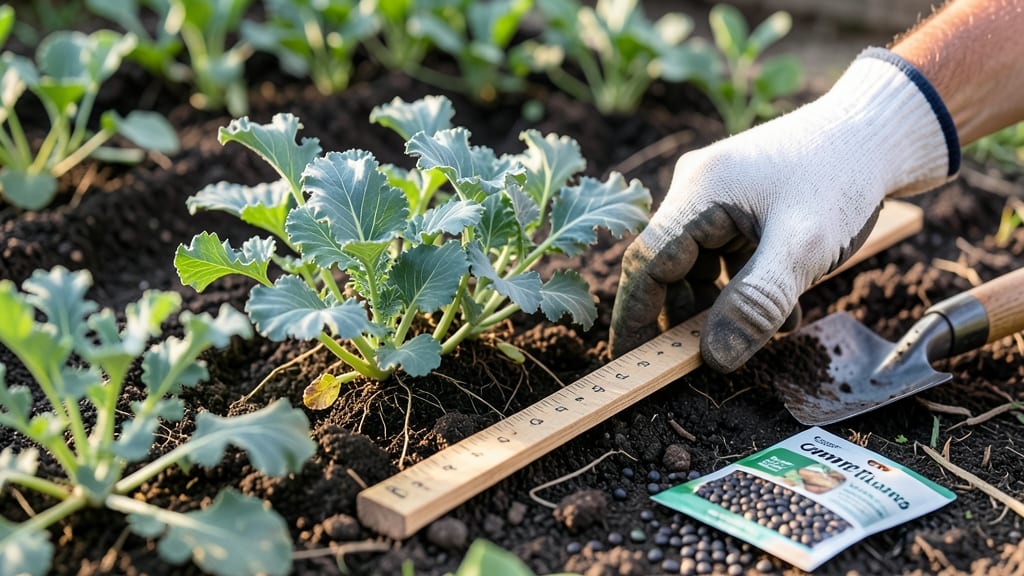
Planting kale seeds at the right depth—how deep to plant kale seeds is the secret to fast germination and strong seedlings that thrive from the start—is critical for success.
Struggling with kale seeds that refuse to sprout? The secret often lies just beneath the surface—in the soil depth where your seeds are planted. Get it right, and you’ll enjoy crisp, homegrown 🥬 in weeks. Get it wrong, and you might be waiting (or worse, weeding out failures).
Too shallow, and seeds dry out before sprouting. Too deep, and they struggle to push through the soil, leaving you with weak, leggy plants. The good news? With the right technique, you can avoid these common pitfalls and set your kale up for success from day one.
In this guide, I’ll walk you through the ideal planting depth, soil prep tips, and post-planting care to ensure your kale grows fast and healthy—no guesswork required.

The ideal kale seed planting depth for maximum germination rates
When planting kale seeds, the depth you choose can make or break your germination success. While many gardeners assume deeper planting equals better results, the truth is more nuanced. Kale seeds need just enough soil coverage to stay moist while still having access to light for photosynthesis.
The optimal planting depth for kale seeds is between ¼ to ½ inch, a range that balances moisture retention and seedling strength.
This depth range isn't arbitrary—it's rooted in science. Kale seeds require darkness to germinate but also need consistent moisture to activate their growth hormones. Planting too shallow risks drying out the seeds, while planting too deep can suffocate them before they break through the soil surface.
The ¼ to ½ inch guideline ensures your seeds stay hydrated while giving them the darkness they need to sprout efficiently.
| Factor | Optimal Specification | Effect on Germination |
|---|---|---|
| Planting Depth | ¼ to ½ inch | Balances moisture and light access |
| Soil Temperature | 50-75°F | Faster germination in warmer soil |
| Moisture Level | Consistently damp | Prevents seed desiccation |
| Seed Spacing | 18-24 inches apart | Reduces competition for nutrients |
| Soil Type | Well-draining, loamy | Improves root development |
In cooler climates like USDA Zone 6a, where temperatures hover around 50-60°F during spring planting, the ½ inch depth is ideal. The extra soil provides insulation, helping seeds maintain warmth and moisture longer.
Conversely, in warmer regions where soil temperatures exceed 70°F, a ¼ inch depth works best to prevent overheating and moisture loss.
Moisture retention plays a critical role in germination speed. Sandy soils dry out quickly, so planting at the ½ inch depth helps retain moisture near the seeds. In contrast, clay soils hold moisture too long, which can lead to rot if seeds are planted deeper than ¼ inch.
Amending your soil with compost or coconut coir can help strike the right balance, ensuring your kale seeds stay hydrated without becoming waterlogged.
Another factor to consider is the seedling strength that results from proper planting depth. Seeds planted at ¼ inch tend to sprout faster but may produce weaker seedlings that struggle to push through the soil surface.
Those planted at ½ inch develop stronger roots and stems, giving them a competitive edge as they emerge. For best results, aim for a consistent ⅓ inch depth—this middle ground offers the best of both worlds.
If you're planting in containers or raised beds, the same depth rules apply, but pay extra attention to soil moisture. Container soils dry out faster, so consider using a moisture-retentive potting mix and planting on the shallower end (¼ inch) to encourage quicker germination.
Always water gently after planting to settle the soil without displacing the seeds.
Temperature also influences how deep you should plant. In spring planting (March-April), when soil temperatures are cooler, deeper planting (½ inch) helps regulate temperature fluctuations.
For fall planting (August-September), shallower planting (¼ inch) works better as the soil remains warmer longer, reducing the risk of cold damage to emerging seedlings.
One common mistake is assuming that all seeds should be planted at the same depth. While kale seeds thrive in the ¼ to ½ inch range, slight adjustments based on your local climate can make a significant difference.
For example, in arid regions, planting at ½ inch helps conserve moisture, while in humid climates, a ¼ inch depth prevents waterlogging and fungal issues.
To maximize your kale's germination success, pair the right depth with proper soil preparation. Loosen the top 6 inches of soil to improve aeration and drainage, then mix in compost or aged manure to enrich the planting area.
This ensures your seeds have the nutrients they need to grow strong once they sprout. After planting, keep the soil consistently moist but not soggy—aim for 1-2 inches of water per week, delivered in the morning to reduce evaporation.
With the right planting depth and care, you'll see your kale seeds germinate in 5-10 days, depending on soil temperature. Thin seedlings to 12-18 inches apart once they reach 2-3 inches tall to give them space to grow into healthy, productive plants.
Before you know it, you'll be harvesting crisp, nutrient-packed kale straight from your garden! 🥬
Common mistakes that kill kale seeds before they sprout (and how to avoid them)
Even with the perfect planting depth of ¼ to ½ inch, kale seeds can still fail if other factors aren't right. Overcrowding is one of the biggest culprits—too many seeds in tight spaces compete for nutrients and light, leaving seedlings weak.
I've seen entire batches of kale seeds rot in the soil simply because they were planted too densely.
Another hidden issue is compacted soil, which creates air pockets that suffocate seeds. Heavy foot traffic or machinery can compress the soil surface, making it impossible for seedlings to push through. Even if you plant at the right depth, compacted soil can block germination entirely.
🚨
⚠️ Critical Depth Warning: Planting Too Deep or Too Shallow
Too deep (over ½ inch) starves seeds of oxygen, causing rot. Too shallow (less than ¼ inch) leaves them exposed to drying out or being washed away. Ideal depth is ¼ to ½ inch—press seeds lightly into soil, but don't bury them. For sandy soil, plant slightly deeper (½ inch) to retain moisture. For clay soil, plant shallower (¼ inch) to prevent suffocation.
💡 Pro Tip: Use a seed spacing tool or toothpick to mark planting lines for consistent depth.
Moisture imbalances are another silent killer. Kale seeds need consistent moisture to germinate, but overwatering can drown them while underwatering leaves them parched. I recommend bottom-watering seed trays to keep soil evenly moist without disturbing seeds. A spray bottle works for precise application.
Let's talk about seed spacing—this is where many gardeners go wrong. Planting kale seeds too close (less than 12 inches apart) leads to overcrowding, while spacing them too far (over 24 inches) wastes garden space.
My rule of thumb: Start with 18-24 inches apart in rows 2 feet apart, then thin to 12-18 inches once seedlings are 2 inches tall.
One mistake I see often is planting at the wrong time. Kale seeds need soil temperatures between 45°F and 85°F to germinate properly. Planting too early in cold soil or too late in hot soil can delay or prevent germination entirely.
Always check soil temperature with a thermometer before planting.
Finally, poor soil quality can sabotage even the best planting efforts. Kale thrives in well-draining, nutrient-rich soil with a pH between 6.0 and 7.0. Amend your soil with compost before planting to improve drainage and fertility. If your soil is heavy clay, mix in sand or perlite to prevent compaction.