
Planting
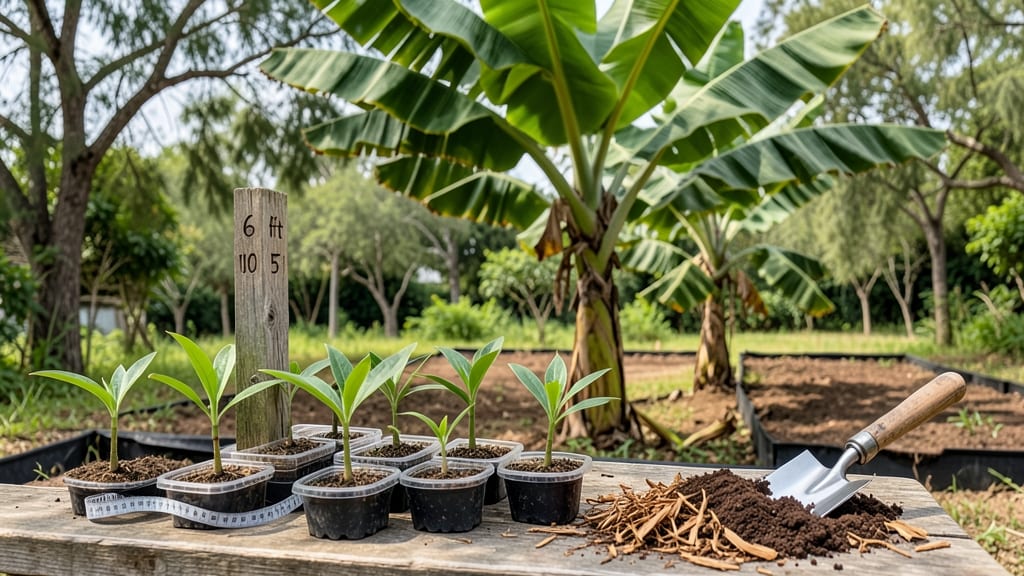
Planting banana trees 🍌 6 to 10 feet apart is the difference between a thriving orchard and a battleground of fungal diseases and stunted fruit.
Banana trees may seem low-maintenance, but proper spacing isn’t just about aesthetics—it’s the foundation for disease prevention, sunlight optimization, and maximizing fruit yield. Get this wrong, and you’ll face stunted growth, fungal infections, or wasted space in your garden.
Dwarf varieties can handle closer spacing—4 to 6 feet—while standard types need room to spread their massive leaves and roots. In tropical climates, where humidity is high, even extra airflow matters to keep black sigatoka at bay.
Below, I break down the exact spacing rules for your variety, climate, and soil type, plus how to adjust if you’re growing in containers or tight urban spaces.

Optimal banana tree spacing by variety and climate conditions
Banana trees thrive when given room to grow, but spacing needs vary dramatically between dwarf varieties and towering Cavendish or plantain trees. In my tropical homestead, I learned the hard way that cramming banana trees too close leads to stunted fruit and fungal outbreaks.
The right spacing ensures sunlight penetration, airflow circulation, and root competition control, all critical for maximizing yield.
Climate plays a starring role in spacing decisions. In humid tropical zones, where diseases spread like wildfire, I space trees 10-15 feet apart to prevent moisture buildup. Meanwhile, in drier subtropical areas, I can get away with 8-10 feet between plants.
Even temperate gardeners using containers must account for mature size—banana trees can reach 15-30 feet tall!
| Variety | Climate Zone | Spacing (ft) | Notes |
|---|---|---|---|
| Dwarf Cavendish | Tropical/Subtropical | 6-8 ft | Compact growth; ideal for small gardens or containers |
| Standard Cavendish | Tropical/Subtropical | 10-12 ft | Most common; requires airflow to prevent disease |
| Plantain | Tropical | 12-15 ft | Large leaves; needs extra space for leaf spread |
| Any Variety | Temperate (Containers) | 5-7 ft (per tree) | Use large pots (15+ gallons); group 3-4 trees together |
| Wind-Exposed Areas | Any Climate | +20% spacing | Wind stress requires extra room for stability |
| Heavy Clay Soil | Any Climate | +15% spacing | Poor drainage increases root competition |
For dwarf Cavendish varieties, I’ve found 6-8 feet of spacing works beautifully in small gardens or urban containers. These compact trees stay under 10 feet tall and produce bunches of small bananas perfect for snacking.
In my subtropical backyard, I planted three dwarf Cavendish trees in a triangle formation, leaving 7 feet between each to allow for future growth while keeping the space manageable.
When growing standard Cavendish or plantain varieties, the spacing jumps to 10-15 feet. These giants demand room to spread their massive leaves (some reaching 8 feet long) and develop heavy fruit bunches that can weigh 50+ pounds.
In my tropical homestead, I arranged plantain trees in parallel rows with 12 feet between plants and 15 feet between rows. This setup mimics commercial orchards and ensures optimal sunlight exposure for all plants.
If you’re in a temperate climate or growing bananas in containers, spacing becomes a creative challenge. I’ve successfully grown Cavendish trees in 15-gallon pots on my patio, placing them 5-7 feet apart in a cluster of 3-4 trees.
The key is to group them closely while still allowing airflow between clusters. In winter months, I move the containers to a sunny, sheltered spot to protect them from frost.
Don’t overlook soil density and wind exposure when planning your spacing. In heavy clay soils, roots compete fiercely for nutrients, so I increase spacing by 15% to reduce stress. Similarly, in windy coastal areas, I add 20% extra space to prevent stem breakage from gusts.
After a hurricane season in Florida, I learned this lesson the hard way—my too-close plantings suffered severe damage.
Proper spacing also affects
Why proper spacing prevents common banana tree diseases
Banana trees thrive when they have room to breathe—literally. When planted too closely, their large leaves create dense canopies that trap moisture, turning your garden into a fungal paradise. Black sigatoka, panama disease, and bacterial wilt all flourish in these humid conditions, often leading to irreversible damage.
I’ve seen entire banana patches lost because growers ignored spacing guidelines, and I’m here to help you avoid that heartbreak.
The key issue isn’t just the space between plants—it’s the airflow disruption that overcrowding causes. Stagnant air allows spores to linger on leaves, while poor sunlight penetration weakens stems, making trees more susceptible to infections.
Even in tropical climates where bananas naturally grow, artificial spacing is crucial to mimic their native forest-edge habitats where sunlight filters through gaps.
🚨 DON’T MAKE THIS MISTAKE: Many gardeners assume banana trees are like other tropical plants and plant them 3-4 feet apart. This is a recipe for disaster. Mature banana trees need 6-10 feet of space—not just for their massive leaves, but to prevent the humidity domes that foster disease.
The wider the spacing, the faster water evaporates from leaves, reducing fungal growth by up to 70%.
⚠️ Critical Spacing Rule for Disease Prevention
Plant banana trees 6-10 feet apart to:
- ✅ Prevent black sigatoka by reducing leaf moisture retention
- ✅ Block bacterial wilt spread through contaminated soil
- ✅ Improve sunlight penetration to 80%+ of the canopy
💡 Pro Tip: In humid climates, increase spacing to 10-12 feet and plant in north-south rows to enhance airflow.
Let’s talk about the disease triangle—host, pathogen, and environment. Banana trees are the host, fungal/bacterial pathogens are everywhere, but the environment is what you control. By spacing trees properly, you disrupt the pathogen’s ideal conditions.
For example, black sigatoka spores need 24+ hours of leaf wetness to infect—something you can’t prevent with fungicides alone. Proper spacing reduces this to just 6-8 hours of moisture retention.
Another critical factor is soil-borne pathogens. When banana trees are crowded, their roots compete for nutrients, weakening them. Weak roots can’t absorb enough water, leading to stress-induced susceptibility to diseases like Fusarium wilt.
I’ve seen this firsthand in tropical gardens where growers packed trees too tightly—within months, entire rows collapsed. The solution? Wide spacing + deep mulching to keep roots healthy and competitive.
Don’t forget about sunlight’s role in disease prevention. Banana leaves need direct sunlight to dry quickly after rain. When trees are spaced too closely, the inner leaves stay wet for days, creating perfect conditions for leaf spot diseases.
Aim for 6+ hours of direct sunlight reaching the center of each plant’s canopy. In shaded areas, increase spacing to 12 feet to compensate.
If you’re growing banana trees in containers, the same principles apply—just on a smaller scale. Ensure containers are at least 18 inches in diameter and place them 3-4 feet apart to allow airflow.
Grouping containers too closely mimics the overcrowding problem, turning your patio into a disease hotspot. Rotate containers weekly to ensure even sunlight exposure and prevent fungal buildup on one side.