
Planting
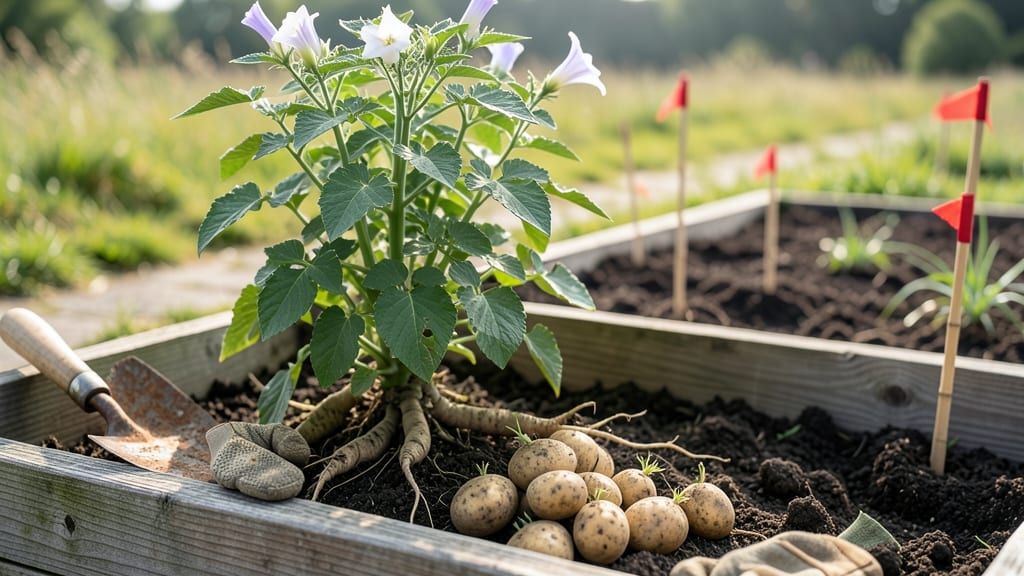
To plant potatoes the right distance apart means the difference between a bountiful harvest and a patchy yield 🥔.
Planting potatoes too close together steals their growth potential, while spacing them too far wastes precious garden space. The key is finding that sweet spot where every tuber has room to swell without competing for nutrients or sunlight.
Most gardeners struggle with this balance—especially when working with different varieties like fingerlings or russets. Too tight, and you risk stunted growth and disease; too wide, and you lose precious garden real estate.
I’ll show you the exact spacing rules for each type, plus how to adjust for raised beds, containers, and even poor soil.
By the end, you’ll know exactly how far apart to plant potatoes for maximum yield, how deep to bury those seed pieces, and when to watch for the first signs of trouble. Let’s dig in!

Optimal potato spacing by variety type: rules for maximum yield
Getting the potato spacing right is like finding the sweet spot between a crowded subway car and a desert island—too close, and your tubers compete for nutrients; too far, and you waste precious garden real estate.
The key lies in matching your variety type to the perfect distance, which directly impacts yield potential and tuber size.
Early varieties like Yukon Golds need different spacing than late-season russets, and ignoring these rules can mean the difference between a handful of small potatoes and a bountiful harvest.
Most gardeners focus only on plant-to-plant distance, but the row spacing and soil depth are equally critical. Planting too shallow risks rot, while burying them too deep stunts growth. The solution?
A science-backed approach that accounts for potato variety, soil type, and garden conditions. Let’s break it down by category so you can maximize every square inch of your plot.
| Variety Type | Plant-to-Plant Distance | Row Spacing | Soil Depth | Yield Impact |
|---|---|---|---|---|
| Early Varieties (e.g., Red Pontiac, Early Girl) | 12–15 inches | 24–30 inches | 4–6 inches | Smaller tubers, faster harvest |
| Mid-Season (e.g., Yukon Gold, Kennebec) | 15–18 inches | 30–36 inches | 4–6 inches | Balanced size and quantity |
| Late Varieties (e.g., Russet, Idaho) | 18–24 inches | 36–48 inches | 6–8 inches | Larger tubers, higher yield |
| Fingerlings (e.g., Purple Peruvian, Rocket) | 8–12 inches | 24–30 inches | 3–5 inches | Compact growth, high density |
For early varieties, tighter spacing works because they mature quickly and produce smaller tubers.
Think of them like fast-food potatoes—you want a quick turnaround, so packing them in slightly (12–15 inches apart) gives you an earlier harvest. Mid-season types strike a balance, with 15–18 inches between plants and 30–36 inches between rows.
This spacing lets them develop medium-sized tubers without overcrowding, which is ideal for storage and cooking versatility.
Now, here’s where things get interesting: late varieties like russets are the heavy hitters of the potato world. They need room to stretch their legs—literally.
Spacing them 18–24 inches apart with 36–48 inches between rows ensures their deep, sprawling roots have space to produce those massive, fluffy tubers we all love. If you’re growing russets in a small garden, consider staggering rows or using a trellis to save space without sacrificing yield.
Don’t overlook soil depth, either. Planting potatoes too shallow (less than 4 inches) exposes them to light, which turns their skins green and makes them bitter. Burying them too deep (more than 8 inches) can stunt growth, especially for early varieties.
Aim for a 4–6 inch depth for most types, and increase to 6–8 inches for late-season varieties with larger tubers. Pro tip: Use a soil marker or string line to keep your depth consistent across the row.
One common mistake is assuming all potatoes thrive in the same conditions. For example, fingerling potatoes are a whole different beast—they’re long, slender, and grow in clusters. Their 8–12 inch spacing lets them spread horizontally without competing for space.
If you’re growing them in containers or raised beds, you can even get away with 6-inch spacing since they’re naturally compact. Just remember: tighter spacing means more frequent hilling to prevent light exposure.
Another pro move? Adjust your row direction based on sunlight. In the Northern Hemisphere, plant rows north to south to maximize sun exposure, especially for late varieties that need every bit of light to bulk up.
If your garden is shaded, opt for early or mid-season varieties and space them slightly wider (up to 20 inches apart) to compensate for slower growth. And always rotate crops—potatoes are heavy feeders, and planting them in the same spot year after year deple
How to adjust potato spacing for different garden conditions
Your garden isn’t one-size-fits-all, and neither is potato spacing. While standard 12-inch spacing works for in-ground planting, raised beds and containers demand different approaches. Even soil quality and sun exposure can mean the difference between a bumper crop and a disappointing haul.
Let’s break down how to tweak spacing for your unique setup.
First, consider your garden layout. If you’re using raised beds, you can plant potatoes 6-8 inches apart in rows just 12-18 inches apart. This tight spacing maximizes the bed’s small footprint while still allowing tubers room to grow.
For containers or grow bags, stack seed potatoes vertically—place them 3-4 inches apart in layers as they sprout. This method saves space but requires careful monitoring for pests.
Adjusting Potato Spacing: Pros and Cons
Raised Beds
- Pros: Maximizes space, warms soil faster
- Cons: Requires frequent hilling, risk of overcrowding
Spacing: 6-8" apart, rows 12-18" apart
Containers/Grow Bags
- Pros: Ideal for small spaces, easy pest control
- Cons: Limited yield, needs frequent watering
Spacing: 3-4" apart, stacked vertically
Poor Soil Conditions
- Pros: Prevents disease, improves tuber size
- Cons: Reduces plant density, slower growth
Spacing: 15-24" apart, rows 36" apart
🌱 Pro Tip: Always adjust row direction for sun exposure—north-south rows ensure even sunlight distribution.
If your soil is clay-heavy or poorly draining, widen your spacing to 15-24 inches apart in rows 36 inches apart.
This gives tubers room to expand without competing for nutrients or sitting in soggy soil. Loose, sandy soil, on the other hand, allows for tighter spacing—12 inches apart—since tubers won’t spread as aggressively.
Don’t overlook the direction of your rows. Planting potatoes in a north-south orientation ensures all plants receive even sunlight exposure throughout the day. This is especially critical in shady gardens or areas with afternoon shade.
If your garden is east-west oriented, you’ll likely see uneven growth on the north side of plants due to limited light.
For container growing, choose determinate varieties like Yukon Gold or Red Pontiac, which stay compact. Fill containers with a mix of potting soil and compost to improve drainage and fertility. Water containers daily in hot weather to prevent tubers from drying out.
If you’re using grow bags, opt for 5-gallon or larger sizes to accommodate at least 3-4 seed potatoes per bag.
Finally, hill soil around plants as they grow to encourage tuber formation and prevent greening. In raised beds, mound soil to 6-8 inches deep around the base of plants, while in containers, add potting mix as vines sprawl.
This simple step can double your yield by promoting larger, healthier tubers.