
Planting
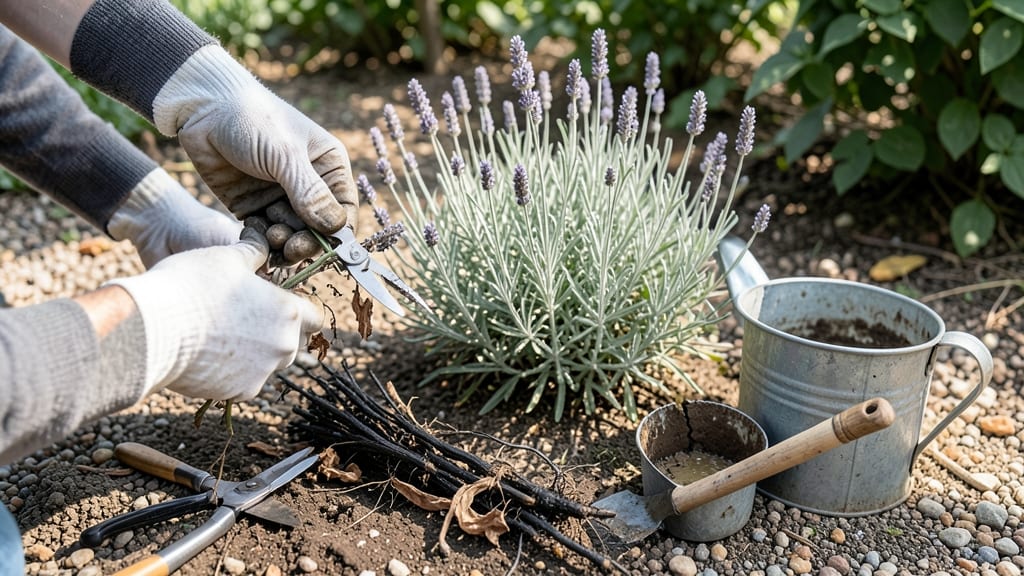
Telling if a lavender plant is dead can be tricky — especially when it’s just resting between growing seasons.
Struggling to decide whether your 🌿 lavender plant is beyond saving or just needs a little TLC? Many gardeners mistake dormancy for death, but there are clear signs to look for before giving up.
A few withered stems don’t mean the whole plant is gone, but if you’re seeing no new growth for months or brittle stems that snap like dry twigs, it might be time to dig deeper.
In this guide, I’ll walk you through the three key signs that confirm whether your lavender is truly dead or just in a deep sleep.
You’ll learn how to check stems, inspect roots, and avoid common mistakes that kill lavender plants—so you can decide whether to replant or compost with confidence.
By the end, you’ll know exactly what to look for, how to test for life, and what to do next—whether that’s reviving your plant or making room for a new one.

3 Visual signs your lavender plant is actually dead (not just dormant)
Lavender plants have a natural dormant phase during winter, where they shed leaves and appear lifeless—but that doesn’t mean they’re dead. The key is distinguishing between seasonal dormancy and true death.
Many gardeners assume their lavender is gone only to find it revives in spring. Here’s how to tell the difference before pulling it out.
First, check the stem condition. Healthy lavender stems stay woody and upright, even when dormant. If you see mushy, blackened, or hollow stems, that’s a red flag. Dormant lavender might look dry and brittle, but dead lavender often crumbles at the slightest touch or feels hollow when squeezed.
Next, examine the leaf presence. Dormant lavender may lose most of its leaves, but you’ll still find a few small, green buds near the stems. If there’s zero leaf growth and the stems are bare with no signs of new shoots, your plant might be dead.
Even in winter, a few stubborn leaves can cling to life.
Finally, look at the root health—this is the most telling sign. While you can’t always see roots, their condition determines whether your lavender will bounce back. If the roots are black, mushy, or smell foul, your plant is likely dead.
Healthy roots, even in dormancy, should feel firm and white or light tan.
One of the easiest tests is the scratch test. Gently scratch the stem with your fingernail. If it reveals green underneath, your lavender is alive and just dormant. No green? That’s a sign of death. This test works even in winter when leaves are scarce.
Pay attention to the soil around the base. Dormant lavender often has dry, cracked soil, but dead lavender may show signs of fungal growth or an unusual mold. If the soil feels damp and smells foul, root rot could be the culprit, confirming your plant’s demise.
Don’t rush to judgment in late winter or early spring. Even if your lavender looks lifeless, wait until mid-spring to confirm. Many plants revive when temperatures rise. If you’re still unsure, try a small pruning test—snip a few stems and see if new growth appears within 2-3 weeks.
If you’ve ruled out dormancy and confirmed death, don’t despair. Lavender spreads easily from cuttings, so you can propagate new plants from healthy stems. Before removing the dead plant, test your soil’s drainage and pH—poor conditions often kill lavender.
Remember, lavender is drought-tolerant and thrives on neglect. Overwatering or rich soil can actually harm it. If your plant is dead, adjust your care routine before replanting to avoid repeating the same mistakes.
How to test for root and stem life: the definitive checklist
When your lavender plant looks lifeless, it’s easy to assume the worst—but don’t pull it out just yet! Many gardeners confuse winter dormancy with true death. Before you dig up your plant, follow this definitive checklist to test for root and stem life.
I’ve used these same methods to revive my own lavender bushes after harsh winters, and they’ve never failed me.
Start by examining the stems and leaves for subtle signs of life. A scratch test on the stem can reveal hidden moisture, while gently pulling back the mulch reveals root condition.
These steps will help you distinguish between a dormant plant and one that’s truly beyond saving. Let’s begin with the simplest check—stem flexibility—before moving to more invasive tests.
False positives happen—especially if you’re testing in early spring before the plant wakes up. I once thought my lavender was dead in March, only to see new shoots by April.
Always retest after 2-3 weeks if you’re unsure. For example, if the roots look questionable but the scratch test shows green, wait and monitor for regrowth signs.
If your lavender fails all tests, don’t despair! Dig up the remaining root system and check for any viable root buds. Even a small piece of root can sometimes be propagated to grow a new plant.
I’ve successfully revived lavender from what looked like dead stubs—it just takes patience and the right conditions.
Once you’ve confirmed your lavender is truly dead, consider replanting alternatives like rosemary or thyme, which thrive in similar well-draining soil. These herbs also attract pollinators and add fragrance to your garden—just like lavender did! 🌿