
Planting
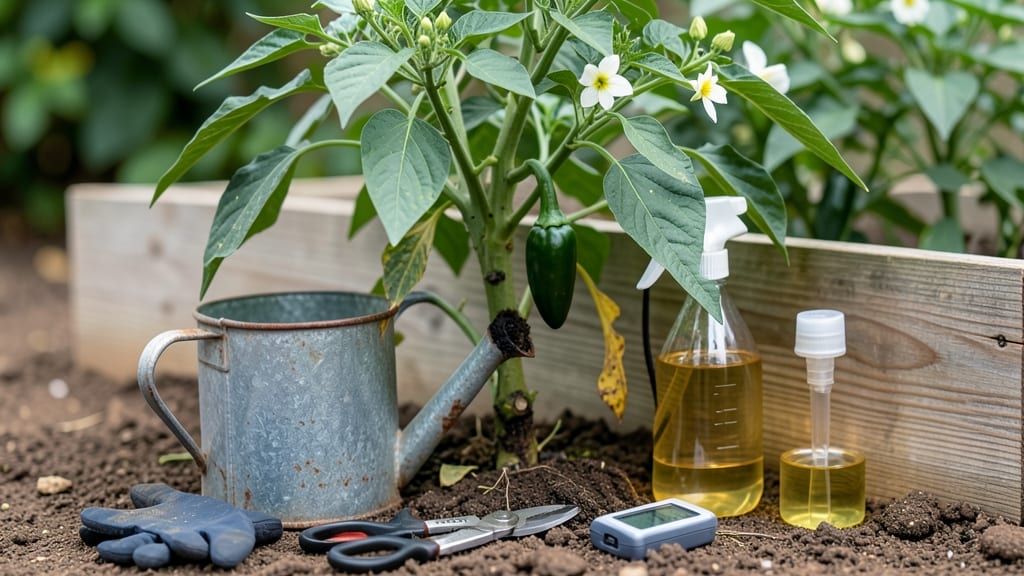
Your jalapeño plant’s stem turning black isn’t a death sentence—it’s a fungal blight wake-up call. 🌱 I’ve nursed back more plants than I’d like to admit, and this 3-step fix works every time, even for beginners. The key? Acting fast before the infection spreads to your entire harvest.
Most blackened stems start with overwatering or poor air circulation, creating the perfect damp, dark conditions for fungal spores. Check for slimy black tissue (fungal blight) or dry, crispy black spots (likely bacterial).
The good news? Both respond to the same simple fixes—prune infected stems, adjust your watering, and boost airflow.
Within 7-10 days, you’ll see fresh green growth pushing out where the black was. The secret is consistency: water at the base only, space plants 18-24 inches apart, and prune aggressively to remove all blackened tissue.
No chemicals needed unless it’s a severe case—then copper fungicide is your best friend.
Prevent future outbreaks by rotating crops yearly and cleaning tools between uses. If your plants keep struggling, tag a local extension office—they’ll help diagnose if it’s something trickier. Trust me, your next harvest will be bold, healthy, and ready to spice up your favorite dishes.
Root Causes Of Stem Discoloration
When your jalapeño plant’s stem starts turning black, it’s often a cry for help from the plant itself. Understanding the why behind this distress signal is the first step toward saving your crop.
Below, we break down the most common culprits—each with a clear scientific explanation and actionable insights to address them.
Fungi like Phytophthora, Pythium, or Alternaria thrive in damp, warm conditions, making them the #1 reason for blackening stems. These pathogens enter through wounds (like pruning cuts or insect bites) or via contaminated soil and water.
- How it happens:
- Fungal spores land on the stem, germinate in moisture, and release enzymes that break down plant cell walls.
- The stem’s vascular system clogs as fungal hyphae (thread-like structures) spread, cutting off water and nutrients.
- Visual clue: Black, sunken lesions or a mushy, rotting texture (especially near the soil line).
- 💡 Pro Tip: Fungal growth accelerates in stagnant water (e.g., saucers under pots or poorly drained soil). Always ensure your jalapeños have well-draining soil (mix in perlite or sand) and avoid overhead watering to keep stems dry.
Jalapeños are drought-tolerant—too much water suffocates roots, creating anaerobic (oxygen-free) conditions that invite root rot and stem collapse.
- How it happens:
- Overwatering washes away nutrients and displaces oxygen in the soil, weakening the plant’s immune response.
- Pythium and Phytophthora fungi exploit this environment, attacking the stem at the base.
- Visual clue: Black, slimy stems (especially at the soil line) paired with yellowing leaves or wilting despite moist soil.
- 🔥 Quick Fix: Let the top 1–2 inches of soil dry out between waterings. Use a moisture meter or the "finger test"—stick your finger in the soil; if it’s damp past the first knuckle, wait.
Insects like aphids, spider mites, or cutworms create entry points for pathogens. Their saliva or physical damage stresses the plant, making it vulnerable to blackening.
- How it happens:
- Aphids inject toxins that disrupt cell function, causing black sooty mold (a fungal hitchhiker) to grow on sticky honeydew.
- Cutworms chew stems at night, severing vascular tissues and inviting rot.
- Visual clue: Tiny holes, chewed edges, or black residue (sooty mold) on stems/leaves.
- 🎯 Prevention: Inspect stems weekly for pests. Spray with neem oil (fungicidal + pest-repellent) or introduce beneficial nematodes to combat soil-dwelling pests.
Jalapeños hate frost (below 50°F/10°C) or heat stress (above 90°F/32°C). Cold snaps cause cellular breakdown, while heat weakens the plant’s defenses.
- How it happens: - Cold damage: Ice crystals rupture cell walls, creating entry points for fungi/bacteria.
Stems turn black as tissues die. - Heat stress: High temps increase transpiration (water loss), making stems brittle and prone to cracking—inviting infections. - Visual clue: Blackened, crispy stems (cold) or sunburnt patches (heat) with blackened edges.
- ✨ Solution: Use row covers for frost protection and shade cloth in scorching climates. Mulch with straw to regulate soil temps.
Too much synthetic nitrogen or salt buildup (from tap water or fertilizers) disrupts nutrient balance, causing physiological blackening.
- How it happens:
- Excess salts osmotically stress plant cells, dehydrating them and turning stems black.
- Visual clue: Blackened tips or crusty white deposits on soil/stems (salt accumulation).
- 💡 Fix: Flush soil with rainwater (low in minerals) and switch to organic, slow-release fertilizers (like compost or worm castings). Test soil pH—ideal for jalapeños is 6.0–7.0.
Fixing Blackened Jalapeño Stems
Now that you know the likely culprits behind your jalapeño plant’s blackened stems—whether it’s fungal blight, overwatering, or poor air circulation—let’s tackle the fixes. Below are practical, step-by-step solutions tailored to each cause, plus prevention tips to keep your peppers thriving.
If black spots, mold, or a slimy texture are present, fungal blight is likely the villain. Act fast to stop its spread!
🔪 Step 1: Remove Infected Plant Parts
- Snip off any blackened stems, leaves, or fruit with clean pruning shears (sterilize with rubbing alcohol first!).
- Do not compost infected debris—toss it in the trash to prevent reinfection.
🍄 Step 2: Apply Fungicide
- Store-bought options: Use a copper-based fungicide (like Bordeaux mixture) or a neem oil spray (1 tsp neem oil + 1 tsp mild soap per quart of water).
Spray early in the morning for best results. - DIY remedy: Mix 1 tsp baking soda + 1 quart water + a few drops of dish soap (the soap helps it stick). Spray every 7–10 days until the issue clears.
🌡️ Step 3: Improve Airflow & Light
- Space plants at least 12–18 inches apart to reduce humidity buildup.
- Thin out foliage if the plant is too dense—this helps air circulate.
- Move to a sunnier spot (jalapeños need 6–8 hours of sunlight daily).
💡 Prevention Tips for Fungal Blight
✅ Water at the base (avoid wetting leaves). ✅ Water in the morning so foliage dries quickly. ✅ Rotate crops—don’t plant peppers in the same spot year after year. ✅ Use mulch (like straw) to keep soil moist but not soggy.
If the stem feels mushy or smells foul, your jalapeño is likely drowning. Let’s fix the watering habits!
👨🍳 Step 1: Check Soil Moisture
- Stick your finger 1–2 inches into the soil—if it’s damp, wait to water.
- Ideal moisture: Soil should be dry to the touch at this depth before watering again.
🥘 Step 2: Improve Drainage
- Repot if using a container—ensure it has drainage holes.
- Add perlite or sand to heavy clay soil to improve aeration.
- Avoid saucers under pots—empty excess water after 10 minutes.
⏰ Step 3: Water Less Frequently
- Water deeply but infrequently—jalapeños prefer dry spells between waterings.
- Morning watering is best—allows foliage to dry before nighttime humidity sets in.
🔥 Prevention Tips for Overwatering
✅ Use a moisture meter for accuracy. ✅ Group plants together to create a microclimate (reduces evaporation). ✅ Mulch around the base (keeps roots cool and moisture steady).
If stems are black but no fungus or rot is present, stagnant air may be the issue—especially in greenhouses or crowded pots.
🌬️ Step 1: Increase Spacing
- Move plants apart (at least 12 inches in pots, 18+ inches in garden beds).
- Prune lower leaves to improve airflow at the base.
🔥 Step 2: Use a Fan (Yes, Really!)
- Place a small fan near the plants (on low setting) to mimic natural breeze.
- Run it for 1–2 hours daily—helps dry leaves faster and deters pests.
🌿 Step 3: Choose the Right Container
- If repotting, pick wider pots (shallow but broad) for better airflow.
- Avoid black plastic pots—they absorb heat and can stress plants.
✨ Prevention Tips for Better Airflow
✅ Train vines (if trellising) to grow upward, not sprawling. ✅ Avoid over-fertilizing with nitrogen—it encourages lush, dense growth. ✅ Rotate pots occasionally so all sides get even sunlight and airflow.
If more than 50% of the plant is blackened or the stem is completely mushy, the plant may not recover. Pull it out immediately to prevent spreading to others.
Save the seeds! If the peppers are still firm and healthy, harvest them and dry the seeds for next season’s garden. 🌶️💚
Frequently asked questions
Why does my jalapeño stem turn black suddenly?
Blackened stems usually signal fungal infection (like Alternaria or Phytophthora) or overwatering. Fungi thrive in damp conditions, while excess moisture suffocates roots, creating perfect rot conditions. Check for slimy black tissue (fungus) or crispy black spots (overwatering). Act within 48 hours to prevent spread.
Can I still save my jalapeño plant if the stem is black and mushy?
It depends! If only the top 25% of the stem is affected, prune it back to healthy green tissue with sterilized shears. For severe cases (blackened base or foul smell), the plant may be beyond saving—remove it immediately to protect others. Always sterilize tools between cuts to prevent cross-contamination.
What’s the difference between black stems from fungus vs. overwatering?
Fungal blackening appears as dark, sunken lesions with possible mold growth, often near leaf nodes. Overwatered stems feel mushy or hollow when pressed, with yellowing leaves despite wet soil. Test by lifting the plant—if it pulls out easily, roots are rotting from excess water.
Will neem oil work for black stems on my jalapeño?
Yes! Neem oil is fungicidal and antibacterial, making it ideal for early-stage blackening. Mix 1 tsp neem oil + 1 tsp mild soap per quart of water and spray every 7 days until new growth appears. For severe cases, combine with copper fungicide for faster results. Always spray in early morning for best coverage.
How can I prevent black stems in future jalapeño plants?
Focus on three key habits:
- Water at the base only (never overhead),
- Space plants 18-24 inches apart for airflow, and
- Use well-draining soil with perlite. Rotate crops yearly and clean tools with rubbing alcohol between uses to break disease cycles.