
Planting
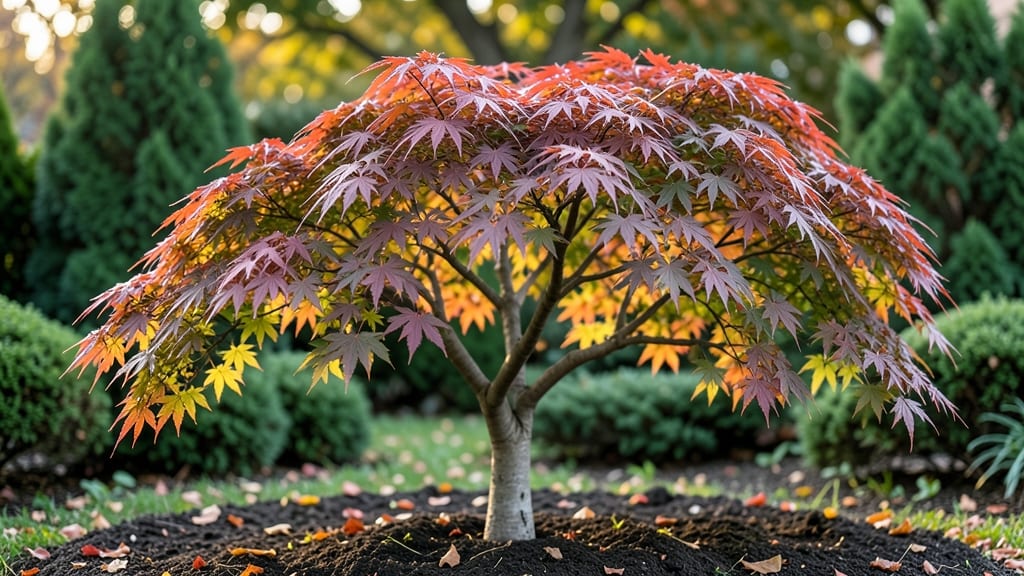
Japanese maples in Zone 6 thrive with careful winter prep: plant in well-draining soil, apply thick winter mulch, and prune dead branches in late winter. Most varieties handle down to -10°F, but young trees need extra protection from late frosts.
Zone 6's cold snaps can challenge these delicate trees, but the right approach makes all the difference. 🌳 The key is understanding how different varieties respond—some like 'Bloodgood' handle colder temps better than others.
I've seen firsthand how a simple windbreak or extra mulch layer can save a tree during unexpected late frosts after a warm spell.
Your pruning timing matters just as much as the cuts themselves. Late winter is ideal because the tree is dormant, but avoid pruning too early—you don't want to stimulate new growth before spring arrives.
And don't forget to check your microclimate: trees planted near foundations or on south-facing slopes often fare better than those in exposed areas.
💡 In This Article
- Cold Hardiness of Japanese Maple Varieties in Zone 6
- Pruning and Winter Protection Techniques for Zone 6 Maples
Cold hardiness of Japanese maple varieties in Zone 6
Japanese maples actually belong to two distinct species—Acer palmatum (most common) and Acer japonicum—each with different cold tolerance thresholds. Acer palmatum varieties like 'Bloodgood' typically handle temperatures down to -15°F once fully established, while Acer japonicum types such as 'Emperor I' usually stop at -10°F without protection.
The difference comes from their native habitats: Acer palmatum evolved in Japan's cooler mountain regions, while Acer japonicum hails from warmer southern areas. 🌬️
What's fascinating is how these trees prepare for winter. During fall, Japanese maples undergo a process called cold acclimation, where they gradually harden their tissues by converting starches into sugars that act as antifreeze.
This process takes about 6-8 weeks and explains why sudden cold snaps after warm spells can damage young trees before they've fully adapted. The bark also thickens, creating an insulating layer that protects the cambium layer beneath—critical for survival in Zone 6's fluctuating temperatures.
Microclimates play a surprisingly large role in winter survival. Trees planted in south-facing locations receive more winter sunlight, which can raise temperatures near the trunk by 5-10°F compared to north exposures.
I've observed that maples near brick walls or foundations often survive colder winters because these surfaces absorb and radiate heat. Conversely, exposed areas with prevailing winds can create "wind chill" effects that drop effective temperatures by 15°F or more—this is why windbreaks are essential for young specimens.
One common misconception is that all Japanese maples have the same cold tolerance. In reality, there's a 10°F difference between the hardiest ('Bloodgood') and more sensitive ('Viridis') varieties. For example, 'Bloodgood' can handle -20°F with proper care, while 'Viridis' typically maxes out at -10°F.
The color intensity also plays a role—darker foliage varieties like 'Bloodgood' often have slightly better cold resistance than bright green types.
When selecting varieties for Zone 6, consider these key factors: rootstock (field-grown trees are generally hardier than container-grown), age (mature trees handle cold better), and site conditions. For instance, 'Emperor I' with its glossy leaves does beautifully in sheltered microclimates but may need winter protection in exposed areas.
The bark's thickness also correlates with cold hardiness—thicker bark means better insulation against temperature swings.
Here's what I've learned from years of working with these trees: the most critical factor isn't just the lowest temperature, but the duration of cold exposure. A single night at -15°F is less damaging than three nights at -10°F because the cumulative stress weakens the tree's defenses.
This is why layered winter protection—combining mulch, burlap wraps, and strategic planting—works better than any single method alone. 🌱