
Planting
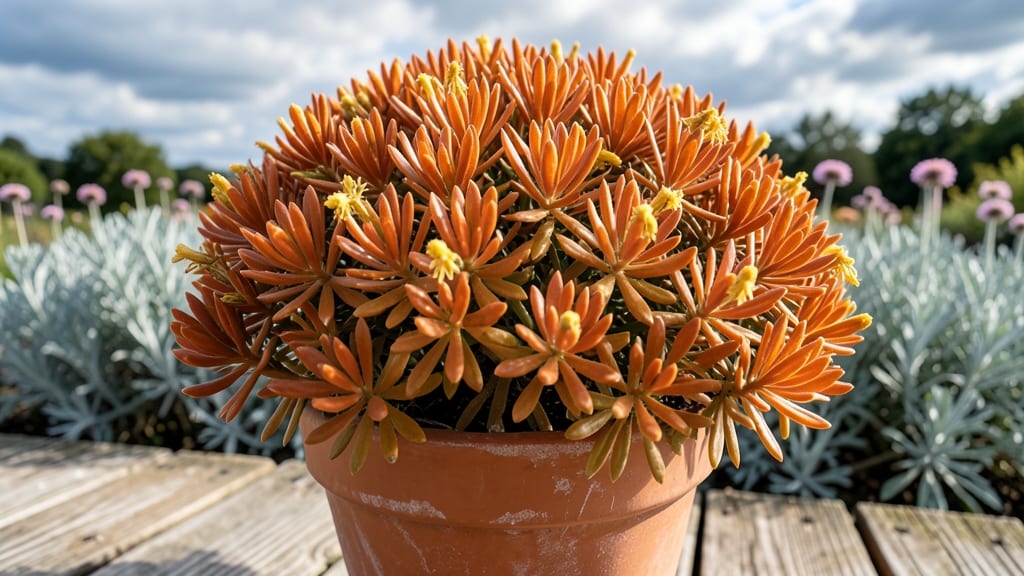
The Leucadendron 'Safari Sunset' plant thrives in USDA zones 9-11, where it demands well-draining soil, full sun exposure, and minimal watering to prevent root rot. Prune after flowering to maintain compact growth, and use mulch to balance moisture retention and heat protection. Its bold foliage and vivid blooms shine in Mediterranean-style gardens or containers.
The Leucadendron 'Safari Sunset' isn't just a drought-tolerant shrub—it's a showstopper that rewards gardeners with bright orange and red foliage and pinkish-purple blooms when given the right conditions. 🌿 Native to South Africa's Cape region, this plant evolved to handle dry, sandy soils and intense sunlight, which explains why it struggles in heavy, waterlogged environments.
I've seen it transform ordinary landscapes into striking focal points, especially when planted in groups or as a dramatic container specimen.
The key to keeping it thriving lies in mimicking its natural habitat: fast-draining soil mixes with perlite or sand, and a location where it gets at least 6-8 hours of direct sunlight daily.
Even in its ideal zones, winter protection becomes crucial in years with unexpected frosts—just a light frost cloth can save it from damage.
💡 In This Article
- Optimal Growing Conditions for Leucadendron Safari Sunset
- Step-by-Step Leucadendron Pruning and Propagation Guide
Optimal growing conditions for Leucadendron Safari Sunset
The Leucadendron 'Safari Sunset' thrives because it evolved in South Africa's nutrient-poor, sandy soils where water drains rapidly. Its roots develop a symbiotic relationship with mycorrhizal fungi, allowing it to access moisture and minerals efficiently even in dry conditions.
The plant's natural habitat experiences intense sunlight with minimal rainfall—typically less than 30 inches annually—which is why it demands full sun exposure (6+ hours daily) to prevent etiolation (stretching) and maintain its vibrant foliage colors.
The soil's acidity (pH 4.5-5.5) is another critical factor. In alkaline conditions, the plant struggles to absorb iron, leading to chlorosis (yellowing leaves). To replicate its native environment, mix 50% peat moss or pine bark fines with 30% coarse sand and 20% perlite.
This blend mimics the loose, aerated texture of its natural substrate while preventing compaction. In containers, ensure drainage holes are present—water should flow through within 10-15 minutes after watering to avoid root suffocation.
Climate plays a surprising role in bloom intensity. In zones 9-11, the 'Safari Sunset' typically flowers late winter to early spring, triggered by cooler temperatures (55-65°F) after a dry summer.
However, in marginal zones like zone 8b, winter protection becomes essential—even a 28°F dip can damage foliage. Use 3-4 inches of mulch (pine bark or gravel) around the base to insulate roots while reflecting sunlight during heatwaves.
This mulch layer also reduces soil temperature fluctuations by 10-15°F, creating a more stable microclimate.
Container growers face unique challenges due to limited root space. In pots, the plant's roots compete fiercely for moisture, so watering every 7-10 days (or when the top 2 inches of soil feel dry) is ideal.
Overwatering triggers root rot within 3-5 days, as the plant's fibrous roots lack the oxygen needed in saturated conditions. For urban gardeners, placing containers on elevated stands or using self-watering systems with 50% air space in the mix can replicate its natural drought tolerance.
Sun exposure isn't just about duration—it's about intensity. The 'Safari Sunset' handles direct midday sun better than many Mediterranean plants because its leaves have a waxy cuticle that reduces water loss. However, in zone 11's extreme heat, afternoon shade (3-5 PM) can prevent leaf scorch.
The plant's foliage color—ranging from bright orange to deep red—actually intensifies with more sunlight, as higher UV exposure boosts anthocyanin production (the same pigments found in red wine).
What most gardeners overlook is the plant's response to humidity. Native to coastal regions with 30-50% relative humidity, it struggles in arid inland zones (20% humidity) where transpiration rates spike.
To combat this, mist foliage daily during summer or use a pebble tray with water beneath containers. This increases local humidity by 10-15% without overwatering the soil.
For maximum impact, plant 'Safari Sunset' where it gets morning sun and afternoon shade in hot climates—this balance prevents heat stress while maintaining bloom vigor. In Mediterranean gardens, pair it with lavender or rosemary to create a drought-tolerant, low-maintenance display that thrives on neglect once established. 🌿