
Planting
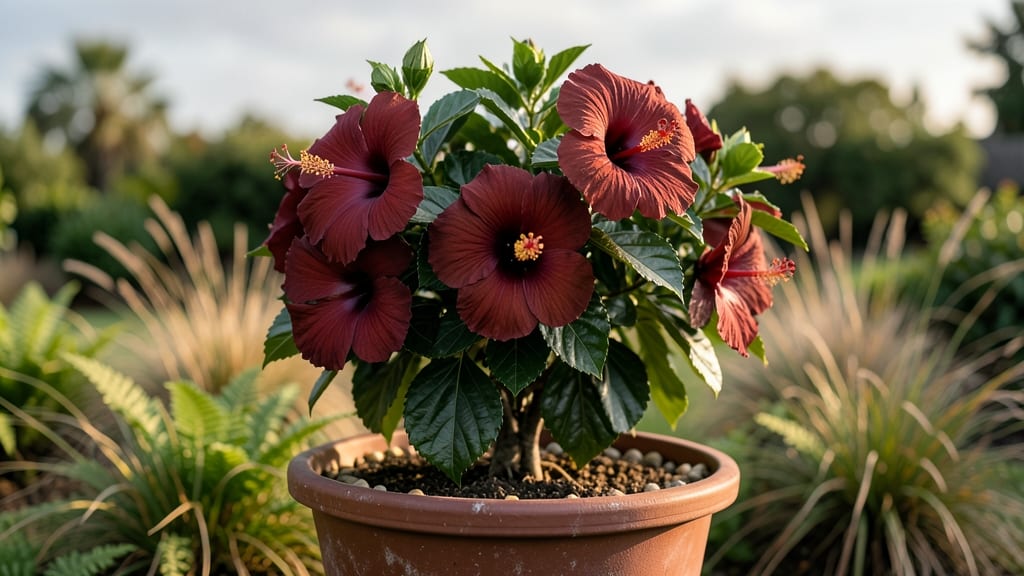
Mahogany Splendor hibiscus thrives best in USDA Zones 9-11, where warm climates and long growing seasons support its lush growth and vibrant blooms.
The Mahogany Splendor hibiscus loves heat and humidity, which is why it performs so well in Zones 9-11. 🌿 These conditions help it develop its signature deep burgundy flowers and glossy leaves.
Outside these zones, gardeners often grow it in containers to bring it indoors during cold months, ensuring it still gets the sunlight and warmth it craves. I've found that even in cooler climates, a sunny spot near a south-facing window can keep this beauty thriving year-round with proper care.
This variety is particularly sensitive to frost, so protecting its roots with mulch in winter is key. The right soil mix—light, well-draining, and slightly acidic—also makes a huge difference in how well it establishes itself.
Think of it like giving your hibiscus a cozy, well-ventilated home where it can stretch out and bloom without stress.
💡 In This Article
- Optimal Growing Conditions for Mahogany Splendor Hibiscus
- Step-by-Step Planting and Care Guide for Mahogany Splendor
Optimal growing conditions for Mahogany Splendor hibiscus
The Mahogany Splendor hibiscus evolved in tropical and subtropical climates, which explains why it thrives specifically in USDA Zones 9-11. This variety's native heat tolerance allows it to handle temperatures consistently above 50°F without stress, while its roots are particularly vulnerable to damage when exposed to 32°F or below.
The deep burgundy blooms you admire are a direct result of these warm conditions stimulating photosynthesis and flower production at optimal rates. In cooler zones, the plant enters a dormant state, which can cause leaf drop and reduced blooming if not managed properly.
Sunlight is non-negotiable for this hibiscus—it demands 6-8 hours of direct sunlight daily to maintain its vibrant foliage and continuous blooming cycle. The leaves contain chlorophyll that converts sunlight into energy, but they also need this intensity to prevent the characteristic "bleaching" where leaves turn pale yellow.
I've noticed that even partial shade can reduce flower production by up to 40%, as the plant diverts energy toward leaf growth instead of blooms. For container growers, a south-facing window or grow lights providing 12,000-15,000 lux can replicate these conditions indoors.
The soil requirements are equally critical—Mahogany Splendor performs best in slightly acidic to neutral soil with a pH range of 6.0-7.0. This pH level ensures optimal nutrient uptake, particularly iron and magnesium, which are essential for the plant's deep red pigmentation.
The soil must also be well-draining to prevent root rot, a common issue when hibiscus sits in soggy conditions. I recommend mixing 2 parts garden soil with 1 part perlite or coarse sand to achieve the perfect balance.
Overwatering is a frequent mistake that leads to yellowing leaves and stunted growth, so always check the top 2 inches of soil before watering.
Consistent moisture is key, but the hibiscus's roots need oxygen too. This means watering deeply 2-3 times per week during hot months, allowing the top inch of soil to dry between waterings. In cooler months, reduce this to once per week to match the plant's reduced metabolic rate.
The deep burgundy flowers you're growing for are actually a stress response—when the plant receives just the right amount of water and nutrients, it produces these stunning blooms as a way to attract pollinators in its natural habitat. Too much or too little water disrupts this balance entirely.
For gardeners in Zones 8 and below, understanding these conditions helps explain why container growing works so well. The portability allows you to move the plant indoors during winter, protecting it from frost while maintaining its sunlight requirements.
I've had success with 15-gallon containers that provide enough root space while allowing for proper drainage.
The key is to use a high-quality potting mix designed for tropical plants and to avoid letting the roots sit in cold, damp soil during winter months—this combination is what keeps Mahogany Splendor thriving even outside its native zone. 🌿
One often overlooked factor is humidity. This hibiscus loves 50-70% humidity, which is why it performs so well in coastal areas where ocean breezes provide natural moisture.
In dry climates, I recommend misting the leaves occasionally or placing a tray of water with pebbles near the plant to increase ambient humidity. This simple adjustment can make the difference between a plant that struggles and one that produces abundant, vibrant blooms throughout the growing season.
The right humidity level helps prevent the edges of leaves from turning brown—a common sign of environmental stress.