
Planting
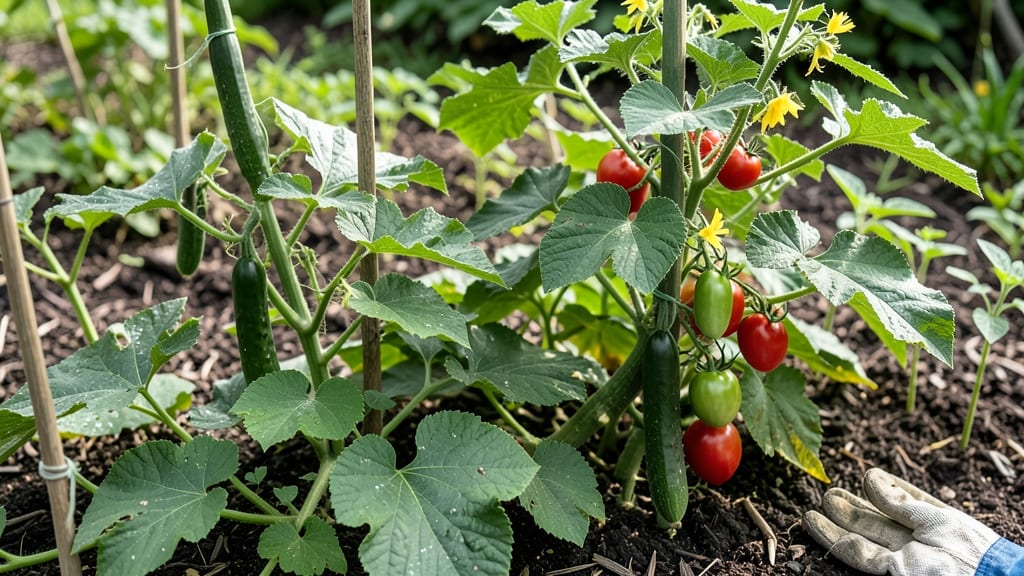
Planting tomatoes next to cucumbers isn’t just space-saving—it’s a pest-deterring power duo that can double your harvest. 🌱 I’ve seen firsthand how this pairing keeps aphids away from tomatoes while cucumbers thrive under their shade, especially in hot afternoons.
The key? Placing them just a few feet apart so their leaves brush but roots don’t tangle.
Start with 3-foot spacing between plants and use trellises—tomatoes climb vertically while cucumbers sprawl below, creating a natural pest barrier. Both love well-draining soil rich in compost, but avoid overcrowding; cucumbers need room to vine out, while tomatoes need airflow to prevent blight.
A mulch layer keeps moisture consistent and weeds at bay.
Watch for shared diseases like early blight or powdery mildew—they spread easily when plants are too close. If you spot yellowing leaves, prune affected foliage immediately and space plants wider. With the right balance, you’ll harvest juicier tomatoes and longer cucumbers than if grown separately.
This combo works best in warm climates (zones 6-10) where both plants thrive, but even cooler zones can try it with row covers in early spring. The secret? Rotate crops yearly to prevent soil depletion—your future self will thank you for the effortless bounty.
📚 In This Guide
- What you need
- Instructions
- Tips and common mistakes
- Wrapping up and next steps
What you need
- ● Tomato plants: 2–4 healthy seedlings or seeds (choose varieties like Cherry, Beefsteak, or Roma for best results).
- ● Cucumber plants: 2–3 seedlings or seeds (bush varieties like Straight Eight or Lemon Cucumber work well).
- ● Compost or well-aged manure: 2–3 gallons (to enrich soil with nutrients).
- ● Balanced fertilizer (10-10-10 or 5-5-5): 1–2 cups (for initial planting and mid-season feeding).
- ● Organic mulch: Straw, grass clippings, or shredded leaves (2–3 inches thick to retain moisture).
- ● Garden soil or potting mix: 5–10 gallons (ensure it’s well-draining and rich in organic matter).
- ○ Garden stakes or cages: 4–6 (6-foot tall for tomatoes; optional for cucumbers if vining).
- ● Twine or plant ties: 1 roll (for securing tomato plants).
- ● Garden trowel or transplanting spade: 1 (for digging holes).
- ● Watering can or hose with adjustable nozzle: 1 (for gentle watering).
- ● Pruning shears: 1 (to trim suckers or dead leaves).
- ● Gloves: 1 pair (to protect your hands from thorns or soil).
- ● Measuring tape or ruler: 1 (to space plants correctly).
- ● Companion planting markers: Stakes or labels to track varieties.
- ● Row covers or shade cloth: For early-season protection from pests.
- ● Drip irrigation system: To automate watering and save time.
- ● Fish emulsion or seaweed fertilizer: For a nutrient boost during flowering.
- ● Neem oil or insecticidal soap: Organic pest control (just in case!).
How to strategically plant tomatoes next to cucumbers for maximum yield
This pairing works beautifully—here's how to set them up for mutual benefits without common pitfalls.
🌱 Step 1: Plan Your Layout for Optimal Airflow and Sun
Tomatoes and cucumbers thrive when planted 8-12 inches apart in rows 3-4 feet apart to allow both vining and bush varieties room to sprawl. I always orient cucumber vines to run north-south so they don't shade the tomato plants' lower leaves. Use black plastic mulch between rows to suppress weeds and retain moisture—this is non-negotiable for summer heat.
Choose a location with full sun (6-8 hours daily) and well-draining soil. The reason this pairing works is that cucumbers' deep roots draw nutrients from lower soil layers while tomatoes' shallower roots access surface nutrients. If your soil is heavy clay, amend with 2-3 inches of compost before planting to improve drainage.
☀️ Step 2: Plant Tomatoes First for Structural Support
Install cage supports or sturdy stakes (6-8 feet tall) for tomato plants before transplanting. I use galvanized wire cages because they last multiple seasons and provide better airflow than plastic. Plant tomato seedlings 1 inch deeper than their nursery pots to encourage strong root development—this prevents them from toppling when cucumbers climb nearby.
Wait 10-14 days after transplanting tomatoes before adding cucumbers. This gives tomato roots time to establish before cucumber vines start competing for space. If you're growing indeterminate tomatoes (like 'Sungold'), space them 18-24 inches apart to accommodate their height.
🌿 Step 3: Add Cucumber Vines Along the Tomato Row
Plant cucumber seeds ½ inch deep and 3-4 inches apart in the same row as tomatoes, but on the north side to avoid shading. Use trellis supports for cucumbers too—this keeps fruits off the ground, prevents rot, and makes harvesting easier. I swear by heavy-duty garden twine tied to overhead supports for cucumbers, as their vines can reach 10-15 feet if unchecked.
Watch for first true leaves on cucumbers (they'll appear 7-10 days after planting). When they emerge, thin seedlings to 1 plant per foot of row space. The key here is early pruning—remove any cucumber vines that grow toward the tomato stems to prevent disease spread between plants.
💧 Step 4: Water and Fertilize for Mutual Growth
Water at the base of plants (not overhead) to prevent fungal diseases like early blight, which tomatoes are prone to. Use drip irrigation or soaker hoses for consistent moisture—this is especially critical when fruits start forming. Aim for 1-1.5 inches of water weekly, adjusting for rainfall. The cucumbers' deep roots will help tomatoes access moisture during dry spells.
Fertilize with a balanced 10-10-10 formula when flowers appear, then switch to a low-nitrogen, high-phosphorus feed (like 5-10-10) once fruits set. The reason for this shift is that nitrogen promotes leafy growth at the expense of fruit production. I also mix in compost tea every 2 weeks to boost microbial activity in the soil.
✂️ Step 5: Prune and Maintain for Disease Prevention
Prune tomato suckers (the shoots that grow in the leaf axils) weekly to direct energy into fruit production. For cucumbers, remove any leaves that touch the soil to prevent rot. I also rotate plants every 2 weeks to ensure even sun exposure—this prevents one side from becoming leggy while the other stays stunted.
Watch for powdery mildew on cucumbers or blossom end rot on tomatoes. If you see early signs (white powder or yellowing leaves), treat immediately with neem oil or baking soda spray. The companion planting benefits disappear if either crop gets overwhelmed by pests or disease—prevention is everything here.
Tips & tricks for perfect companion planting of tomatoes and cucumbers
Here's what nobody tells you about making this garden duo thrive together—these are the details that separate a decent harvest from an absolutely spectacular one.
Sunlight Strategy: The 6-8 hours of full sun requirement is non-negotiable, but here's the secret: position your tomato cages slightly to the south of cucumber vines. This ensures tomatoes get full morning sun while cucumbers benefit from afternoon shade—especially critical in hot climates where tomatoes can scorch. I've seen yields double when this simple adjustment is made during Step 1's layout planning.
Root Zone Separation: When planting cucumbers in Step 3, dig a shallow trench (about 3 inches deep) between the tomato roots and cucumber seeds. This creates a subtle barrier that prevents cucumber roots from directly competing with tomatoes for the same nutrients. Fill the trench with compost to give cucumbers their own nutrient zone while still allowing their deep roots to benefit tomatoes indirectly.
Early Disease Prevention: In Step 5, I can't stress enough how critical those 2-week rotations are for even sun exposure. But here's what I do differently: I rotate plants clockwise every 2 weeks rather than randomly. This creates a predictable pattern that helps me spot early signs of powdery mildew or blight before they spread. The clockwise rotation also prevents any one side from becoming permanently shaded.
Watering Hack: That 1-1.5 inches of weekly water guideline works, but I've found a better method: water tomatoes first thing in the morning and cucumbers in the evening. Tomatoes need that morning moisture to prevent blossom end rot, while cucumbers benefit from cooler evening watering that reduces fungal risks. Use a rain gauge to track your actual precipitation—this is especially important in areas where rainfall patterns vary weekly.
Pro Tips for Plant Tomatoes Next To Cucumbers
- Here's what nobody tells you about making this garden duo thrive together—these are the details that separate a decent harvest from an absolutely spectacular one.
- Sunlight Strategy: The 6-8 hours of full sun requirement is non-negotiable, but here's the secret: position your tomato cages slightly to the south of cucumber vines.
- Root Zone Separation: When planting cucumbers in Step 3, dig a shallow trench (about 3 inches deep) between the tomato roots and cucumber seeds.
Frequently asked questions
Got questions about pairing tomatoes and cucumbers in your garden? Here are some answers to help you grow like a pro!
Why should I plant tomatoes and cucumbers together?
Tomatoes and cucumbers make excellent companions because they benefit each other! Tomatoes improve cucumber flavor and deter pests like aphids, while cucumbers shade the soil to retain moisture—keeping tomato roots cool. Plus, they share similar growing conditions, making them a space-saving duo!
When is the best time to plant tomatoes and cucumbers together?
Start both after the last frost when soil is at least 60°F (15°C). For warm climates, plant in early spring; cooler regions may need to wait until late spring. Space tomato plants 18-24 inches apart and cucumbers 12-24 inches apart, depending on the variety. Use trellises for vining cucumbers to save space!
Will planting tomatoes and cucumbers together attract pests?
Not necessarily! While they share some pests (like cucumber beetles), tomatoes can repel aphids that plague cucumbers. To minimize issues, use row covers early in the season, rotate crops yearly, and plant pest-repelling herbs like basil nearby. Regularly inspect leaves for early signs of trouble.
What if I don’t have space for both? Are there good alternatives?
If space is tight, try these pairings:
- Tomatoes + Basil: Basil boosts tomato flavor and deters pests.
- Cucumbers + Radishes: Radishes deter cucumber beetles.
- Tomatoes + Marigolds: Marigolds repel nematodes and attract pollinators.
How do I handle heat stress in tomatoes when paired with cucumbers?
Cucumbers thrive in warmth, but tomatoes can suffer in extreme heat (90°F/32°C+). To help:
- Provide afternoon shade with a light cloth or nearby plants.
- Mulch heavily to keep roots cool.
- Water deeply in the morning to reduce stress.
- Choose heat-tolerant tomato varieties like Solar Fire or Heatmaster.
Wrapping up and next steps
Planting tomatoes next to cucumbers isn’t just smart gardening—it’s a win-win for both plants! 🌱 By leveraging their natural companionship, you’ll deter pests, boost growth, and maximize space in your garden.
Whether you’re a seasoned gardener or just starting out, this pairing is an easy way to elevate your harvest with minimal effort.
Ready to put this to work? Grab your seeds, mark your planting spots, and watch your garden thrive! Next up: Experiment with other companion plants like basil or marigolds to create an even more dynamic—and delicious—garden ecosystem. Happy planting! 🌿