
Planting
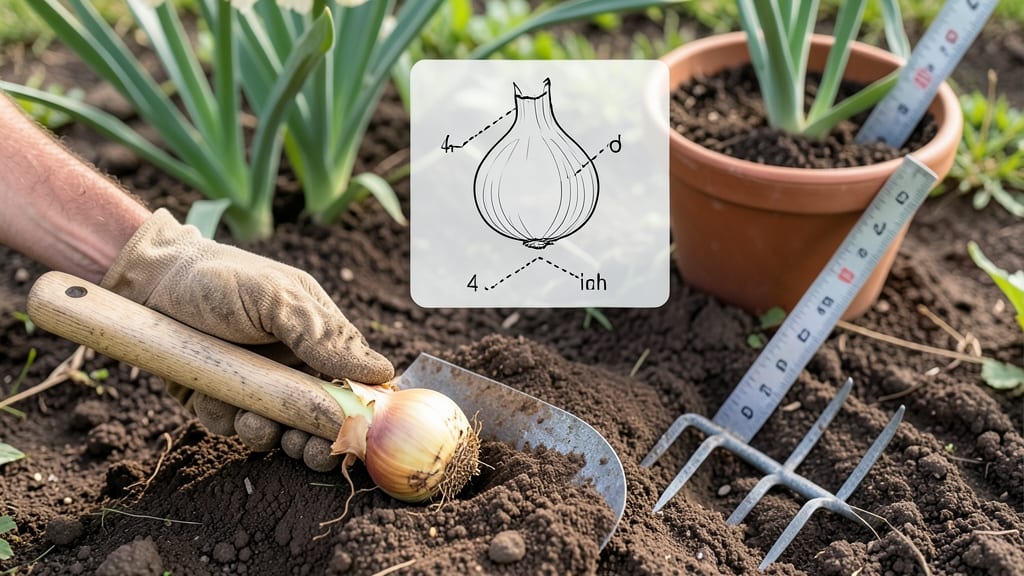
Planting gladiolus bulbs at the right depth—4 to 6 inches—is the key to strong stems and show-stopping blooms 🌸.
If your gladiolus stems wobble like overgrown weeds or flowers flop before they even open, you’re probably planting too shallow (or too deep).
Most gardeners assume "deep enough" means eyeballing it, but soil type, bulb size, and your climate zone all demand precision. Too shallow, and roots struggle to anchor; too deep, and the corm rots before it sprouts.
Below, I break down the exact planting depth for your zone, how to adjust for containers or shade, and the 3 signs your depth is wrong before the stems even emerge.

Optimal gladiolus bulb planting depth by climate zone
Getting the planting depth right for your gladiolus bulbs is the foundation of strong stems and stunning blooms. Unlike many flowers, gladiolus corms thrive when planted at specific depths based on your USDA climate zone, soil type, and bulb size.
Plant too shallow, and you risk weak stems; too deep, and blooms may never emerge. Let’s break down the science-backed guidelines to ensure your gladiolus grow like champions.
In most USDA zones 3-11, gladiolus corms should be planted 4-6 inches deep, but adjustments are key. Cold climates (zones 3-5) often require deeper planting to protect bulbs from frost, while warm climates (zones 8-11) may need shallower depths to encourage early sprouting.
Even the size of your corm—small vs. large—plays a role in determining the perfect depth for robust growth.
Soil type also influences depth. Sandy soils drain quickly, so you can plant slightly deeper (5-6 inches) to retain moisture. In clay-heavy soils, plant closer to 4 inches to prevent waterlogging, which can rot corms. Always ensure the pointed end of the corm faces upward—this is non-negotiable for proper growth.
| USDA Zone | Climate Type | Soil Type | Bulb Size | Optimal Depth (inches) | Notes |
|---|---|---|---|---|---|
| 3-5 | Cold | Loam/Sandy | Small (1-2") | 5-6" | Deeper for frost protection |
| 3-5 | Cold | Clay | Small (1-2") | 4-5" | Avoid waterlogging |
| 6-7 | Temperate | Loam | Medium (2-3") | 4-5" | Standard depth for most regions |
| 8-10 | Warm | Sandy | Large (3"+) | 3-4" | Shallower for faster sprouting |
| 11 | Hot/Dry | Any | Any | 2-3" | Minimize heat stress; mulch heavily |
| All Zones | Containers | Well-draining mix | Any | 3-4" | Use deep pots (12"+); add gravel at bottom |
For small corms (1-2 inches), aim for 5-6 inches deep in cooler zones to protect them from temperature fluctuations. In warmer zones (8-11), even large corms (3+ inches) can be planted as shallow as 3-4 inches to encourage quicker emergence.
Pro tip: If your soil is sandy or rocky, add a layer of compost or peat moss at the bottom of the hole to improve moisture retention without altering depth.
Adjustments are also needed for container gardening. Since pots lack the insulation of garden soil, plant gladiolus 3-4 inches deep and use containers with at least 12 inches of depth.
Add a 2-inch layer of gravel at the bottom to prevent rot from excess moisture. In containers, watering frequency becomes critical—keep soil consistently moist but never soggy.
One common mistake is planting gladiolus too deep, which can suffocate the corm and prevent sprouting. Conversely, shallow planting leads to weak stems that flop over, especially in tall varieties. Always measure depth
Common mistakes that ruin gladiolus growth (and how to fix them)
If your gladiolus plants are producing weak stems or refusing to bloom, the issue might be hiding right under your feet. Planting depth is one of the most overlooked factors in gladiolus care, yet it directly impacts root development and flower production.
Too shallow, and your bulbs won’t anchor properly; too deep, and they’ll struggle to reach sunlight.
I’ve seen gardeners make these mistakes repeatedly—even experienced ones. The good news? Fixing depth issues is simple once you know what to look for. Start by checking your leaf color and stem strength. Yellowing leaves or flopping stems are often the first signs of depth-related stress.
⚠️ Critical Depth Rule for Gladiolus Bulbs
Plant corms 4–6 inches deep—measured from the base of the bulb to the soil surface. The pointed end must face upward. Smaller bulbs (1.5 inches) need 4 inches of depth, while larger ones (2+ inches) can go 6 inches deep.
❌ Too shallow = weak roots, flopping stems, and poor blooms. ❌ Too deep = stunted growth and rotting.
One of the biggest mistakes is overcrowding bulbs. Planting them too close together (less than 4–6 inches apart) creates competition for nutrients and water. This leads to pale, spindly stems and smaller flowers.
I once saw a garden where gladiolus were planted just 2 inches apart—resulting in no blooms at all.
Another red flag? Leaf discoloration. If your gladiolus leaves turn purple or yellow at the tips, it’s often a sign of depth stress. Purple hues indicate phosphorus deficiency (common when roots can’t reach nutrients), while yellowing suggests overwatering due to poor drainage from incorrect planting.
Here’s my quick-fix checklist for weak gladiolus growth: ☑️ Dig up and re-plant bulbs at the correct 4–6 inch depth ☑️ Space bulbs 6 inches apart to prevent overcrowding ☑️ Loosen soil around roots if they’re tangled ☑️ Water deeply after replanting to settle the soil
Remember, gladiolus are sun-loving plants, so even if you fix the depth, ensure they get 6+ hours of sunlight daily. Combine proper depth with good sunlight, and you’ll see taller stems and brighter blooms in just a few weeks! 🌸