
Planting
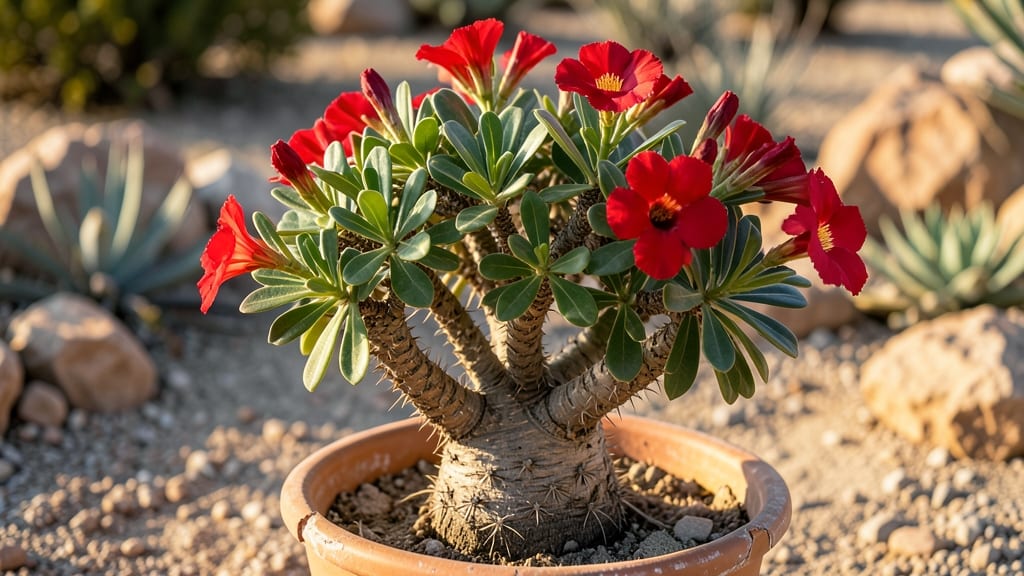
The Red Desert Rose (Adenium obesum) turns harsh climates into a showstopper with its bold red blooms and thick, drought-resistant trunk. 🌵 I’ve grown mine for years in full sun, and it’s the one plant that thrives when others wilt—even in 100°F heat.
The secret lies in mimicking its natural desert habitat: minimal water, bright light, and well-draining soil. Start with a succulent or cactus mix in a pot with drainage holes—this plant hates soggy roots.
A 6-inch container works for young plants, but mature specimens need 10+ gallons to support their thick caudex. Place it where it gets at least 6 hours of direct sun daily, and you’ll see those striking red flowers appear in late spring through summer.
Water only when the top 2 inches of soil feel dry, and cut back in winter when growth slows. A little fertilizer in spring encourages blooms, but don’t overdo it—this plant prefers neglect to overcare. The result? A stunning, low-maintenance centerpiece that outlasts trends and temperatures.
Indoor growers can replicate its needs with a south-facing window and a grow light in winter. Just avoid drafts, and your Red Desert Rose will reward you with years of vibrant color—and bragging rights for surviving what other plants can’t.
📚 In This Guide
- What you need
- Instructions
- Tips and common mistakes
- Wrapping up and next steps
What you need
- ● Red Desert Rose Plant: 1 seedling (nursery-bought) or
- ● 1-3 cuttings (3-4 inches long, with at least 2 nodes) or
- ● Seeds (soaked overnight for faster germination)
- ● Well-draining soil mix: 60% cactus/succulent soil + 30% perlite/pumice + 10% coarse sand (sterilized). Pro tip: Avoid garden soil—it retains too much moisture!
- ● Container: 1 pot (12-16 inches deep) with drainage holes or
- ● In-ground planting area (if temperatures stay above 50°F year-round)
- ● Drainage layer: 2-3 inches of pebbles, gravel, or broken pottery at the pot’s base.
- ● Watering can or spray bottle: With a narrow spout for precision.
- ● Fertilizer: Balanced liquid fertilizer (10-10-10 or 20-20-20), diluted to half-strength.
- ● Pruning shears: Sterilized (rubbing alcohol or bleach wipe).
- ○ Rooting hormone (optional for cuttings): Speeds up propagation.
- ● Slow-release fertilizer granules: Mix 1-2 tbsp into soil at planting.
- ● Mulch: Gravel or decorative stones to prevent soil splatter on the swollen trunk.
- ● Grow lights: LED full-spectrum bulbs (if indoors or low-light conditions).
- ● Humidity tray: For seedlings to retain moisture without overwatering.
- ● Plant supports: Small stakes for young plants in windy areas.
Step-by-step instructions for growing a thriving red desert rose
Here's how to coax these stunning succulents into full, vibrant bloom with minimal fuss.
🪴 Step 1: Select the Perfect Container and Soil Mix
The red desert rose (Adenium obesum) needs excellent drainage to prevent root rot—its Achilles' heel. Choose a 6-8 inch diameter pot with multiple drainage holes (terra cotta works best). I use a mix of 50% cactus/succulent mix and 50% perlite or pumice to create that gritty, airy texture roots crave. Never use garden soil—it compacts and suffocates roots.
Fill the pot ¾ full with your mix, then tap it gently on the table to settle the soil without compacting it. The goal is a medium that looks fluffy but holds shape when pressed lightly. Add a 1-inch layer of small gravel at the bottom if your pot lacks drainage holes—this creates a buffer zone that prevents water from pooling at the roots.
🌱 Step 2: Plant the Desert Rose with Careful Root Placement
Remove the plant from its nursery pot and gently tease apart the roots if they're circling. The red desert rose's thick, caudex roots need room to spread—don't bury the base too deeply. Plant so the top of the root ball sits just below the soil surface (about ½ inch down). Press the soil lightly around the roots to eliminate air pockets, but avoid compacting.
Water immediately after planting, but only until water runs freely from the drainage holes. This settles the soil and helps the roots make initial contact with the growing medium. Place the pot in a bright, indirect light spot for the first 3-5 days—this prevents transplant shock from sudden light exposure.
☀️ Step 3: Master the Light and Water Balance
Red desert roses demand full sun (6+ hours daily) but need time to acclimate. Start with morning sun only for the first week, then gradually increase exposure. You'll know it's getting enough light when the leaves develop a deep, glossy green color and the stems thicken noticeably. Intense afternoon sun can scorch tender new growth, so I move mine to a shaded spot after 11 AM during the hottest months.
Watering is where most growers fail. Only water when the top 2 inches of soil feel completely dry—stick your finger in to check. When you do water, soak thoroughly until it drains from the bottom. Let the plant dry out completely between waterings. Overwatering is the #1 killer—roots rot within 48 hours of sitting in soggy soil. In winter, reduce watering to every 3-4 weeks as growth slows dramatically.
✂️ Step 4: Encourage Blooming with Strategic Pruning
Pruning isn't just for shaping—it's how you trigger those stunning red blooms. After the plant finishes flowering (usually spring/summer), cut back one-third of the current season's growth just above a leaf node. This stimulates bushier growth and more flower buds for next season. Always use sterilized scissors to avoid introducing pathogens through open wounds.
Remove any yellowed or damaged leaves immediately—they drain energy and attract pests. If your plant develops long, leggy stems, it needs more light. You can also pinch back the tips of new growth to encourage branching. The key is to prune after flowering so you don't sacrifice potential blooms for the season.
🌿 Step 5: Fertilize and Protect for Long-Term Success
Feed your red desert rose with a balanced, water-soluble fertilizer (10-10-10) diluted to half strength every 4-6 weeks during the growing season (spring through fall). I switch to a low-nitrogen, high-phosphorus formula (5-10-10) when buds form to encourage flowering. Never fertilize in winter—the plant is dormant and can't use nutrients effectively.
Watch for mealybugs (white cottony clusters) or scale insects (brown bumps on stems). Wipe them off with a 70% isopropyl alcohol-soaked cotton swab or treat with neem oil spray applied at dusk. Protect your plant from freezing temperatures below 40°F—bring it indoors or cover it with burlap and frost cloth during cold snaps. The caudex is surprisingly cold-sensitive despite the plant's desert origins.
Tips & tricks for perfect red desert rose care
These essential insights will help you nurture your desert rose into a thriving, blooming beauty that defies harsh conditions.
Soil Texture Matters: The 50% cactus/succulent mix and 50% perlite ratio is non-negotiable for proper aeration. I've found that adding a handful of coarse sand to the mix creates even better drainage without compromising moisture retention. The goal is a soil that looks like wet sand rather than damp clay—this mimics the plant's natural desert habitat. If your mix feels too dense after wetting, add more perlite until it crumbles easily between your fingers.
Transplant Shock Prevention: That 3-5 day bright, indirect light period after planting is crucial—don't rush it! I've seen plants wilt dramatically when moved to full sun too soon. For extra insurance, mist the leaves lightly with water during this period to maintain humidity. The key is to let the roots establish without overwhelming the plant with light stress. You'll notice new growth appearing after this adjustment period.
Watering Technique: The "top 2 inches dry" rule is your best friend, but here's how to check properly: Insert your finger about 2 inches deep—if it feels completely dry and warm, it's time to water. I use a watering can with a narrow spout to direct water to the soil surface rather than splashing leaves, which can lead to fungal issues. Always water until it drains freely from the bottom—this ensures complete saturation without leaving pockets of moisture.
Pruning Strategy: When cutting back one-third of growth after flowering, focus on removing the longest, leggiest stems first. These are the ones that drain energy and prevent bushier growth. I always prune just above a leaf node where new growth will emerge. For larger plants, consider making two cuts: one to remove the top third and another to shape the remaining structure. This creates a more balanced, fuller plant that blooms more abundantly next season.
Pro Tips for Red Desert Rose Plant
- These essential insights will help you nurture your desert rose into a thriving, blooming beauty that defies harsh conditions.
- Soil Texture Matters: The 50% cactus/succulent mix and 50% perlite ratio is non-negotiable for proper aeration.
- Transplant Shock Prevention: That 3-5 day bright, indirect light period after planting is crucial—don't rush it!
Frequently asked questions
How much sunlight does a Red Desert Rose need to survive?
A Red Desert Rose (Adenium obesum) is a sun-worshipper! It thrives in full sun (6+ hours daily), especially in hot climates. In extreme heat (above 95°F), provide partial shade (3–4 hours of direct sun) to prevent leaf scorch. Pro tip: Morning sun is ideal—it’s less intense than afternoon rays.
How long does it take for a Red Desert Rose to bloom?
Patience is key! With proper care, your plant may produce its first blooms in 1–2 years, but some take up to 3 years to flower. Factors like light exposure, soil quality, and watering consistency speed up the process. Bonus: A well-established plant can bloom year-round in warm climates or seasonally in cooler areas.
Why are my Red Desert Rose leaves turning yellow or dropping?
Yellowing or dropping leaves usually signal overwatering or poor drainage. These succulents hate soggy roots! Let the soil dry completely between waterings (every 2–3 weeks in summer, less in winter). If repotting, use a fast-draining cactus/succulent mix with perlite or pumice. Troubleshoot: Check for root rot—if mushy, trim affected roots and repot.
Can I grow a Red Desert Rose indoors, or is it strictly outdoors?
Yes, but with caveats! Place it near a south-facing window for maximum light (supplement with a grow light if needed). Keep temps between 65–85°F and avoid drafts. Watch out: Indoor plants may struggle to bloom without intense sunlight. If indoors long-term, rotate the pot weekly for even growth.
What are some low-maintenance alternatives to Red Desert Rose?
If you love drought-tolerant plants but want easier options, try these:
- Snake Plant (Sansevieria): Nearly indestructible, thrives in low light.
- Zebra Plant (Haworthiopsis): Compact succulent with striking stripes.
- Agave: Bold, architectural, and zero-fuss.
- Lantana: Drought-resistant bloomer with vibrant colors.
Wrapping up and next steps
The Red Desert Rose isn’t just a stunning addition to your garden—it’s a resilient symbol of nature’s ability to thrive even in the driest conditions. With its striking blooms and low-maintenance care, this drought-tolerant beauty proves that you can create a vibrant landscape without wasting water.
Whether you’re a seasoned gardener or a beginner, its adaptability makes it the perfect choice for transforming arid spaces into breathtaking oases.
Ready to bring a touch of desert magic to your yard? Start by selecting your plant, prepping the soil, and giving it the right spot to shine! 🌵✨