
Planting
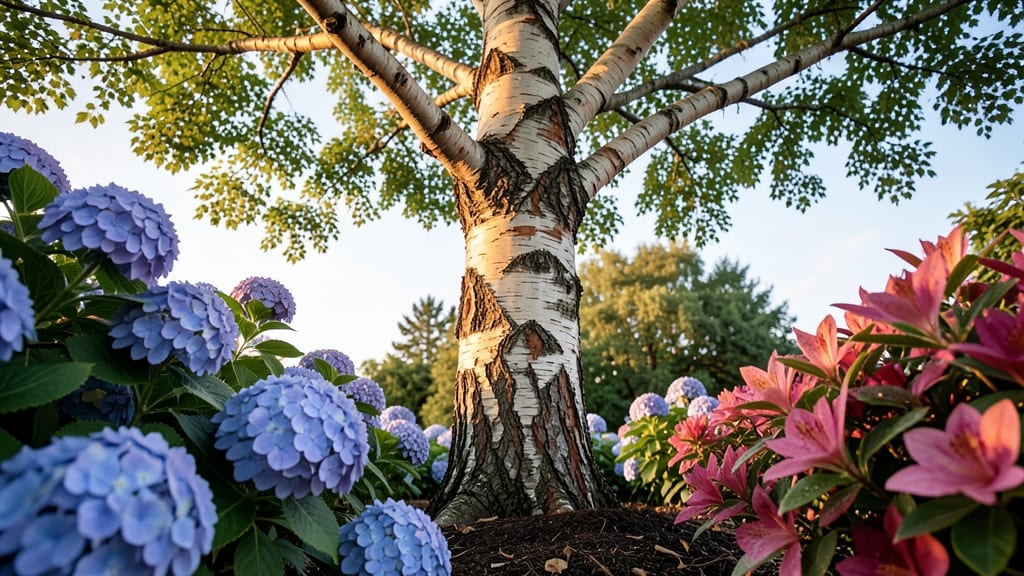
River birches add stunning peeling bark and vibrant foliage to landscapes, but proper spacing ensures their long-term health. These 10 planting distance guidelines cover everything from urban yards to wild meadows, helping you avoid overcrowding and maximize beauty.
Standard Spacing for River Birch Trees
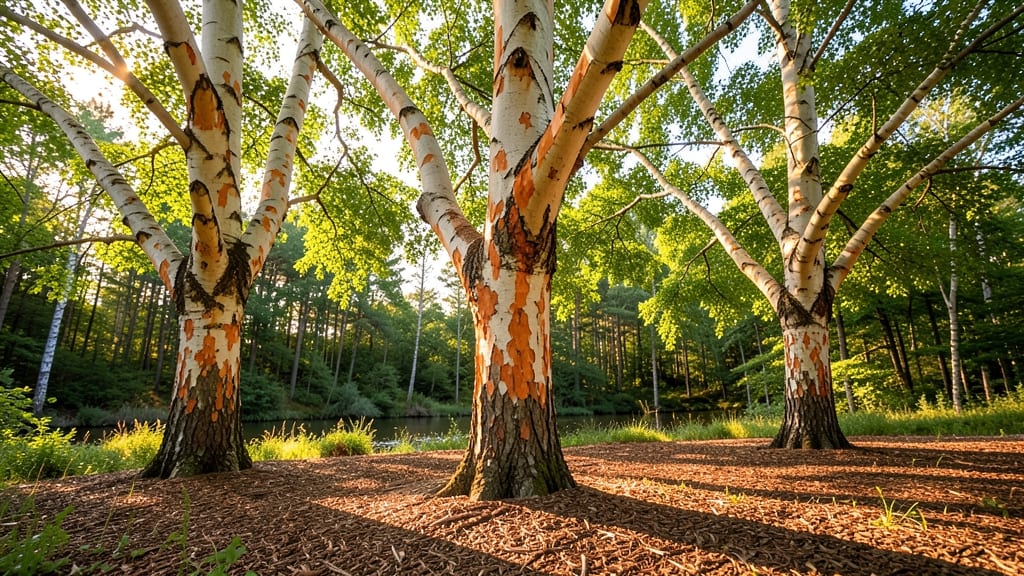
If you're dreaming of a stunning natural landscape with river birch trees, proper spacing is the secret to their long-term success. These trees grow wide and tall, and giving them room ensures they thrive for decades with minimal competition.
For standard river birch planting, aim for 20-25 feet between trees in open landscapes. This spacing guarantees they receive full sun exposure and adequate airflow, which prevents fungal diseases and supports strong growth. On large properties, this distance also allows for natural expansion without overcrowding, creating a picturesque meadow effect.
This foundational rule is perfect for landowners with ample space who want to create a low-maintenance yet breathtaking garden. With the right spacing, your river birches will grow into majestic specimens that enhance your property for generations. 🌟
Closer Planting for Small Urban Yards
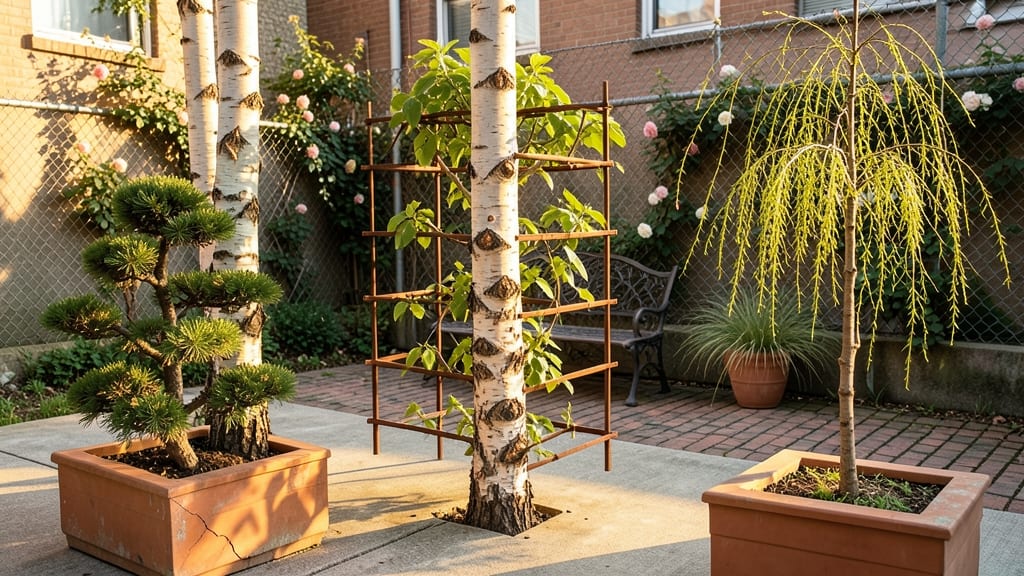
City dwellers with limited space can still enjoy the beauty of river birch trees by using closer spacing—just 10-12 feet apart. This works especially well with dwarf varieties or when training trees with espalier techniques, turning small yards into stunning green spaces.
For urban settings, choose compact cultivars like 'Fastigiata' or 'Heritage' to keep growth manageable. Espaliered trees grow flat against walls or fences, saving ground space while adding vertical interest. Mulch heavily around the base to retain moisture and reduce competition from weeds, which is crucial in tight planting scenarios.
This approach is perfect for urban gardeners, balcony planters, or anyone with a small yard who wants to make the most of their space without sacrificing the river birch's signature peeling bark. 🌱
River Birch Planting Near Water Features
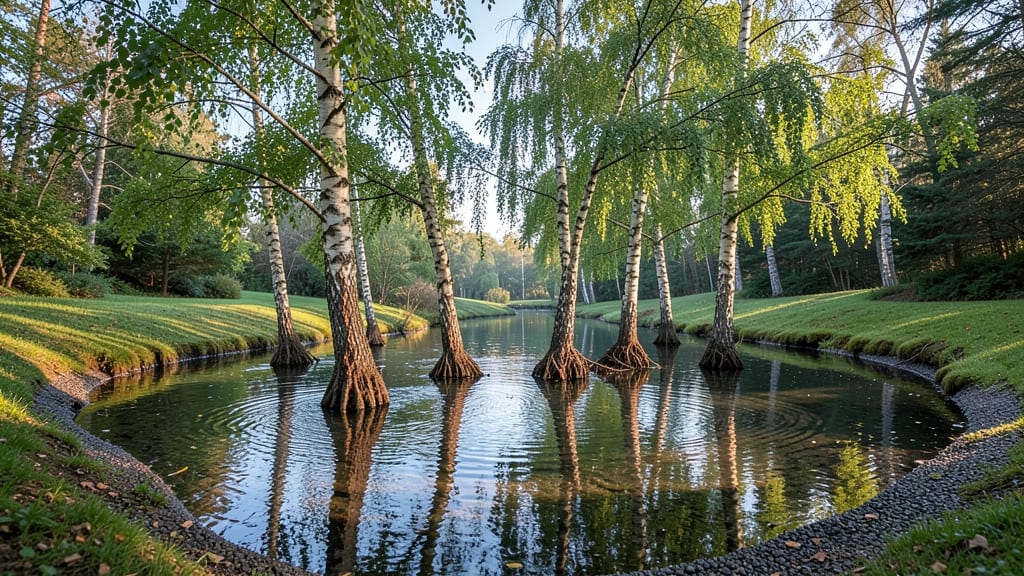
Transform your water garden into a serene woodland retreat by planting river birch along ponds or streams—its moisture-loving roots thrive where other trees struggle. The key to success? Maintaining 15-18 feet of spacing between trees to prevent roots from encroaching on water features or competing for nutrients.
This spacing creates a naturalistic buffer zone that mimics riverbank ecosystems while keeping your water feature healthy. Plant along the edge of the water’s edge (not directly in it) to allow roots to establish in damp but well-drained soil. The exfoliating bark will add drama as it reflects in the water, while the dramatic foliage provides seasonal interest from spring through fall.
Perfect for gardeners designing wildlife-friendly water gardens or restoring natural riparian zones, this approach ensures both your trees and aquatic plants remain vibrant for decades. 🌿
Windbreak Planting Patterns for River Birch
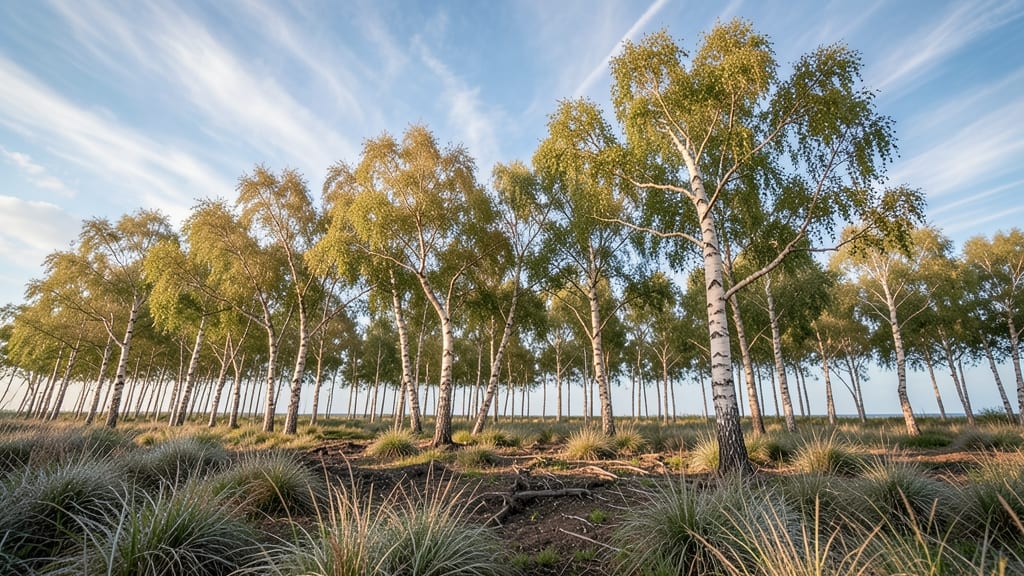
Struggling with wind damage on your farm or coastal property? A single row of river birch spaced 12-15 feet apart creates a natural windbreak that reduces erosion while allowing airflow—unlike dense hedges that trap moisture and encourage disease.
This staggered pattern mimics how birches grow naturally along riverbanks, with each tree’s branches interlocking to deflect wind while maintaining structural integrity. For coastal properties, this spacing prevents salt spray buildup on leaves, while farm borders benefit from reduced soil compaction. Plant in late fall or early spring when soil is workable but not frozen.
Farmers and homesteaders will appreciate how this method protects crops, livestock, and structures without sacrificing the birch’s iconic peeling bark aesthetic. 🌻
Group Plantings for Naturalistic Landscapes
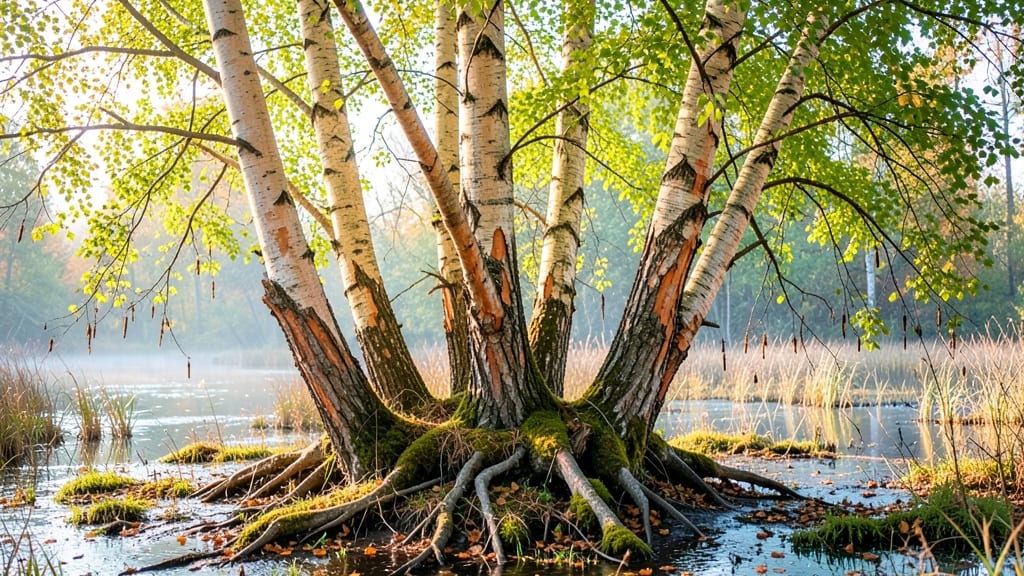
Want to create a wild, organic look in your landscape without sacrificing space? Grouping river birch trees mimics their natural habitat—where they grow in tight clusters along riverbanks and wetlands. This approach maximizes visual drama while keeping spacing efficient.
Plant 3-5 trees just 8-10 feet apart to achieve that lush, woodland feel. Unlike traditional spacing, this method prioritizes dramatic bark displays and layered foliage over rigid geometry. Use it in moist or shady areas where river birches thrive naturally, like near ponds or understory settings. Just avoid grouping in full sun without ample airflow to prevent fungal issues.
Perfect for gardeners who love naturalistic designs but have limited space—this technique works beautifully in small yards, woodland gardens, or erosion-prone slopes. The result? A low-maintenance, high-impact focal point that feels untamed yet intentional. 🌿
River Birch Understory Planting Distance
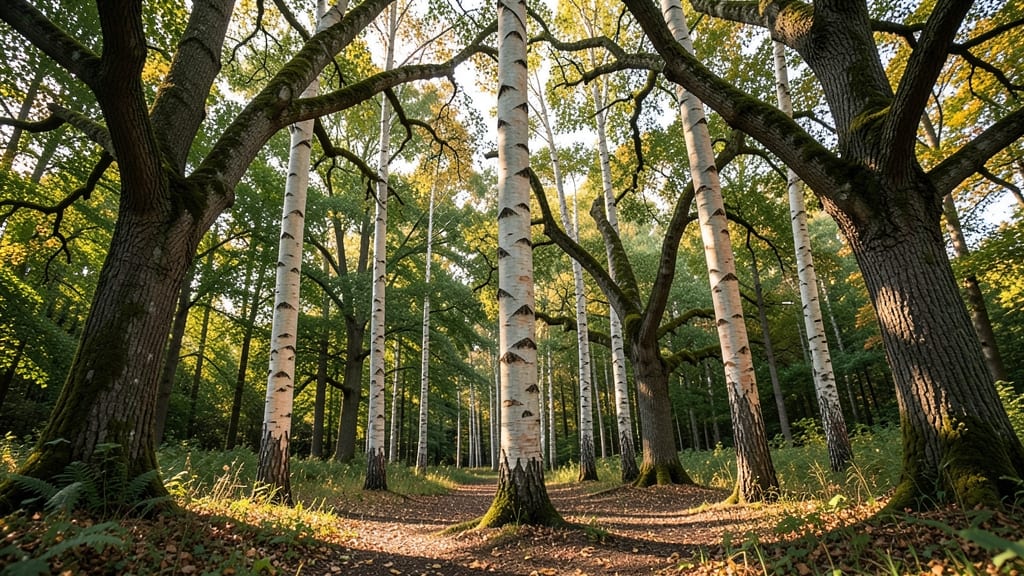
Creating a multi-layered forest garden? River birch thrives in the understory when given the right space—15-20 feet from overstory trees like oaks or maples. This spacing prevents root competition and ensures your birch gets enough dappled sunlight to develop its signature peeling bark and lush foliage.
Unlike open landscapes, understory birches focus on vertical growth rather than wide canopies. Plant them where taller trees cast partial shade, and watch them fill the middle layer beautifully. This technique works especially well in woodland gardens or naturalistic landscapes where you want to mimic a wild forest structure.
Perfect for gardeners who love low-maintenance, layered designs—this approach reduces pruning needs while creating a lush, dynamic look. Your birches will grow strong without fighting for resources. 🌿
Container Grown River Birch Spacing
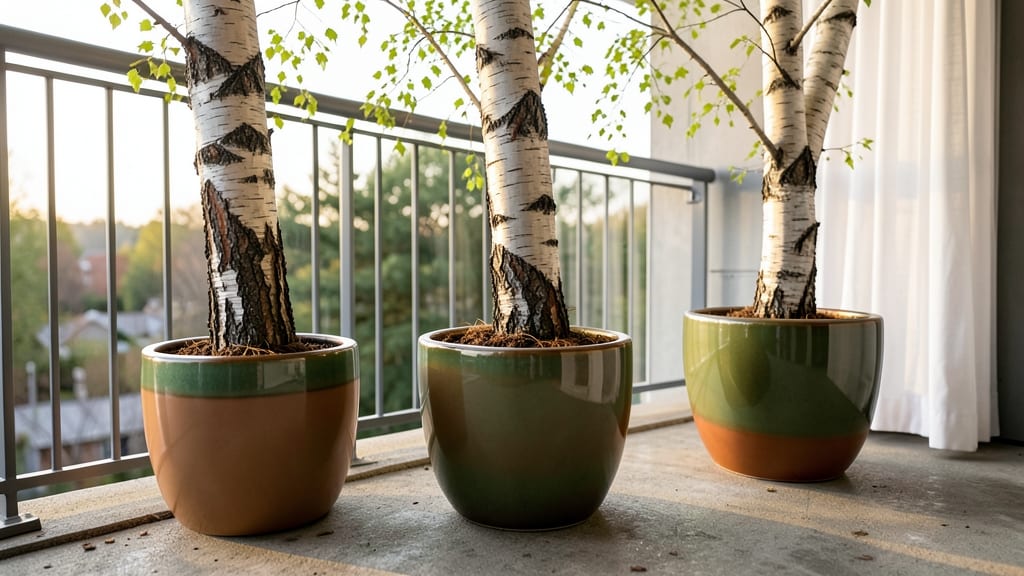
Balcony or patio gardening just got more stylish with river birch trees—but their container roots need room to breathe. Unlike in-ground plantings, potted specimens require a 10-foot minimum spacing to prevent root binding and maintain healthy growth, even in large containers.
Choose containers with at least 24-inch diameter to accommodate their spreading roots, and use well-draining soil mixed with compost. Place containers where they’ll receive 6 hours of sun daily, as river birches thrive in full sun. Urban gardeners love this option because it brings the tree’s iconic peeling bark to small spaces without compromising its long-term health.
This approach works perfectly for city dwellers with limited yards or those wanting to add drama to patios. Just remember: proper spacing now means fewer headaches later! 🌱
River Birch Along Fence Lines
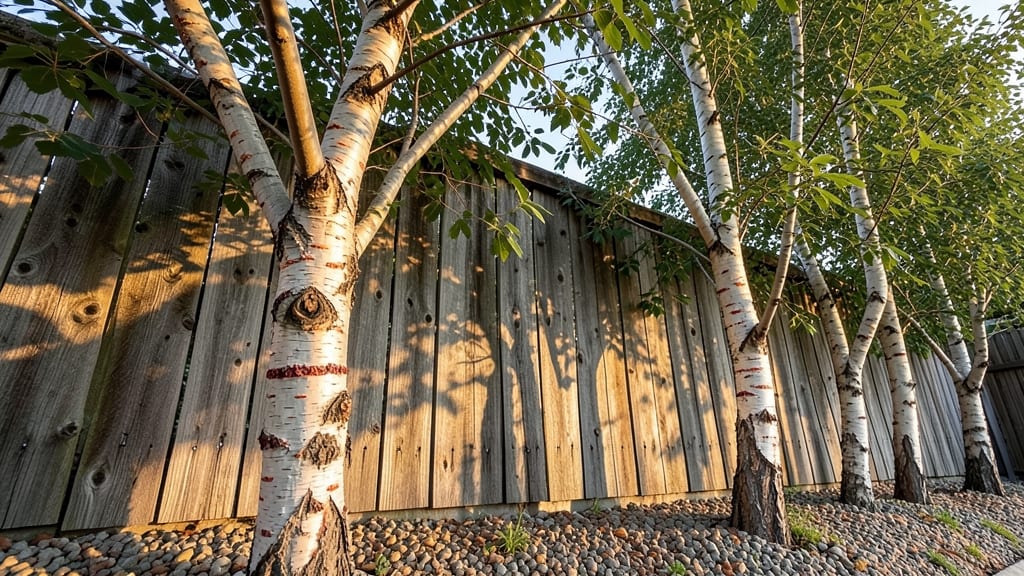
Transform your fence line into a privacy screen without sacrificing your property's structural integrity. River birch trees planted along fences create a stunning, natural barrier while preventing their aggressive roots from damaging wooden or vinyl materials.
For standard varieties, maintain a 12-15 feet distance from fence lines to allow roots to spread naturally without crowding. In tighter spaces, opt for dwarf river birch varieties like 'Fastigiata' or 'Heritage', which can be planted just 8-10 feet from fences. These compact options deliver the same peeling bark beauty while respecting your property boundaries.
This approach is ideal for homeowners with fenced yards who want year-round privacy without the maintenance of traditional hedges. The right spacing ensures both your fence and trees thrive together. 🌿
River Birch for Erosion Control Spacing
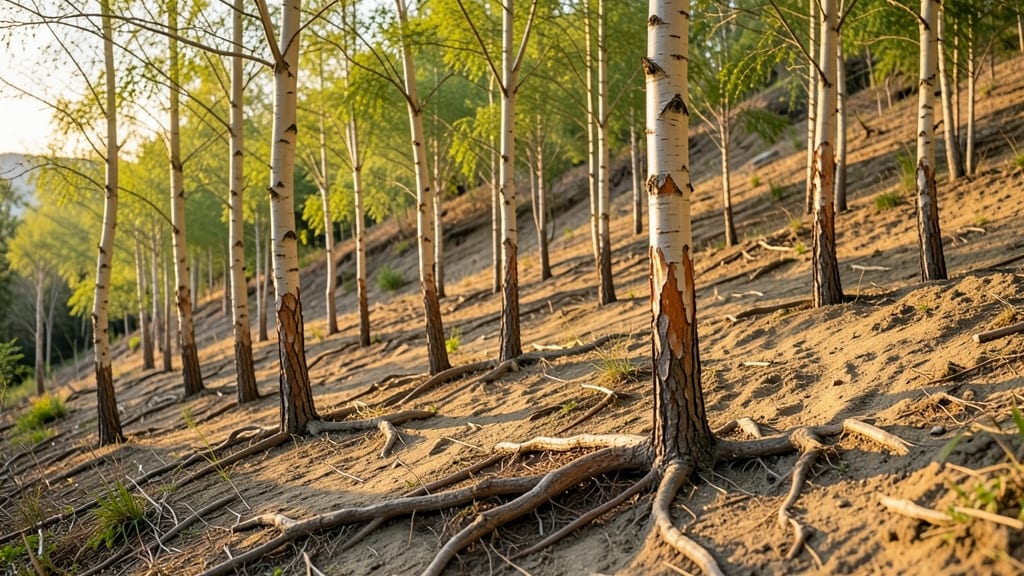
Struggling with erosion on your slopes? River birch isn’t just beautiful—it’s a powerhouse for stabilizing soil with its extensive root systems. When planted 8-10 feet apart on hillsides, these trees create a natural, interlocking network that holds soil in place while adding visual charm.
The key is to plant them in staggered rows along the slope’s contour, not straight up and down. This dense spacing encourages rapid root growth into the soil, reducing runoff and preventing further erosion. The trees’ peeling bark and golden foliage also make them a standout feature in restoration projects or naturalistic landscapes.
Perfect for landowners dealing with erosion-prone areas, this method combines practical benefits with striking aesthetics—no heavy machinery or expensive solutions required. 🌿
River Birch with Companion Shrubs

Want to combine the dramatic bark of river birch with the blooms of hydrangeas or azaleas? The secret lies in strategic spacing—10-12 feet apart—to let both plants shine without stealing each other’s spotlight.
This spacing ensures your river birch gets the 6+ hours of sun it craves while giving flowering shrubs enough room to spread their branches. Pair it with hydrangeas for summer color or dwarf ninebark for year-round interest—just avoid planting too close to aggressive roots like boxwood or juniper, which can compete for moisture.
Perfect for mid-sized gardens where you want both structure and seasonal blooms. With the right spacing, you’ll create a layered, low-maintenance landscape that thrives. 🌻