
Vegetables
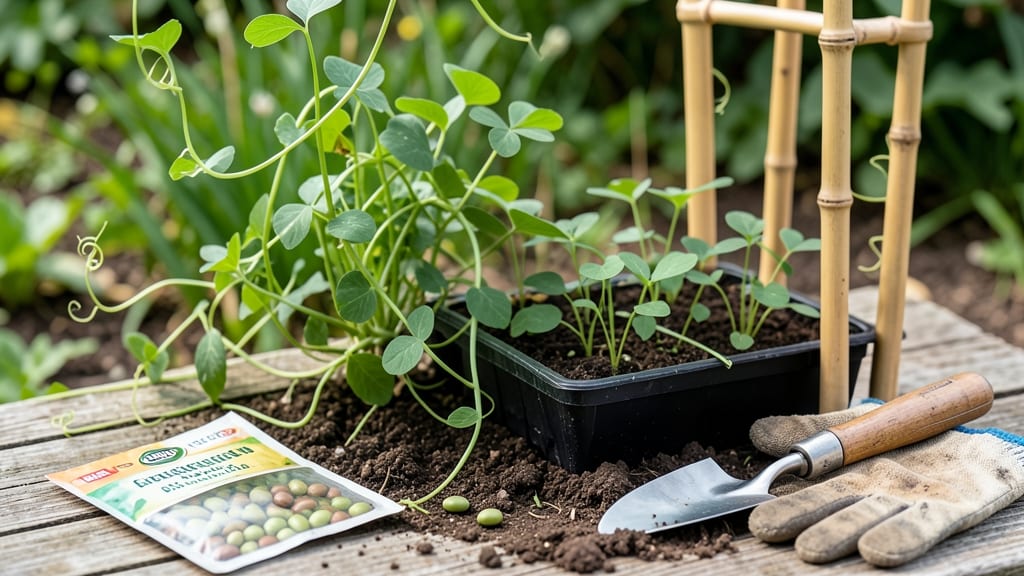
Calculating the right seeding rate for Austrian winter peas 🌱 can mean the difference between a lush cover crop and a patchy, underperforming field.
If you've ever stared at a bag of seeds wondering, "How many do I actually need?"—you're not alone. The answer isn’t one-size-fits-all; it depends on whether you’re growing for forage, grain, or soil improvement, plus your soil type and climate.
Too sparse, and you waste space; too dense, and you stunt growth.
Below, I break down the science behind optimal seed spacing, how to adjust for sandy vs. clay soils, and when thinning becomes necessary. You’ll also learn how to calculate your exact rate based on acreage, variety, and even seed purity.
By the end, you’ll know exactly how many seeds to plant per foot or per square meter—no guesswork, just consistent, high-yield results.
Optimal seeding rates for Austrian winter peas by variety and planting purpose
Austrian winter peas are a versatile legume used for grain production, forage, and cover cropping, but their seeding rates vary dramatically based on your planting purpose and variety.
Unlike spring peas, winter peas establish slowly in cool soils, so precise seed placement is critical to avoid overcrowding or thin stands. The right rate ensures maximum yield while preventing disease pressure from dense foliage.
For grain production, you’ll aim for 30-40 plants per square foot to optimize pod set, while forage mixes often use higher rates (50-60 plants/sq ft) for rapid ground cover. Cover crop plantings typically use the lowest rates (20-30 plants/sq ft) since biomass—not grain—is the goal.
Below, I’ve broken down the lbs/acre recommendations for three popular varieties, along with adjustments for seed size and germination rates.
Key factors influencing seeding rates:
- Variety: Some, like 'Champ', have larger seeds and lower pure live seed (PLS) percentages.
- Seed size: Larger seeds (e.g., 'Lincoln') require fewer per pound, changing weight-based calculations.
- Germination: Winter peas often have 80-90% germination, but cold soils can drop this to 60%—always adjust upward for late fall plantings.
| Variety | Seed Weight (lbs/100,000 seeds) | Grain Production (lbs/acre) | Forage Mix (lbs/acre) | Cover Crop (lbs/acre) | Notes |
|---|---|---|---|---|---|
| 'Austrian Winter' | 1.8 lbs | 120-140 lbs | 150-170 lbs | 80-100 lbs | Small seed size; increase 10% for cold soils |
| 'Lincoln' | 2.2 lbs | 100-120 lbs | 130-150 lbs | 60-80 lbs | Larger seed; lower PLS (75-85%) |
| 'Champ' | 2.0 lbs | 110-130 lbs | 140-160 lbs | 70-90 lbs | High germination (90%); drought-tolerant |
*Adjust rates +10-15% for late fall plantings or sandy soils
Let’s tackle 'Austrian Winter' first—the most widely planted variety for grain. At 120-140 lbs/acre, this rate targets 35-40 plants per square foot, which is ideal for pod development without shading the lower canopy.
If you’re planting for forage, bump it to 150-170 lbs/acre to ensure rapid ground cover before winter. For cover crops, the lighter 80-100 lbs/acre suffices since you’re prioritizing biomass over grain yield.
For 'Lincoln', the larger seed size means fewer seeds per pound, so you’ll use 100-120 lbs/acre for grain. However, its lower pure live seed (PLS) percentage (75-85%) means you’re effectively planting fewer viable seeds.
Always weigh seeds before planting—don’t rely solely on bag labels, as moisture content can vary wildly. Pro tip: Calibrate your seeder by counting seeds in a known weight (e.g., 1 oz) to fine-tune your planter settings.
If you’re using 'Champ' for its drought tolerance, stick to the 110-130 lbs/acre range for grain. This variety’s high germination rate (90%) lets you plant slightly lighter than 'Austrian Winter'.
For organic systems, increase rates by 10-15% to compensate for potential seedling disease pressure. Always soak seeds overnight in a 1% molasses solution to boost microbial activity in organic soils.
Overseeding is a common mistake—especially for beginners. Dense stands lead to fungal diseases (like powdery mildew) and poor grain fill. If you’re unsure, plant on the lighter end of the range and thin seedlings to 2-3 inches apart once they’re 2-3 inches tall. For no-till cover crop mixes, blend Austrian winter peas with rye or clover at a 30:70 ratio to improve soil structure without overcrowding.
Seed depth is another critical factor. Plant 1-1.5 inches deep in well-drained soils; deeper plantings risk rot in heavy clay, while shallow plantings may lead to poor emergence in dry conditions. Use a seed firming wheel to ensure consistent depth, especially on rocky or uneven terrain. In sandy soils, increase seeding rates by 10% to account for faster moisture loss and lower seed-to-soil contact.
Finally, calibrate your seeder before planting. Fill a 1-pint container with seeds and weigh it, then adjust your planter to deliver the correct seeds per foot based on your target rate. For example, at 120 lbs/acre for 'Austrian Winter', you’re aiming for ~25 seeds per foot in a 7-inch row.
A simple seed counter (or even a measuring cup) helps verify accuracy. Precision pays off—every extra seed costs money and can reduce yield through competition.
How soil type and climate affect Austrian winter pea seeding rates
Austrian winter peas thrive when their seeding rates align with your local soil conditions and climate zone. Unlike uniform recommendations, the ideal seeds-per-square-foot varies dramatically between sandy loam and heavy clay, or between the dry Northern Plains and moist Pacific Northwest.
These differences impact moisture retention, nutrient availability, and even germination speed—all critical for stand density.
In sandy soils, for example, I increase seeding rates by 10-20% because seeds dry out faster and require denser populations to compensate for lower moisture retention.
Meanwhile, in clay soils, I reduce rates by 15% to prevent overcrowding, as these soils retain excess moisture that can lead to rot or fungal issues. Organic matter content also plays a role—soils with 3%+ organic matter need fewer seeds due to better nutrient buffering.
Climate further refines these adjustments. In arid regions like the Great Plains, I seed 25% thicker to ensure survival during drought periods, while in humid coastal zones like the Pacific Northwest, I thin stands slightly to reduce disease pressure.
Even elevation changes matter—high-altitude gardens often require 5-10% more seeds due to cooler temperatures slowing early growth.
| Soil Type | Climate Zone | Seeding Rate Adjustment | Key Consideration |
|---|---|---|---|
| Sandy Loam | Arid (Great Plains) | +20% (e.g., 35 lbs/acre) | Fast moisture loss; needs dense stand |
| Clay | Humid (Pacific NW) | -15% (e.g., 28 lbs/acre) | Excess moisture; risk of rot |
| Loamy (3%+ OM) | Temperate (Midwest) | Standard (30 lbs/acre) | Balanced moisture/nutrients |
| Silty | High Altitude (>5,000ft) | +10% (e.g., 33 lbs/acre) | Cooler temps slow germination |
For organic matter, I test soil first—peas in low-organic soils (<1% OM) need 15% more seeds because nutrients leach faster. Amend with compost or manure 4-6 weeks pre-planting to improve fertility without over-seeding. In contrast, high-organic soils (>4% OM) can support 10% fewer seeds thanks to slower nutrient release.
Regional climate also dictates plant stand density. In short-season zones (e.g., USDA Zone 4), I prioritize thicker stands (up to 40 lbs/acre) to maximize early biomass before frost.
Conversely, in longer growing seasons (e.g., Zone 8), I thin to 25 lbs/acre to reduce competition and boost pod yield. Always calibrate with your local frost dates—early springs demand faster establishment.
Pro tip: Use a seed meter to verify rates, especially in variable soils. For example, my sandy garden plots often need 35 lbs/acre where loamy areas thrive at 30 lbs/acre.
Adjust incrementally—5 lbs/acre changes make noticeable differences in stand density without overcomplicating the process. Start with the comparison table above, then fine-tune based on your first harvest’s germination success.