
Planting
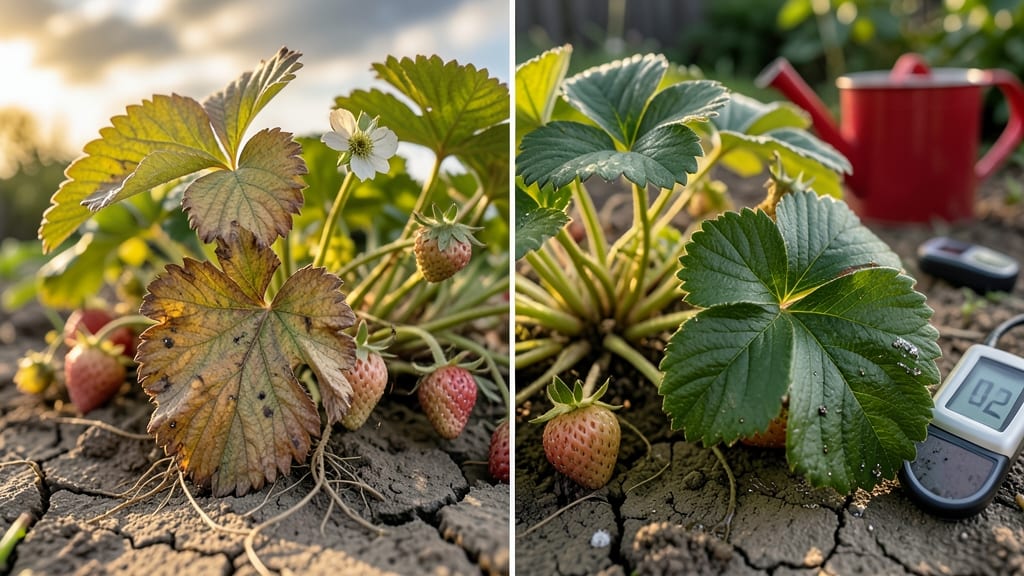
Your strawberry plants wilted overnight, and panic sets in—but there’s a quick revival that works when disease strikes. 🌱 I’ve used this boiling water spot treatment to save my own struggling berries after a rainy week turned them limp. The key is acting fast before the fungus spreads.
First, check the roots: healthy ones are firm and white, while mushy or brown roots mean rot. Overwatering or fungal issues like gray mold are usually to blame. If the leaves have gray fuzz, that’s your culprit—time to treat before replanting becomes necessary.
Boil a kettle of water, let it cool 30 seconds, then pour 1 cup directly on infected spots. The heat kills spores instantly while leaving healthy plants unharmed. Within 24 hours, you’ll see new growth if the roots are still viable.
Prevent future wilts by spacing plants for airflow, watering at the base (not overhead), and removing old leaves. If the whole plant collapses, it’s often beyond saving—but this method gives struggling berries a fighting chance.
Root Causes Of Wilting Strawberries
When your lush, vibrant strawberry plants suddenly droop and wilt, it’s often a sign that something fundamental is amiss. Understanding the why behind the wilting is the first step toward reviving your plants.
Below, we break down the most common causes—each with a scientific explanation and actionable insights to help you diagnose the issue quickly.
Strawberries thrive in well-draining soil, but when they’re overwatered or planted in heavy, compacted soil, their roots suffocate. This leads to root rot, a fungal infection that blocks water and nutrient uptake, causing wilting even when the soil feels moist.
Why it happens:
- Oxygen deprivation: Waterlogged roots can’t absorb oxygen, triggering anaerobic conditions that produce toxic byproducts like ethanol.
- Fungal growth: Pathogens like Phytophthora or Pythium thrive in soggy soil, invading roots and clogging their vascular system.
- Nutrient lockout: Excess water leaches away essential minerals (e.g., potassium, magnesium), weakening the plant’s cellular structure.
How to check: Stick your finger 2 inches into the soil—if it’s damp after 24 hours, drainage is poor. For container-grown strawberries, ensure pots have drainage holes and a cactus/succulent mix amended with perlite.
Strawberries are cool-season plants, and while they love sunlight, intense heat waves (especially above 90°F/32°C) can scorch leaves and dehydrate plants faster than they can absorb water. This causes physiological wilting—the plant’s cells lose turgor pressure due to rapid water loss.
Why it happens:
- Stomatal closure: Under extreme heat, leaf pores (stomata) shut to conserve water, but this halts photosynthesis and gas exchange.
- Cell membrane damage: Heat stress disrupts aquaporins (proteins regulating water flow), making it harder for roots to pull moisture upward.
- Sunburned foliage: White or brown patches on leaves reduce the plant’s ability to transpire efficiently.
Quick fixes:
- Provide afternoon shade with shade cloth (30-50%) during heatwaves.
- Mulch with straw or wood chips to retain soil moisture and cool roots.
- Avoid overhead watering—use drip irrigation at dawn to minimize evaporation.
Wilting can be a silent symptom of hidden pests or pathogens that disrupt the plant’s vascular system. Sap-sucking insects and fungal infections often go unnoticed until the damage is severe.
Why it happens:
- Vascular blockages:
- Verticillium or Fusarium wilt fungi clog xylem vessels, preventing water transport (symptoms: yellowing leaves, wilting despite moist soil).
- Spider mites or aphids pierce cells, causing plasmolysis (cell collapse from water loss).
- Root feeding: Grubs (e.g., Japanese beetle larvae) or nematodes chew roots, reducing their surface area for absorption.
Diagnosis tips:
Symptom
Likely Culprit
Action
Wilting + sticky residue on leaves
Aphids or scale insects
Spray with neem oil or introduce ladybugs.
Wilting + mushy roots
Root rot or nematodes
Remove affected plants; solarize soil or use beneficial fungi (Trichoderma).
Wilting + brown streaks in stems
Fungal wilt (Verticillium)
Remove infected plants; rotate crops for 3+ years.
Wilting strawberries may scream for macronutrients (nitrogen, phosphorus, potassium) or suffer from micronutrient imbalances (e.g., calcium, magnesium). Conversely, over-fertilizing can burn roots, leading to wilting.
Why it happens:
- Potassium (K) deficiency: Critical for osmoregulation (water balance in cells). Without enough K, guard cells can’t regulate stomata, causing wilting.
- Calcium (Ca) deficiency: Weakens cell walls, leading to blossom end rot in fruit and wilting foliage.
- Salt buildup: Over-fertilizing or poor-quality water raises soil salinity, osmotic stress forces roots to work harder, and wilting follows.
Soil test solutions:
- Test soil pH (ideal: 5.5–6.5 for strawberries). Adjust with lime (to raise pH) or sulfur (to lower).
- Use a balanced fertilizer (10-10-10) or compost tea for micronutrients.
- Avoid fresh manure—it can burn roots due to high ammonia.
If your strawberry plants are container-grown or planted too closely, roots become root-bound—a condition where roots circle or grow in tight knots, restricting water and nutrient uptake.
Why it happens:
- Limited exploration: Roots can’t spread to access moisture in dry patches, leading to localized drought stress.
- Competition for resources: Overcrowded plants deplete soil nutrients faster, weakening individual plants.
- Physical damage: Circling roots can girdle the crown, cutting off water flow to leaves.
Fix it fast:
- For containers: Repot into a larger planter (12+ inches deep) with fresh soil.
- For in-ground plants: Divide runners in early spring, spacing plants 18–24 inches apart.
- Gently tease out root-bound roots before repotting to encourage outward growth.
Now that you’ve pinpointed the likely cause, your next step is reviving your strawberries—including the surprising (but effective) boiling water spot treatment mentioned in the article title! 🌱🔥
Revive Your Wilting Strawberries Fast
When your strawberry plants look sad and droopy, don’t panic—there’s a way to bring them back to life! The key is identifying the root cause (literally and figuratively) and applying the right fix.
Below are practical, step-by-step solutions tailored to common issues, plus prevention tips to keep your plants thriving. Let’s turn those wilted leaves into lush, fruiting powerhouses!
Signs: Yellowing leaves, mushy stems, soil that stays soggy for days.
How to Fix It:
- 🔥 Stop Watering Immediately
- Overwatering suffocates roots by cutting off oxygen. Let the soil dry out completely before watering again.
- 🍳 Improve Drainage
- Mix sand or perlite into the soil (1 part amendment to 3 parts soil) to create air pockets.
- If planting in containers, ensure pots have drainage holes and elevate them slightly.
- 👨🍳 Repot if Necessary
- If the root ball is waterlogged, gently remove the plant, trim any black/mushy roots, and replant in fresh, well-draining soil.
💡 Prevention Tip:
- Water deeply but infrequently—strawberries prefer 1–1.5 inches of water per week (including rain). Use a moisture meter to check soil dampness.
Signs: Crispy leaf edges, wilting in afternoon heat, white/yellow patches on leaves.
How to Fix It:
- 🥘 Provide Afternoon Shade
- Use shade cloth (30–50%) or move pots to a spot with dappled sunlight during peak heat (11 AM–3 PM).
- 🌡️ Mulch Like a Pro
- Spread 2–3 inches of straw or wood chips around the base to retain moisture and regulate soil temperature.
- ⏰ Water at the Right Time
- Early morning (6–8 AM) is best—avoid evening watering to prevent fungal growth.
💡 Prevention Tip:
- Choose heat-tolerant varieties like ‘Seascape’ or ‘Albion’ if you live in a hot climate.
Signs: Chewed leaves, sticky residue (aphids), or tiny holes (spider mites).
How to Fix It:
- 🔪 Blast Off Pests
- Spray with soapy water (1 tsp mild soap + 1 quart water) or neem oil (1 tbsp per gallon of water). Reapply every 5–7 days.
- 🐞 Introduce Beneficial Bugs
- Ladybugs and lacewings devour aphids—buy them online or attract them with dill or fennel plants.
- 🌿 Prune & Dispose
- Cut off heavily infested leaves and burn or trash them (don’t compost!).
💡 Prevention Tip:
- Rotate crops if growing strawberries in the same spot yearly to break pest cycles.
Signs: Black, smelly roots, wilting despite watering, fungal spots on leaves.
How to Fix It:
- 🔥 Sterilize the Soil
- Mix 1 part hydrogen peroxide (3%) with 4 parts water and water the soil to kill fungus. Repeat weekly until symptoms improve.
- ✨ Boost Fungal Resistance
- Baking soda spray (1 tsp baking soda + 1 quart water + a drop of dish soap) helps prevent powdery mildew.
- 🌱 Transplant if Severe
- If roots are mushy and rotting, trim healthy roots, dip in cinnamon powder (natural antifungal), and replant in sterile potting mix.
💡 Prevention Tip:
- Space plants 18–24 inches apart for airflow and avoid overhead watering.
Signs: Yellowing leaves (nitrogen deficiency), purple stems (phosphorus lack), weak growth.
How to Fix It:
- 📊 Test Your Soil
- Use a DIY soil test kit (available at garden centers) to check pH (ideal: 5.5–6.5 for strawberries).
- 💪 Fertilize Right
- Balanced fertilizer (10-10-10) at planting, then switch to low-nitrogen (5-10-10) when fruiting begins.
- Compost tea (1:10 compost-to-water ratio) gives a gentle nutrient boost.
- 🍎 Add Organic Amendments
- Work in well-rotted manure or worm castings for slow-release nutrients.
💡 Prevention Tip:
- Side-dress with compost in early spring to replenish nutrients without burning roots.
Final Thought: Most wilted strawberry plants can bounce back with the right care—just match the symptom to the solution! Start with one fix (like improving drainage or pest control), monitor progress, and adjust as needed.
Before you know it, those sad stems will be bursting with juicy, ripe berries! 🍓✨
Frequently asked questions
Why do my strawberry plants wilt suddenly even when the soil feels moist?
This is often a sign of root rot or fungal infection like Phytophthora. Overwatering creates waterlogged conditions that suffocate roots, while pathogens block nutrient uptake. Check for mushy, dark roots—if present, reduce watering immediately and improve drainage with perlite or sand.
Can I save a strawberry plant with completely wilted leaves?
It depends! If the roots are still firm and white, the plant may recover with proper care. Trim any damaged foliage, move to shade, and water deeply at the base. If roots are mushy or black, the plant is likely beyond saving—consider replanting new runners instead.
How often should I water wilted strawberry plants to revive them?
Water deeply every 2-3 days at first, then taper to 1-1.5 inches per week once they recover. Use drip irrigation at the base (not overhead) to prevent fungal growth. Monitor soil moisture—it should dry slightly between waterings to encourage strong root growth.
Is boiling water safe to treat fungal spots on strawberry leaves?
Yes, but with caution! Boil water, let it cool for 30 seconds, then pour 1 cup directly on infected spots. The heat kills fungal spores instantly while leaving healthy tissue unharmed. Test on a small area first to ensure it doesn’t scorch delicate leaves. Repeat if needed after 7 days.
Why do my container-grown strawberries keep wilting even with regular watering?
Containers dry out faster and may have root-bound issues. Check if roots are circling the pot—if so, repot into a larger container with fresh, well-draining soil. Also ensure pots have drainage holes and use a mix of 50% potting soil and 50% perlite to improve aeration.