
Planting
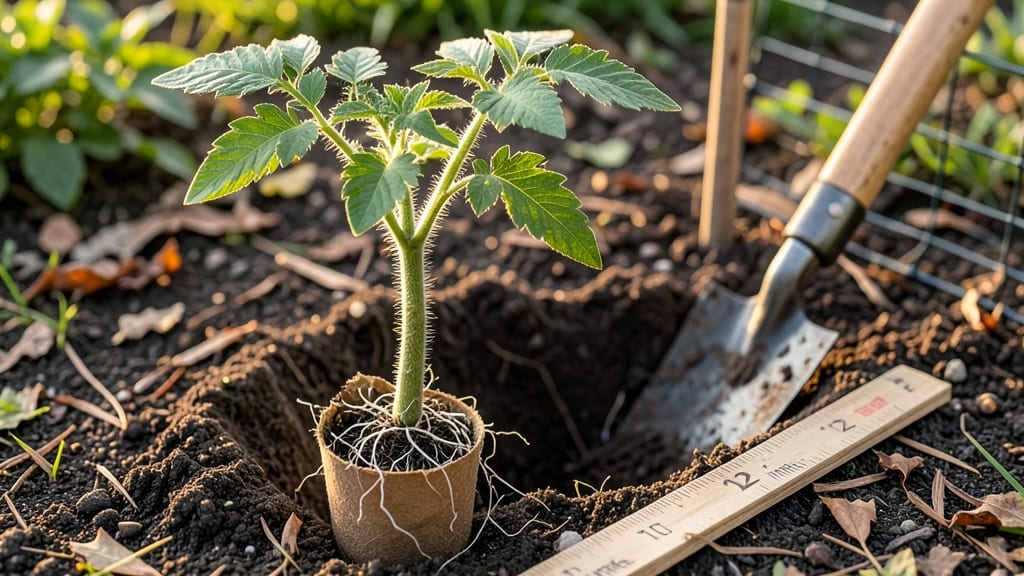
Planting a tomato 🍅 at the wrong depth can turn your big harvest dreams into stunted vines and wasted effort—but getting it right is simpler than you think.
Most gardeners bury seedlings too deep, smothering the stem and inviting rot, or plant them too shallow, leaving roots exposed to dry out. The key is a sweet spot that encourages strong roots without sacrificing airflow or stability.
In this guide, I’ll break down the exact planting depth for seeds and seedlings, how to adjust for soil type, and the one mistake that even experienced growers make (and how to avoid it).
By the end, you’ll know whether to plant your tomato at 1/4 inch or 2 inches, plus pro tips to keep roots thriving once they’re in the ground.

Optimal tomato planting depth by variety (stem thickness matters)
Getting the tomato planting depth right is one of the most overlooked steps that can make or break your harvest. Unlike many plants, tomatoes have specific stem thickness requirements that determine how deep you should bury them.
Plant too shallow, and you risk weak stems and poor root development. Plant too deep, and you risk stem rot or stunted growth. The key lies in understanding your tomato variety and soil type.
Most gardeners assume a one-size-fits-all approach—like planting seedlings 1-2 inches deep—but this misses the science behind tomato stem thickness. Determinate varieties (bush tomatoes) and indeterminate varieties (vining tomatoes) have different needs.
Even within those categories, stem diameter plays a critical role in determining the perfect planting depth for maximum root growth and stability.
For determinate tomatoes, which grow in compact bushes, the general rule is to plant until the first true leaves appear above soil level. This ensures the stem has enough stability without risking rot.
For example, if you're planting a Roma tomato (a determinate variety), aim for 1-1.5 inches deep—no deeper, or you'll suffocate the lower stem.
Indeterminate varieties, like Sungold cherry tomatoes or Brandywine heirlooms, need extra depth because their vines grow continuously throughout the season. These plants benefit from 2-3 inches of soil coverage, especially if they have thicker stems.
The extra depth provides anchor support for the heavy fruit load and encourages deeper root systems to access moisture during hot summer months.
Your soil type also dictates slight adjustments to these guidelines. In sandy soil, which drains quickly and compacts poorly, you can plant up to 1 inch deeper than recommended to give roots more stability.
Conversely, in clay soil, which holds moisture but can suffocate roots, reduce depth by 0.25-0.75 inches depending on stem thickness to prevent rot.
One common mistake is burying the stem past the leaf axils (the points where leaves attach to the stem). This can lead to stem rot because the buried area won’t dry out properly.
Always leave the lower leaves above soil level to maintain airflow and reduce disease risk. If you're unsure, use a ruler or your finger to measure depth—precision matters!
Pro tip: After planting, gently water the soil to settle it around the stem. This helps eliminate air pockets and ensures the roots make immediate contact with moisture.
For container-grown tomatoes, use a well-draining potting mix and plant slightly deeper than in-ground varieties to compensate for the limited root space.
Remember, the goal is to create a strong root system while keeping the upper stem healthy. By following these depth guidelines tailored to your tomato variety and soil type
Common planting depth mistakes that kill tomato yields (and how to fix them)
Getting the tomato planting depth wrong is one of the most overlooked mistakes that can turn a promising harvest into a disappointment. Too deep, and you risk stem rot and poor airflow; too shallow, and your plants develop weak stems and stunted roots.
Even experienced gardeners sometimes guess, leading to plants that struggle from day one.
I’ve seen yellowing leaves and stunted growth in my own garden from improper planting depth, and it’s heartbreaking to watch a plant fight just because it wasn’t placed correctly. The good news? Diagnosing and fixing these issues early can save your tomatoes—and your harvest.
⚠️ Warning: Over-Deepening Dangers
Burying tomato seedlings too deep (below the first true leaves) suffocates the stem, trapping moisture and inviting fungal diseases like blight. Look for dark, mushy stems or yellowing below soil level—these are red flags. Fix it by trimming the stem above the soil line and replanting at the correct depth.
On the flip side, under-planting seedlings leaves too much stem exposed, creating weak anchor points that snap in wind or when laden with fruit. I’ve had tomato plants topple mid-season because their stems couldn’t support their own weight—always a sad sight.
The fix? Bury seedlings deeper than you think, up to the first set of true leaves, to encourage strong root development.
Watch for leaf color changes as a clue: Pale or purple leaves often signal poor root establishment from shallow planting, while dark spots or wilting near the soil line point to over-deepening.
Both issues can be corrected early by adjusting the planting depth and improving soil drainage or airflow around the base.
For container-grown tomatoes, the stakes are even higher—literally. Shallow containers exacerbate root restriction, so bury seedlings 1-2 inches deeper than in-ground plants. Use a well-draining mix and avoid compacting soil around the roots to prevent suffocation.
My container tomatoes thrive when planted this way, producing heavier yields than their under-planted counterparts.
Pro tip: Mark your planting depth with a small stake or tag to track growth patterns. If you notice stunted growth or unusual leaf patterns within weeks, revisit the planting depth—it might be time to adjust.
With the right depth, your tomatoes will develop stronger stems, deeper roots, and the resilience to fight off pests and diseases naturally.