
Planting
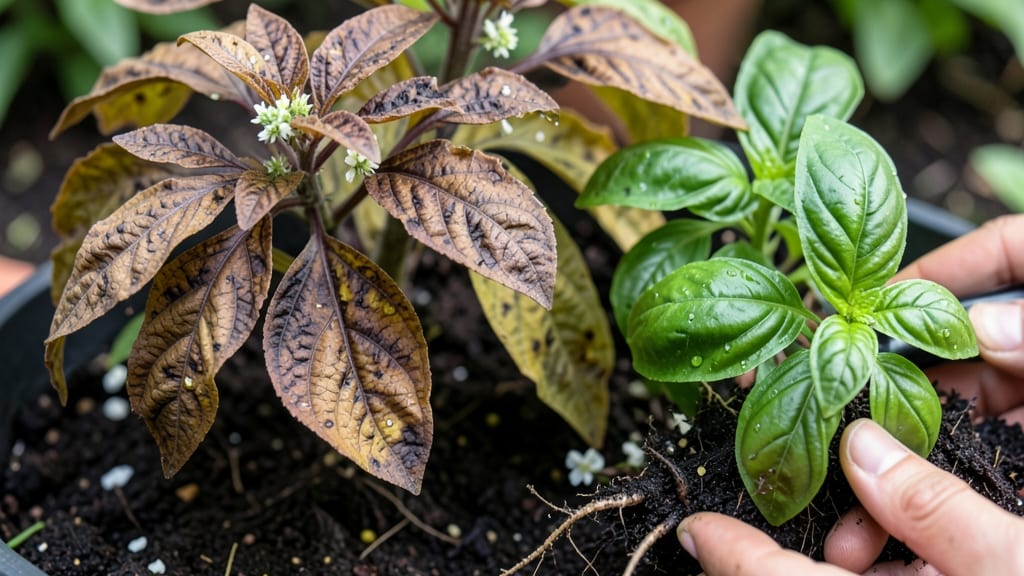
Brown leaves on your basil plant aren’t a death sentence—just a cry for help. 🌿 I’ve nursed back more than my share of crispy-edged basil, and the fix is simpler than you’d think.
Most of the time, it’s not even a disease, but a care routine that’s just a little off. The real culprit is usually overwatering (soggy soil = drowned roots) or underwatering (dry, brittle leaves), though pests and nutrient burn can sneak up too.
Start by checking the soil: if it’s damp more than an inch down, hold off on watering. If it’s bone-dry, give it a deep drink—but never let it sit in standing water. Within a week, you’ll see fresh green growth pushing out as the plant recalibrates.
The key is consistency: basil wants moist but well-draining soil, bright light (not scorching afternoon sun), and regular pruning to keep it bushy. I’ve revived plants that looked like they’d given up—all it takes is adjusting one thing at a time.
This works for container basil, in-ground plants, and even window-sill growers. Let’s get those leaves perky again—no green thumb required.
Root Causes Of Basil Leaf Discoloration
When your basil plant’s leaves turn brown, it’s often a cry for help—your plant is telling you something’s off. Understanding the why behind the browning is the first step to saving your herb garden.
Below, we break down the most common culprits, along with the science behind them, so you can diagnose and fix the issue fast.
Basil thrives on moisture but hates soggy roots. When soil stays too wet, oxygen can’t reach the roots, leading to root rot (a fungal infection caused by Pythium or Phytophthora). This disrupts nutrient uptake, causing leaves to yellow first, then brown and crisp at the edges.
- Signs: Wilting despite wet soil, mushy stems, brown patches starting at the base.
- Why it happens: Basil prefers well-draining soil with a pH of 6.0–7.0. If your pot lacks drainage holes or you’re watering on a schedule (rather than checking soil moisture), roots suffocate.
- Actionable fix:
- Let the top 1–2 inches of soil dry out between waterings.
- Repot in a container with holes and a mix of potting soil + perlite (50/50).
- If root rot is severe, trim affected roots with sterilized scissors and treat with a fungicide like copper-based spray.
Basil loves sunlight, but too much direct heat (especially in hot climates or midday sun) can scorch leaves. When temperatures exceed 90°F (32°C), leaves lose moisture faster than roots can replace it, leading to oxidative stress and browning, often along leaf edges.
- Signs: Crispy, papery brown edges; leaves feel dry or brittle; wilting in peak afternoon heat.
- Why it happens: Basil’s native Mediterranean climate means it prefers bright, indirect light with afternoon shade. High UV exposure + low humidity = leaf desiccation.
- Actionable fix:
- Move pots to a shadier spot (e.g., under a patio cover) during 11 AM–3 PM.
- Mist leaves early in the morning to boost humidity.
- Use shade cloth (30–50%) if growing outdoors in extreme heat.
Basil is a light feeder, and too much fertilizer (especially high-nitrogen or salt-based) burns roots, while deficiencies cause stress. Brown patches often appear when plants lack magnesium, potassium, or iron, or when soil salinity spikes.
| Deficiency | Symptoms | Cause | Fix |
|---|---|---|---|
| Magnesium (Mg) | Brown spots between leaf veins (interveinal chlorosis). | Poor soil structure or overwatering leaches Mg. | Apply Epsom salt (1 tbsp/gallon of water) every 2 weeks. |
| Potassium (K) | Brown edges or tips; weak stems. | Overwatering flushes K out, or soil is too sandy. | Use a balanced liquid fertilizer (5-5-5) diluted to half-strength. |
| Iron (Fe) | Yellowing between veins (chlorosis), then browning. | Alkaline soil (pH >7.0) locks out Fe. | Lower pH with vinegar (1 tbsp/gal) or sulfur; use chelated iron. |
| Fertilizer Burn | Brown crusty patches on soil surface; leaves wilt suddenly. | Too much salt/synthetic fertilizer. | Flush soil with water until it runs clear; avoid fertilizing for 2 weeks. |
Sap-sucking pests (like aphids, spider mites, or whiteflies) inject toxins that cause brown, curled, or stippled leaves. Fungal diseases (e.g., downy mildew) thrive in humid conditions, creating dark brown spots with yellow halos.
- Signs:
- Sticky residue (honeydew) + ants (aphids).
- Fine webbing (spider mites).
- Fuzzy gray mold (downy mildew).
- Why it happens: Weak plants (from stress) attract pests, while poor airflow promotes fungal spread.
- Actionable fix:
- Pests: Spray with neem oil (1 tsp + 1 tsp soap/quart water) or introduce ladybugs.
- Fungus: Remove infected leaves; apply copper fungicide and space plants for airflow.
Basil is a tender annual and struggles below 50°F (10°C). Cold snaps cause cellular damage, leading to brown, mushy leaves. Wind desiccates leaves by increasing transpiration rates faster than roots can compensate.
- Signs: Brown, water-soaked patches; leaves curl or blacken.
- Why it happens: Basil’s native Mediterranean climate means it’s adapted to mild winters. Sudden temperature drops or drafts shock the plant.
- Actionable fix:
- Move pots to a protected spot (e.g., near a wall or under eaves).
- Cover with frost cloth if temps dip below 40°F (4°C).
- Prune damaged leaves to encourage new growth once temps rise.
Now that you’ve identified the cause, the next step is reviving your basil. Each issue above has a targeted solution—so pick the one that matches your plant’s symptoms and get growing!
Revive Your Basil Fast
Brown leaves on your basil? Don’t toss it yet! With a few simple fixes, you can nurse your plant back to health and keep those fragrant leaves thriving. Below, we’ve mapped the most common causes to practical solutions—plus prevention tips to avoid future stress.
Signs: Yellowing or mushy brown leaves, wilting despite wet soil, or a foul smell at the base.
Fix It: 🔥 Step 1: Pause Watering Immediately Stop adding water until the soil dries out. Basil hates soggy roots—overwatering suffocates them and invites fungal diseases like root rot.
🍳 Step 2: Check the Roots Gently remove the plant from its pot and inspect the roots. Healthy roots are firm and white; rotten roots are brown, mushy, or smell bad. Trim away the damaged ones with clean scissors.
👨🍳 Step 3: Repot in Fresh Soil Use a pot with drainage holes (if it doesn’t have them, add a layer of pebbles at the bottom). Fill it with a well-draining potting mix—basil thrives in a blend of garden soil, compost, and perlite (or coconut coir).
🥘 Step 4: Adjust Your Watering Routine Water only when the top 1–2 inches of soil feel dry. Stick your finger in the soil to test—if it’s damp, wait another day. Water deeply but infrequently, ensuring excess drains away completely.
Prevent It: ✨ Upgrade your pot to one with drainage holes if it lacks them. 🌡️ Monitor humidity—basil prefers moderate moisture but despises wet feet. Avoid placing it in saucers of standing water.
Signs: Crispy, dry brown edges on leaves, soil pulling away from the pot, or leaves curling inward.
Fix It: 🔥 Step 1: Water Thoroughly Give your basil a deep drink—water until it runs out of the drainage holes. This encourages roots to grow deeper and retain moisture.
🍳 Step 2: Mulch to Retain Moisture Sprinkle a thin layer of organic mulch (like straw or shredded leaves) around the base of the plant. This slows evaporation and keeps roots consistently hydrated.
👨🍳 Step 3: Adjust Your Schedule Basil needs consistent moisture, especially in hot or dry conditions. Water every 1–2 days in summer, or when the soil feels dry to the touch. Morning watering is best—it gives leaves time to dry before evening.
🥘 Step 4: Move It to a Shadier Spot (Temporarily) If your basil is struggling, relocate it to partial shade for a few days to reduce water loss through transpiration. Once revived, gradually reintroduce it to sunlight.
Prevent It: 💡 Group plants together to create a microclimate that retains humidity. 🎯 Use self-watering pots or a drip irrigation system for hands-off hydration.
Signs: Brown, crispy patches on leaves, especially on the side facing direct sun, or leaves wilting in the afternoon heat.
Fix It: 🔥 Step 1: Provide Afternoon Shade Basil loves sunlight but can’t handle intense midday heat. Move your plant to a spot with morning sun and afternoon shade (like under a sheer curtain or near a lattice).
🍳 Step 2: Mist the Leaves Lightly mist the foliage in the early morning or late evening to cool the plant down. Avoid wetting leaves in direct sun—this can cause leaf burn.
👨🍳 Step 3: Increase Airflow Place a small fan nearby on a low setting to improve circulation. This mimics natural breezes and helps leaves evaporate excess moisture, reducing heat stress.
🥘 Step 4: Water at the Base Instead of overhead watering, water directly at the soil level to keep leaves dry and prevent them from overheating.
Prevent It: ✨ Grow basil in containers for easy relocation if temperatures soar. 🌡️ Harvest regularly—overcrowded plants stress more in heat.
Signs: Brown spots with yellow halos, white fuzzy growth (mold), or slimy leaves.
Fix It: 🔥 Step 1: Isolate the Plant Move your basil away from other herbs to prevent the spread of disease.
🍳 Step 2: Prune Infected Leaves Use sterilized scissors to snip off brown or spotted leaves. Dispose of them in the trash (not compost)—don’t let the pathogens spread.
👨🍳 Step 3: Treat with Fungicide or Baking Soda Spray For mild cases, mix 1 teaspoon of baking soda + 1 quart of water + a few drops of dish soap in a spray bottle.
Spray the leaves thoroughly every 7–10 days. For severe infections, use a copper-based fungicide (follow label instructions).
🥘 Step 4: Improve Airflow and Light Ensure the plant has space between leaves and isn’t overcrowded. Trim back nearby plants if needed.
Prevent It: 💡 Water at the base (not overhead) to keep leaves dry. 🎯 Avoid wetting leaves when watering—use a watering can with a narrow spout or a drip system.
Signs: Brown, wilted leaves, especially on younger growth, or blackened stems after a frost.
Fix It: 🔥 Step 1: Move Indoors Immediately If temperatures drop below 50°F (10°C), bring your basil inside to a sunny windowsill or under grow lights.
🍳 Step 2: Trim Damaged Leaves Cut back any brown or blackened leaves with clean scissors. Healthy green leaves will regrow quickly.
👨🍳 Step 3: Acclimate Gradually If you plan to move it back outside, do so slowly over 5–7 days. Start with a few hours in a sheltered spot and gradually increase exposure.
🥘 Step 4: Protect from Future Chills If you’re growing basil outdoors in cooler climates, use a cloche, row cover, or cold frame to shield it from frost.
Prevent It: ✨ Monitor weather forecasts and bring potted basil inside before nighttime temps drop. 🌡️ Grow basil in containers for easy relocation when temperatures dip.
Signs: Yellowing between leaf veins (iron deficiency), purple stems (phosphorus deficiency), or overall stunted growth.
Fix It: 🔥 Step 1: Test Your Soil Use a simple soil test kit to check pH and nutrient levels. Basil prefers a slightly acidic to neutral soil (pH 6.0–7.0).
🍳 Step 2: Fertilize Gently Feed your basil with a balanced liquid fertilizer (like 10-10-10) diluted to half strength. Apply every 4–6 weeks during the growing season. Avoid over-fertilizing—it can burn roots.
👨🍳 Step 3: Boost Specific Nutrients
- For yellowing leaves (iron/chlorosis): Sprinkle iron chelate or use a compost tea.
- For purple stems (phosphorus): Add bone meal or a phosphorus-rich fertilizer.
🥘 Step 4: Improve Soil Quality Mix in compost or well-rotted manure to replenish organic matter. Basil loves rich, fertile soil but can suffer in heavy clay or sandy soils.
Prevent It: 💡 Rotate crops if growing basil in the ground—don’t plant it in the same spot year after year. 🎯 Use organic mulch to slowly release nutrients into the soil.
Frequently asked questions
Why do basil leaves turn brown at the edges first?
This is usually a sign of underwatering or heat stress. When basil doesn't get enough moisture, the outer edges dry out first because they're furthest from the plant's water supply. Extreme heat also causes leaf edges to crisp up as moisture evaporates faster than roots can replace it. Check soil moisture by sticking your finger 1 inch deep—if it's dry, water thoroughly.
Can I save my basil if all the leaves are brown?
Not necessarily—but don't give up yet! If the stems are still green and firm, there's a good chance new leaves will grow. Trim all brown leaves back to healthy green growth, adjust your care routine (check watering, light, and soil), and keep the plant in stable conditions. With proper care, basil can regrow surprisingly fast from its base.
What's the difference between brown leaves from overwatering vs. underwatering?
Overwatered basil shows yellowing leaves that turn brown and mushy, often starting at the base, with a foul smell from rotting roots. Underwatered basil has crispy, dry brown edges while the center stays green, and the soil pulls away from the pot edges. The key difference: check the soil—if it's soggy, you're overwatering; if bone-dry, you're underwatering.
Is it safe to harvest basil with brown leaves?
Only harvest the green parts—never use brown or yellow leaves in cooking as they can make your dishes taste bitter. For best flavor, always pick leaves from the top third of the plant, leaving at least half the plant intact to keep it growing. Brown leaves won't recover, so remove them completely to redirect the plant's energy to new growth.
How often should I fertilize basil to prevent brown leaves?
Basil is a light feeder—over-fertilizing causes more problems than deficiencies. Use a balanced liquid fertilizer (5-5-5) diluted to half-strength every 4-6 weeks during growing season (spring-fall). For organic options, compost tea works well. Always water thoroughly after fertilizing to prevent salt burn, which causes brown leaf tips.