
Planting
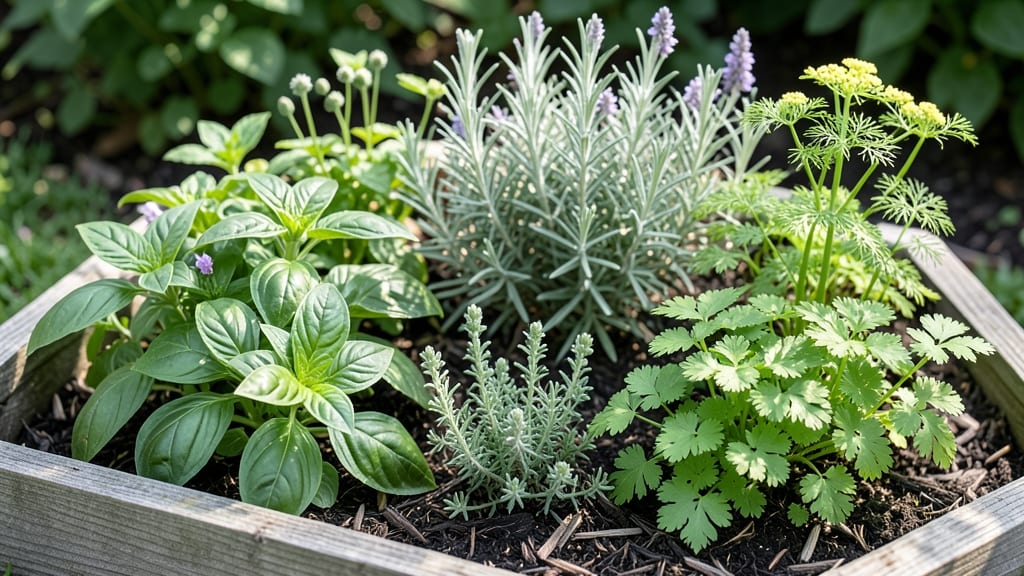
Staring at a mysterious herb plant identifier in your garden? 🌿 I’ve wrestled with this too—until I learned to spot the tiny details that reveal whether it’s rosemary, thyme, or something you’d rather not eat. The secret lies in leaf shape, stem texture, and even how it smells when crushed.
Start with the basics: count the leaf edges (smooth or jagged?), check the stem (hairy or smooth?), and note the aroma. Basil smells like cloves, mint like candy, and rosemary like pine needles—those clues cut through the confusion instantly.
For tricky pairs like dill vs. cilantro, a quick rub between your fingers makes all the difference.
You’ll never second-guess your harvest again. Within minutes, you’ll confidently ID plants at the farmers’ market, in your windowsill garden, or even wild in the neighborhood. The right tools (like a free plant ID app) make it even easier—just snap a photo and let the tech do the work.
Works for beginners, urban gardeners, or anyone who’s ever grabbed the wrong herb. Here’s how to turn uncertainty into instant ID skills—no green thumb required.
The Science Behind Misidentification
Misidentifying herbs—whether in your garden, a wild patch, or a grocery store—isn’t just a matter of inexperience. It’s often rooted in biological, environmental, and human factors that trick even seasoned gardeners.
Understanding these causes helps you sharpen your eye and avoid costly mistakes (like confusing deadly nightshade for basil!). Here’s why it happens—and how to outsmart it.
Some plants are evolutionary doppelgängers, designed to fool pollinators or predators. For example: - Wild Parsnip vs. Queen Anne’s Lace: Both have lacy white flowers, but wild parsnip’s sap causes phytophotodermatitis (a painful skin reaction when exposed to sunlight).
The key? Stem color—Queen Anne’s Lace has hollow stems, while wild parsnip’s are solid and purple-tinged. - Poison Hemlock vs. Wild Carrot: Hemslock’s purple-spotted stems and musty odor (when crushed) are dead giveaways, but its umbrella-shaped flowers mimic edible alternatives. Pro tip: Smell test first—toxic plants often have a bitter or foul scent.
Actionable fix: Use a field guide or app to cross-reference leaf arrangement, stem texture, and flower structure—never one trait alone.
Herbs don’t wear the same "uniform" year-round. Light, soil, and weather can drastically alter their appearance:
- Basil in Shade: Normally vibrant green, but when grown in low light, it turns yellowish or purple-tinged—easily mistaken for mint or lemon balm.
- Rosemary in Heat Stress: Drought or extreme heat causes needle-like leaves to curl or drop, making it resemble lavender or even cedar.
- Chives vs. Garlic Chives in Winter: Both turn brown and brittle, but garlic chives develop tiny bulbils (mini onions) at the stem tips—a dead giveaway.
Actionable fix: Track growth stages—take photos monthly to spot subtle changes. Use moisture sensors to avoid stress-induced mutations.
Even with perfect plants, our brains play tricks on us. Here’s how: 1. Over-Reliance on Color: Many herbs (like cilantro vs. poison hemlock) share green hues, but leaf shape and vein patterns differ. Hemlock leaves are fern-like and hollow, while cilantro’s are lacy and solid.
- Ignoring the Roots: Ginseng vs. wild ginger look identical above ground, but ginseng has a reddish, forked root, while wild ginger’s is brown and fibrous.
- Assuming Size = Species: Young stinging nettle plants have smooth edges, but mature ones develop teeth—easy to mistake for lamb’s quarters (edible) if you’re not checking closely.
- Skipping the Smell Test: Anise hyssop smells like licorice, while agrimony has a sour, vinegary scent.
Train your nose! 5. Not Checking for Seeds/Fruit: Dill vs. fennel both have feathery leaves, but fennel produces oval, papery fruits, while dill’s are slender and flat.
Actionable fix: Carry a mini magnifying glass (or use your phone’s camera) to inspect leaf undersides, stem nodes, and seed heads.
Even the best herb plant identifier apps (like PlantNet or iNaturalist) can fail because:
- Low-Quality Photos: Blurry or poorly lit images miss key details (e.g., hairy stems on wolfsbane vs. smooth ones on monkshood).
- Regional Variants: A European nettle may not match your North American database entry.
- Hybrids and Cultivars: ‘Sweet Basil’ vs. ‘Thai Basil’ can look entirely different, even though they’re the same species.
Actionable fix: Combine tech with tactile checks—rub leaves, snap stems, and note texture, flexibility, and aroma. When in doubt, submit to a local botanical society for verification.
Some gardeners assume a plant is safe if it "looks close enough" to an edible herb.
But one wrong ID can be fatal: - Deadly Nightshade (Atropa belladonna) vs. Henbane (Hyoscyamus niger): Both have bell-shaped flowers, but nightshade’s berries are black and shiny, while henbane’s are yellowish and wrinkled. - Water Hemlock (Cicuta spp.) vs. Wild Celery: The root’s chambered structure (like a honeycomb) is a red flag—water hemlock is one of the most toxic plants in North America.
Actionable fix: When harvesting wild herbs, follow the "three-part rule"—match leaf, stem, and root before consuming. Never eat anything unless you’re 100% certain.
Stress from insects or disease can warp a plant’s appearance:
- Aphids on Mint: Cause curling leaves and black soot mold, making it resemble wilted oregano.
- Powdery Mildew on Sage: Turns leaves white and brittle, mimicking dried-out lavender.
- Caterpillars on Dill: Chew jagged edges into leaves, making it look like damaged parsley.
Actionable fix: Inspect the undersides of leaves for pests. Use neem oil or insecticidal soap to treat infestations before they alter the plant’s ID.
Misidentification isn’t random—it’s a combination of biology, environment, and human oversight.
The good news? You can outsmart it by: ✅ Studying multiple traits (not just color). ✅ Using all your senses (touch, smell, taste—safely). ✅ Leveraging tech + traditional methods. ✅ When in doubt, walk away—some risks aren’t worth the guess.
Quick Fixes for Plant ID Struggles
Staring at a mysterious leaf or stem and wondering, "What in the world is this?" happens to every gardener—even the pros. The good news? With the right tools and a little know-how, you can turn confusion into confidence in minutes.
Below, we break down common plant ID challenges and offer practical, step-by-step solutions to solve them fast. Plus, we’ll share tips to prevent future guesswork so you can enjoy gardening without the frustration.
Cause: Your plant doesn’t match any database results, or apps keep giving you unrelated suggestions. Fix:
- 📸 Take High-Quality Photos – Lighting and angles matter! Snap clear shots of:
- The leaf (front and back—venation patterns are key!)
- The stem (hairy? smooth? ridged?)
- Flowers or buds (if present)
- Growth habit (vining? bushy? succulent-like?)
- 🔎 Use Advanced Search Tools – Try these instead of generic apps:
- iNaturalist (crowdsourced ID with expert verification)
- PlantNet (AI-powered, great for weeds and wild plants)
- Google Lens (upload a photo, then cross-check with a botanic database)
- 📚 Check Local Resources – Visit your extension office or a master gardener forum—they often have rare or regional plants in their archives.
✨ Pro Tip: If all else fails, describe it to a botanist on Reddit’s r/whatsthisplant or Facebook gardening groups. Include your location—many plants are regional!
Cause: Low-resolution photos, partial views, or apps misreading similar-looking plants (e.g., mint vs. oregano). Fix:
- 🔥 Narrow Down the Options – Use a two-step ID process:
- Family First: Is it a mint (Lamiaceae), carrot (Apiaceae), or lily (Liliaceae)? Apps like PictureThis let you filter by family.
- Leaf Shape & Arrangement: Alternate? Opposite? Whorled? (See this quick guide)
- 👨🍳 Compare with Known Samples – Rub leaves between your fingers (scent?), check for milky sap (milkweed?), or tooth-edged leaves (parsley family?).
- 🔪 Test the Stem – Snap it—does it bend without breaking (herbaceous) or snap cleanly (woody)? This tells you if it’s an annual, perennial, or shrub.
💡 Quick Fix: If the app suggests three unrelated plants, it’s likely a weed or invasive species. Search for "[your state] invasive plants with [leaf description]"—local databases are more accurate.
Cause: Basil vs. cilantro vs. dill vs. wild carrot—how do you tell them apart? Fix: Use this cheat sheet for tricky herb lookalikes:
| Plant | Key ID Features | Quick Test |
|---|---|---|
| Basil | Square stem, opposite leaves, strong clove scent | Pinch a leaf—crunchy, aromatic |
| Cilantro | Fern-like leaves, hollow stems, citrusy smell | Tear a leaf—bright green, lacy |
| Dill | Feathery leaves, yellow flowers, anise scent | Crush a leaf—licorice-like aroma |
| Wild Carrot | Fern-like but toothed leaves, white lacy flowers | Root is purple-spotted (if pulled) |
🎯 Prevention Tip: Label your plants at planting time with waterproof tags or twist ties. Add a photo of the mature plant to your phone’s notes for future reference.
Cause: Mistaking wild parsnip (toxic sap!) for Queen Anne’s lace or hemlock (deadly!) for wild carrot. Fix:
- 🚨 Memorize These Danger Zones:
- Hemlock (Conium maculatum): Purple-spotted stems, mousey odor, fern-like leaves. DO NOT TOUCH.
- Poison Hemlock vs. Wild Carrot: Hemlock has no purple root, and its flowers are all white (no red center).
- Wild Parsnip: Yellow flowers, sap causes severe burns—wear gloves if handling!
- 📊 Use the "Thumb Test": If you’re unsure, don’t eat it. Even edible plants can cause issues if misidentified.
🌡️ Safety Tip: If you suspect a toxic plant, take a photo from a distance, then research with "[plant name] + toxic" before touching.
Prevention is easier than fixing mistakes! Here’s how to stop guessing forever: 1. 📸 Create a "Plant Library" – Snap photos of every herb/plant you grow and organize by family (e.g., "Mints," "Nightshades").
- 📅 Track Growth Stages – Some plants (like mullein) look completely different as seedlings vs. mature. Log changes in a notebook or app like Gardenate.
- 🌍 Learn Your Region’s Common Plants – Focus on native weeds and herbs first.
Example: In the Pacific Northwest, oxeye daisy and English ivy are everywhere. 4. 🔄 Use a Hybrid Approach – Combine apps (for basics) + field guides (for details). Try "The New Sunset Western Garden Book" for regional IDs.
✨ Bonus: Invest in a hand lens (10x magnification)—it reveals leaf hairs, glandular dots, and other microscopic clues that apps miss!
Final Thought: The more you ID plants, the faster your brain automatically recognizes patterns. Start with 5 easy herbs (basil, mint, parsley, thyme, chives), master their quirks, then expand. Soon, you’ll be the go-to plant whisperer in your gardening circle! 🌱🔍
Frequently asked questions
How do I tell the difference between basil and mint at a glance?
Check the stem shape—basil has a square stem, while mint is round. Also, crush a leaf: basil smells like cloves, while mint has a bright, candy-like scent. Their leaf arrangements differ too—basil leaves grow opposite each other, while mint leaves are whorled (in circles).
Can I use a plant ID app if I don't have flowers or seeds?
Yes! Focus on leaf shape, arrangement, and texture—these are often enough. Take close-up photos of the leaf undersides (venation patterns matter) and stem texture (hairy vs. smooth). Apps like PlantNet work well without flowers, but include the growth habit (e.g., "creeping" or "upright") for better results.
What's the fastest way to ID a wild herb I found outdoors?
Use the three-sense rule: Look at leaf shape/edges, touch the stem (smooth? hairy?), and smell crushed leaves. For example, wild dill has feathery leaves and smells like licorice, while poison hemlock has purple-spotted stems and a musty odor. When in doubt, never eat it—some wild lookalikes are deadly.
Why does my herb plant look different from pictures online?
Herbs change with light, soil, and season. For example, basil in shade turns purple, while rosemary under stress may drop needles. Compare with multiple sources—some apps show mature plants, while others show seedlings. Check the leaf texture (crispy? fuzzy?) and growth pattern (spreading? bushy?) for clues.
What's the most common herb misidentified as something else?
Cilantro is the top culprit—many confuse it with wild carrot or poison hemlock. The key difference: cilantro has lacy, solid leaves and a citrusy scent, while hemlock has hollow stems and a musty odor. Always check the stem first—if it's hollow, walk away!