
Planting
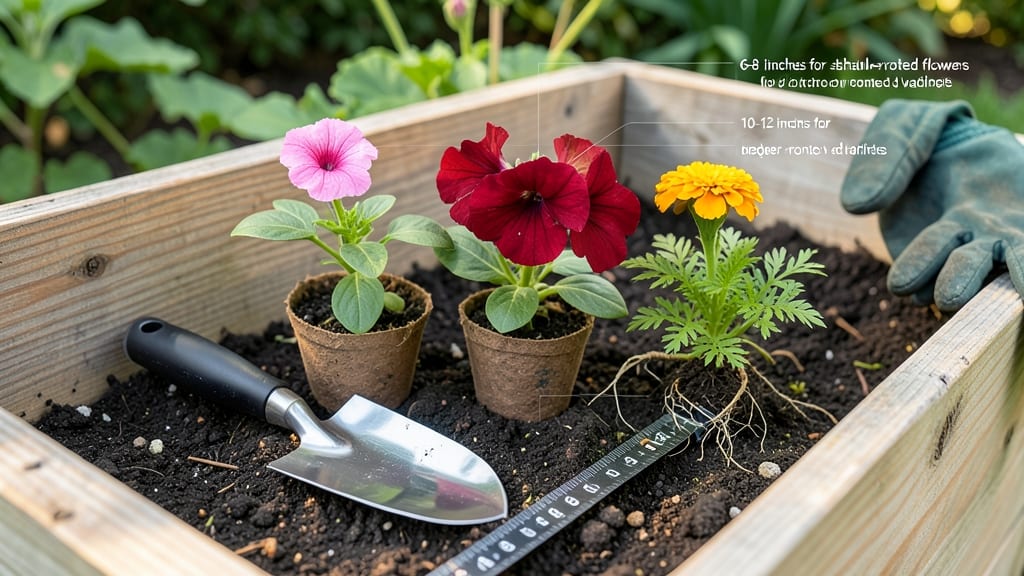
To determine how deep a planter box should be for flowers, aim for 6 to 12 inches for annuals and perennials, while shrubs and trees need 18 to 24 inches. Shallow-rooted varieties like pansies do well in 6-inch containers, while bulbs require at least 8 inches of soil.
A planter box's depth directly impacts root growth and plant health. 🌱 Most flowers spread horizontally rather than vertically, so even 6-inch containers work for shallow-rooted annuals like marigolds or pansies. However, bulbs need extra space—8 inches minimum—to store nutrients and develop properly over time.
The key is matching your box height to the plant's mature root zone, which you can find in seed packets or plant care guides. For example, lavender thrives in 12-inch boxes because its roots grow deeper than many annuals.
If you're working with limited space, consider layered planting or raised beds with adjustable depths. Drainage holes are non-negotiable—roots rot quickly in soggy soil, no matter how deep the container.
I always check the plant's tag for root depth requirements before buying a planter, as this simple step prevents future headaches.
💡 In This Article
- Root Depth Requirements for Different Flower Types
- Choosing Planter Box Depth by Flower Variety
Root depth requirements for different flower types
Root systems determine how much vertical space your flowers need to thrive. Most annuals and perennials develop shallow but wide-spreading roots that only penetrate 6-12 inches deep, which is why standard planter boxes work perfectly.
For example, petunias and geraniums—common container plants—typically grow roots just 4-6 inches deep but spread 12-18 inches outward, making them ideal for 8-inch boxes. The science here is fascinating: these plants prioritize horizontal expansion to maximize water and nutrient absorption from the soil surface.
Bulbs represent a special case because they store energy underground during dormancy. Tulips and daffodils need at least 8 inches of soil to develop properly, while larger bulbs like alliums require 10-12 inches.
The deeper the bulb, the more nutrients it can store in its scalelike layers, which translates to bigger, healthier blooms. 🌸 What's often overlooked is that bulbs also need room to push upward—a 6-inch box would leave them stunted, unable to reach their full potential.
Drainage plays a critical role in root health, especially in containers. Without proper holes, roots suffocate in waterlogged soil, leading to rot within 3-5 days—regardless of box depth. This is why even shallow-rooted plants need containers with 1-2 inches of drainage space at the bottom.
For instance, succulents like sedum only need 4-6 inches of soil but require extra drainage to prevent root rot, making terracotta pots with built-in holes ideal.
Perennials like lavender and salvia have deeper taproots that can reach 12-18 inches down, which is why they struggle in shallow containers. These roots anchor the plant and access moisture from deeper soil layers.
If you're growing perennials in planters, opt for 12-inch boxes or deeper—anything less forces the roots to compete for space, weakening the plant over time. The trade-off? Deeper boxes mean more soil volume, which translates to better water retention and nutrient availability.
For shrubs and small trees, the rules change dramatically. Plants like boxwoods or dwarf fruit trees need 18-24 inches of depth to support their extensive root systems. The root ball of a 3-gallon container-grown shrub can measure 12-18 inches deep, so transplanting into a 12-inch planter would leave it root-bound.
Here, the soil volume matters just as much as depth—aim for a container that's 2-3 times wider than the root ball to give roots room to spread.
One common mistake is assuming all flowers have the same depth needs. For instance, pansies thrive in 6-inch boxes, while roses (even dwarf varieties) need 18+ inches. Always check the plant's tag or a reliable gardening guide for specific recommendations.
The right depth ensures your flowers grow strong, bloom abundantly, and last through multiple seasons without stress.