
Planting
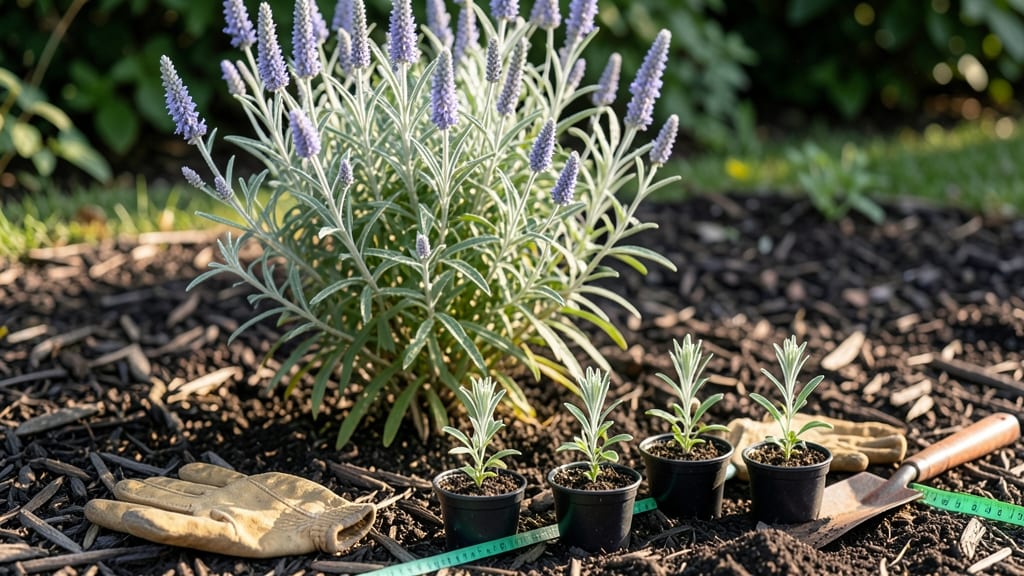
To plant Russian Sage with the right spacing means the difference between a lush, long-blooming border and a struggle with leggy, weak stems—but how far apart to plant Russian Sage is where many gardeners go wrong.
If you’ve ever watched your Russian Sage stretch thin or fight for space in your garden, you’re not alone. The key to those bushy, vibrant plants you see in catalogs? Spacing them 18 to 24 inches apart—not the crowded 12-inch guesswork that so many gardeners fall into.
Russian Sage thrives in full sun and well-drained soil, but its mature size—up to 6 feet tall—means cramming it in too close leads to competition for light and nutrients.
Too much space, and you’ll waste room on a plant that spreads slowly. Getting it right ensures stronger stems, bigger blooms, and fewer pruning headaches later.
In this guide, I’ll break down the exact spacing you need for perennials vs. young plants, how to adjust for borders or mass planting, and which companion plants keep your Russian Sage looking its best without stealing its spotlight.

Ideal Russian sage spacing by plant type: perennial vs. annual guidelines
Russian sage (Perovskia atriplicifolia) thrives when given the right amount of space to spread its silvery foliage and fragrant blooms. Unlike many drought-tolerant perennials, proper spacing directly impacts its bushiness and bloom longevity.
As a perennial, mature plants need room to establish strong root systems, while young transplants benefit from slightly closer spacing to encourage branching.
For established perennials, aim for 18-24 inches apart in garden beds. This spacing allows airflow, reducing fungal risks while giving each plant enough room to reach its mature height of 4-6 feet.
If you're planting young transplants or starting from seed, 12-18 inches apart works better to promote bushier growth before they fill out.
Container gardening changes the game entirely. In pots, Russian sage spacing shrinks dramatically—1 plant per 12-inch pot or 2-3 plants in 18-inch containers. Overcrowding in containers leads to root competition, stunting growth and reducing bloom production. Always use well-draining soil to prevent soggy roots in confined spaces.
| Plant Type | Spacing (Inches) | Container Size | Notes |
|---|---|---|---|
| Established Perennial | 18-24 | Not recommended | Full sun, well-drained soil |
| Young Transplant | 12-18 | 12-inch pot (1 plant) | Encourages bushier growth |
| Mature Perennial (Border) | 24 | N/A | Prevents overcrowding |
| Container Grouping | 12-18 (per plant) | 18-inch pot (2-3 plants) | Use well-draining mix |
When planning your Russian sage layout, consider your garden's purpose. For mass planting in borders or slopes, stretch spacing to 24 inches apart to create a lush, textured backdrop. In mixed borders with shorter perennials, 18-inch spacing works well to showcase its height without overshadowing neighbors.
If you're using Russian sage as a privacy screen, plant 3-4 feet apart in rows to ensure unbroken foliage by midsummer. This spacing also allows for easy maintenance—pruning dead blooms becomes simpler when plants aren't fighting for space.
Always mulch around the base to retain moisture and suppress weeds.
For container gardens, choose pots with drainage holes and fill them with a 50/50 mix of potting soil and perlite. This lightweight medium prevents root rot while accommodating the plant's drought-tolerant nature.
In containers, Russian sage may bloom 2-3 weeks later than in-ground plants, but proper spacing ensures stronger stems to support those lavender-blue flower spikes.
One common mistake is assuming drought tolerance means no spacing rules. Russian sage actually needs room to breathe—crowded plants develop weak stems and fewer blooms.
If you're working with limited space, opt for dwarf varieties like 'Little Spire', which max out at 2-3 feet tall and can be spaced 12 inches apart.
Pro tip: Use a garden flag or string line to mark your planting spots before digging. This helps maintain consistent spacing across large beds. For sloped areas, stagger plants in a stair-step pattern to prevent erosion while keeping airflow optimal. Always water deeply after planting to encourage root establishment.
Remember, Russian sage spacing isn't set in stone—adjust based on your microclimate. In hotter climates, slightly wider spacing reduces competition for water. In cooler zones, closer spacing can help plants reach full height faster. The key is observing how your plants respond and adjusting over time.
5 Common spacing mistakes that stunt Russian sage growth (and how to fix them)
Russian sage (Perovskia atriplicifolia) thrives when given enough room to spread its roots and branches, but many gardeners unintentionally crowd or over-space these plants. The ideal spacing of 18-24 inches apart for mature plants might seem generous, but it’s critical for preventing leggy growth or stunted blooms.
Even drought-tolerant perennials like Russian sage need proper airflow to avoid fungal issues and weak stems.
One of the biggest mistakes is assuming that because Russian sage is drought-resistant, it can handle tight spaces. In reality, overcrowding leads to competition for nutrients and increased humidity around the foliage, creating perfect conditions for powdery mildew.
On the flip side, spacing plants too far apart can leave gaps in your garden design and reduce the visual impact of those signature lavender-blue spikes.
Another overlooked issue is soil compaction from over-tight planting. When you squeeze too many plants into a small area, their roots struggle to penetrate deeply, leading to shallow root systems that can’t support the plant’s 4-6 foot height.
This often results in plants that flop over or produce fewer blooms.
⚠️ Warning: The Wrong Spacing Costs You Blooms!
Russian sage needs 18-24 inches apart at maturity. Planting too close (12 inches or less) causes crowded stems, while spacing too far (36+ inches) wastes space and reduces visual density. For young transplants, start with 12-18 inches and adjust as they grow.
✅ Correct spacing = bushier growth, stronger stems, and longer bloom seasons.
If you’ve already planted Russian sage too closely, don’t panic—corrective pruning can help. In early spring, cut back one-third of the oldest stems to encourage new growth from the base.
This opens up space between plants and allows remaining stems to thicken and strengthen. Just avoid heavy pruning in late summer, as this can reduce next year’s flower production.
For containers, the rule changes slightly: use one plant per 12-inch pot for young sages and one per 18-inch pot for mature plants. Overcrowding in pots leads to root-bound stress, while under-potting limits growth potential.
Always ensure containers have drainage holes to prevent soggy roots, which Russian sage hates.
Finally, resist the urge to tuck Russian sage into tight borders or foundation plantings. This perennial needs room to fluff out naturally. Instead, pair it with low-growing companions like thyme or sedum, which won’t compete for space.
With the right spacing, your Russian sage will reward you with vibrant blooms from midsummer to frost—and minimal maintenance.