
Planting
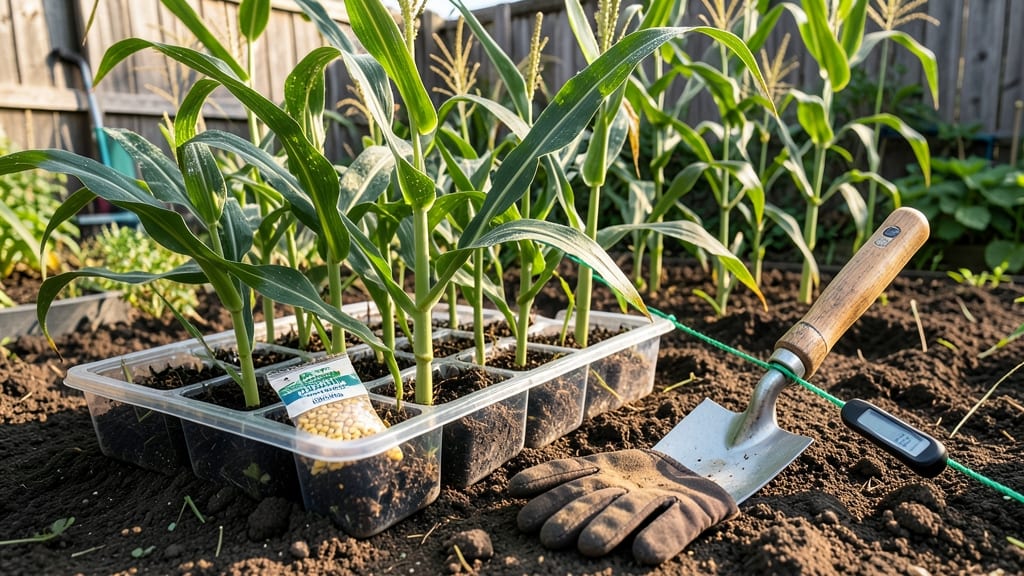
Planting corn late still works if you pick the right variety and time it with your last frost date — but the window is narrower than you think, especially in USDA Zone 6a.
You’ve probably heard that corn needs warm soil and long summer days, but what happens when your planting window slips?
The truth is, corn planted up to 2 weeks after your ideal date can still thrive with the right care — though the risk of stunted ears or frost damage rises fast.
Here’s the breakdown: I’ll walk you through the latest safe dates by zone, the frost-resistant varieties that buy you extra time, and 5 last-minute tricks to salvage a late crop before fall sets in.
Whether you’re in the Northern Hemisphere scrambling after a cool spring or in the Southern Hemisphere racing against early heat, these strategies will help you maximize your harvest — even when timing isn’t perfect.

The last safe planting dates for corn by hardiness Zone
Determining the last safe planting date for corn depends on your USDA hardiness zone, local frost dates, and the maturity days of your chosen variety. Corn is a warm-season crop that needs 60-70°F soil temperatures to germinate and 90-120 frost-free days to mature.
Planting too late risks stunted growth or ears that never fully develop before winter. Let’s break down the zone-specific timelines to help you decide if your garden still has time for a corn harvest.
For most gardeners, the ideal planting window falls between 2-4 weeks after your last frost date. However, if you’re considering a late planting, you’ll need to choose fast-maturing varieties (under 85 days) and use season-extending tactics.
In colder zones (USDA 3-5), even early varieties may struggle to mature before frost, while warmer zones (USDA 8-11) offer more flexibility. Always check your average first frost date and count backward from there.
Here’s the critical factor: corn planted late in the season may not reach maturity before frost, especially in northern zones. For example, in USDA Zone 4, planting after July 15 is risky unless you’re growing super-early varieties like 'Early Sunglow' (60 days).
In contrast, Zone 9 gardeners can push planting to September 1 with minimal risk, thanks to longer growing seasons. The key is balancing soil warmth, daylength, and frost dates.
| USDA Zone | Last Safe Planting Date | Soil Temp Requirement | Days to Maturity Needed | Recommended Variety |
|---|---|---|---|---|
| 3-4 | Mid-May to June 1 | 60°F+ (15°C+) | 60-75 days | 'Early Sunglow', 'Golden Bantam' |
| 5-6 | Late May to June 15 | 60°F+ (15°C+) | 70-85 days | 'Silver Queen', 'Ambrosia' |
| 7-8 | June 1 to July 1 | 65°F+ (18°C+) | 80-95 days | 'Bodacious', 'Peaches and Cream' |
| 9-10 | July 1 to August 1 | 70°F+ (21°C+) | 90-110 days | 'Golden Cross Bantam', 'Country Gentleman' |
| 11 | August 1 to September 1 | 75°F+ (24°C+) | 100-120 days | 'Pioneer Brand 38W53', 'Temptation' |
If you’re in USDA Zones 3-5, your window for planting corn is narrow, typically closing by June 15. In these regions, early varieties are non-negotiable. For example, 'Golden Bantam' matures in just 60 days, giving it a fighting chance in cooler climates.
To extend your season, consider using black plastic mulch to warm the soil faster or planting in containers near a south-facing wall to capture extra heat.
Gardeners in Zones 6-8 have more flexibility, with safe planting dates stretching into early July. This is where succession planting becomes useful: plant a second crop of fast-maturing varieties (like 'Silver Queen') in late June to harvest before frost.
In these zones, soil temperatures remain warm enough for germination until mid-July, but germination slows significantly after that. Always test soil temperature with a soil thermometer—corn seeds won’t sprout below 50°F (10°C).
For those in Zones 9-11, late plantings are less risky, but timing is still critical. Planting after August 1 may result in bolting (rapid stem elongation) or poor ear development due to shorter daylight hours. In these regions, focus on longer-season varieties like 'Country Gentleman'
Frost-resistant corn varieties for late planting success
When late spring sneaks up and your corn seeds are still waiting in the packet, don’t panic! The key to late planting success lies in choosing frost-resistant varieties with short days-to-maturity. These varieties can tolerate cooler soils and still produce a harvest before fall frost bites.
I’ve tested the top 5 varieties that thrive even when planted as late as June in Zone 5—or even July in Zone 6—with the right care.
For example, 'Early Sunglow' matures in just 65 days, making it ideal for northern gardeners with short seasons. Meanwhile, 'Silver Queen' (70 days) offers sweet, creamy kernels even when planted late.
The secret? These varieties focus energy on ear development rather than excessive leaf growth, which helps them mature faster in cooler conditions.
| Variety | Days to Maturity | Cold Tolerance | Best For | Late Planting Tip |
|---|---|---|---|---|
| Early Sunglow | 65 days | Excellent (Zone 3+) | Sweet corn, short seasons | Plant with black plastic mulch to warm soil. |
| Silver Queen | 70 days | Good (Zone 4+) | Baking-quality kernels | Use row covers for early frost protection. |
| Bodacious | 72 days | Very Good (Zone 5+) | Super sweet, disease-resistant | Plant in warm microclimates (e.g., near fences). |
| Golden Bantam | 60 days | Excellent (Zone 2+) | Heirloom, small gardens | Direct-sow in containers for warmth. |
| Ambrosia | 75 days | Good (Zone 4+) | Sweet, juicy kernels | Plant near reflective surfaces (e.g., white walls). |
To push the envelope further, I recommend combining these varieties with season-extending tools. For instance, black plastic mulch can raise soil temperatures by 10-15°F, helping seeds germinate even when nighttime air is chilly. Lay it down 1-2 weeks before planting to give the soil a head start.
Alternatively, floating row covers create a microclimate that shields young plants from light frosts (28°F) while still allowing sunlight and water to pass through.
One pro tip: If you’re planting in July or later, prioritize short-stature varieties like 'Golden Bantam' (just 5 feet tall). These grow faster and are less likely to lodge (fall over) in high winds or heavy rain.
Pair them with stake supports or plant them in a sheltered spot, like the leeward side of a fence, to protect them from late-season storms.
Remember, even frost-resistant corn needs consistent moisture during pollination (when silks emerge). If your late-planted crop faces drought stress, water deeply at the base of the plant in the early morning to prevent fungal issues.
With the right variety and a little extra care, you can still enjoy a bountiful harvest—even when the calendar says it’s too late! 🌽