
Planting
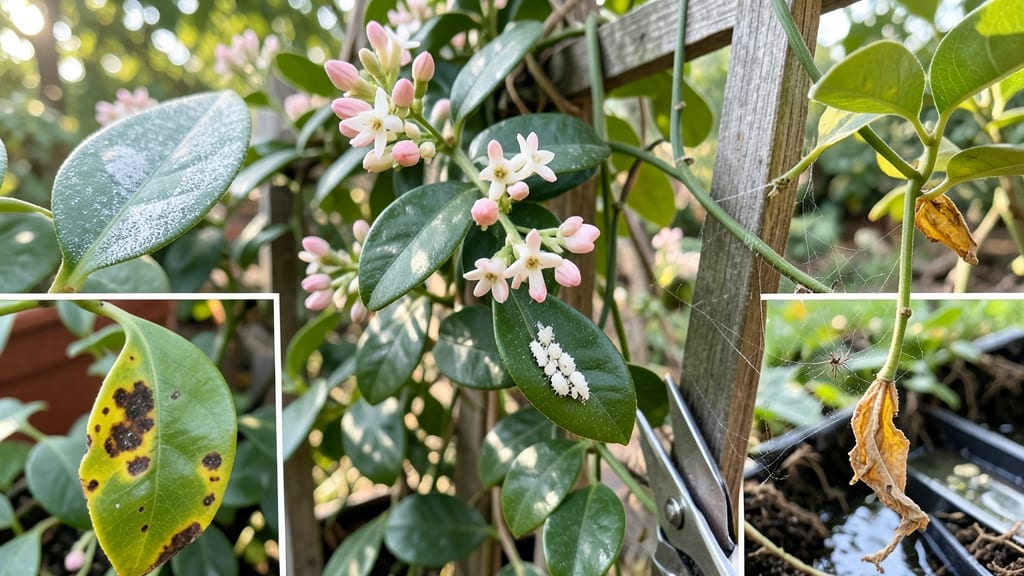
Your jasmine plant problems aren’t just sad—they’re screaming for help. 🌿 Root rot and overwatering are the usual culprits, but spider mites and powdery mildew can sneak in too.
The good news? Most jasmine plant problems fix fast with the right moves, and I’ll show you exactly how to diagnose and revive yours before it’s too late.
Start by checking the soil—if it smells sour or feels soggy, you’ve got root rot. Yellowing leaves paired with wilting? That’s usually overwatering or poor drainage. And don’t ignore those tiny webs or white powdery spots—those are pests and fungal diseases waiting to spread.
The fix often comes down to adjusting water, improving airflow, and a little targeted treatment.
Within 2-3 weeks, you’ll see fresh green leaves if you act now. Prune back the worst damage, repot if needed, and keep an eye out for those pesky invaders. A healthy jasmine rewards you with fragrant blooms all season—no more sad, yellowing branches.
Here’s the game-changer: prevent future problems by watering only when the top inch of soil is dry and ensuring your pot has drainage holes. A little maintenance now means months of worry-free blooms. Let’s get your jasmine back to its fragrant best!
📚 In This Guide
- What you need
- Instructions
- Tips and common mistakes
- Wrapping up and next steps
What you need
- ● Pruning shears or sharp scissors – sterilized (rubbing alcohol wipe works!) for trimming dead or yellow leaves.
- ● Gloves – gardening or rubber gloves to protect your hands from soil and sap.
- ● Trowel or small shovel – For gently lifting the plant to inspect roots.
- ● Well-draining potting mix – 3-4 gallons (look for a blend labeled for fragrant plants or shrubs).
- ● Perforated pot or container – 1-2 sizes larger than the current pot (ensure drainage holes!).
- ○ Fungicide (optional but helpful) – Copper-based or neem oil spray to treat root rot or fungal issues.
- ● Hydrogen peroxide (3%) or cinnamon powder – For disinfecting roots if root rot is suspected.
- ● Watering can with a fine rose nozzle – To avoid overwatering and soil displacement.
- ● pH test kit – To check soil acidity (jasmine prefers slightly acidic to neutral, 6.0–7.0).
- ● Slow-release fertilizer – Balanced 10-10-10 or 20-20-20 for post-recovery growth.
- ● Misting bottle – For humidity-loving jasmine varieties (like Jasminum officinale).
- ● Rooting hormone – If you’re propagating cuttings from healthy stems.
How to diagnose and fix common jasmine plant problems
Jasmine's delicate beauty can fade fast when issues like yellow leaves or root rot creep in—but here's how to spot and fix them before they spread.
🌿 Step 1: Identify Yellow Leaves and Their Root Causes
Start by examining the leaves closely. Yellowing on older leaves usually signals underwatering or nutrient deficiency, while new leaves turning yellow often mean overwatering or root rot. Check the soil—if it smells sour or feels soggy, that’s your clue for root rot. I always run my finger an inch deep; if it’s damp but not wet, your plant’s thirsty.
Look at the leaf edges too. Brown, crispy edges mean underwatering, while soft, mushy leaves with yellowing mean overwatering. Jasmine thrives when the top 2 inches of soil feel dry to the touch—that’s your moisture sweet spot. If you’re unsure, wait one more day before watering.
💧 Step 2: Adjust Watering and Improve Soil Drainage
Jasmine hates soggy roots, so if you’ve been watering on a schedule, switch to a "check-the-soil" method. Water deeply only when the top 2 inches of soil are dry, then let excess water drain completely. I use a terracotta pot with drainage holes—it’s non-negotiable for jasmine. If your pot lacks holes, drill a few or repot immediately.
For root rot, you’ll need to act fast. Gently remove the plant, trim away any black, mushy roots with clean scissors, and replant in fresh, well-draining soil. I like to add a handful of perlite to the mix to boost drainage. After repotting, hold off on watering for 3-5 days to let the roots recover.
☀️ Step 3: Check Light Exposure and Leaf Health
Jasmine needs bright, indirect light—too much direct sun scorches leaves, while too little causes weak, pale growth. If your plant’s leaves are stretching toward the light (called "leggy"), it’s not getting enough. Move it within 3-6 feet of a south- or east-facing window, or supplement with a grow light for 6-8 hours daily.
Inspect leaves for pests like spider mites or aphids—tiny webs or sticky residue on the undersides are dead giveaways. Wipe leaves with a damp cloth or spray with neem oil if you spot them. I check mine weekly during warm months, especially if the air feels dry.
✂️ Step 4: Prune for Airflow and Encourage New Growth
Overcrowded jasmine struggles to breathe, leading to fungal issues. Snip back any dead, diseased, or crossing branches with clean pruners, cutting just above a leaf node. I always sterilize my tools with rubbing alcohol first—it prevents spreading infections. After pruning, give the plant a light fertilizer with balanced 10-10-10 or 20-20-20 to support recovery.
Prune in early spring or after flowering to avoid removing next year’s blooms. You’ll see new growth within 2-4 weeks if the plant is otherwise healthy. If not, revisit your watering and light conditions—those are the biggest culprits.
🪴 Step 5: Monitor and Prevent Future Problems
Keep a log of your jasmine’s care routine—note watering days, light changes, and any issues that arise. I jot mine in a small notebook near my plants. If yellowing persists, test your soil’s pH (jasmine prefers 6.0-7.0) and adjust with lime or sulfur if needed. Mulch lightly with compost to retain moisture and nutrients without suffocating roots.
In dry climates, mist the leaves occasionally to mimic humidity—jasmine loves it. And always use room-temperature water; cold water shocks the roots. With these tweaks, your jasmine should bounce back within 4-6 weeks, blooming stronger than ever.
Tips & tricks for reviving a struggling jasmine plant
Here's what nobody tells you—these quick fixes can turn your dying jasmine around in a flash.
Soil Test First: Before adjusting watering, stick your finger an inch deep into the soil. If it feels damp but not soggy, your plant is likely thirsty—not overwatered. I've caught multiple cases of "overwatering" that were actually just dehydration from inconsistent watering schedules. The key is that top 2 inches should feel dry to the touch before watering again. This simple check saves plants from unnecessary repotting.
Root Rot Rescue: When dealing with root rot in Step 2, don't just trim the obvious black roots—cut back another inch into healthy white tissue. I've seen people miss hidden rot that spreads quickly. After repotting, place the pot on a tray of pebbles with water (not touching the bottom) to maintain humidity while roots recover. This creates a self-watering system that prevents both underwatering and overwatering during the critical recovery period.
Light Experiment: If your jasmine is leggy (stretching toward light), try rotating it a quarter turn every few days. This ensures even growth and prevents the plant from leaning permanently. For indoor grow lights, position them 6-12 inches above the plant for those 6-8 hours daily—closer than most people think. I've seen dramatic improvements in just 7 days with this adjustment.
Pruning Secret: When pruning in Step 4, make your cuts at a 45-degree angle just above a leaf node. This encourages faster regrowth. I always sterilize my pruners with rubbing alcohol between cuts to prevent spreading any potential infections. After pruning, give the plant a week of reduced watering to let the wounds heal before resuming normal care.
Pro Tips for Jasmine Plant Problems
- Here's what nobody tells you—these quick fixes can turn your dying jasmine around in a flash.
- Soil Test First: Before adjusting watering, stick your finger an inch deep into the soil.
- Root Rot Rescue: When dealing with root rot in Step 2, don't just trim the obvious black roots—cut back another inch into healthy white tissue.
Frequently asked questions
Got questions about keeping your jasmine plant thriving? You’re not alone—here are some of the most common concerns and quick fixes to keep your plant happy and healthy!
Why are my jasmine leaves turning yellow?
Yellow leaves are often a sign of overwatering or root rot. Check the soil—if it’s soggy, let it dry out before watering again. Ensure your pot has drainage holes to prevent water buildup. If the roots smell foul or look mushy, trim the affected parts and repot in fresh, well-draining soil.
How often should I water my jasmine plant?
Jasmine plants love moisture but hate soggy roots. Water when the top 1-2 inches of soil feel dry. In warmer months, this might be every 2-3 days, while cooler seasons may stretch it to once a week. Always use room-temperature water to avoid shocking the roots.
What pests should I watch out for on jasmine plants?
Common pests include aphids, spider mites, and whiteflies. Start by wiping leaves with a damp cloth to remove pests. For stubborn infestations, use neem oil or insecticidal soap. Isolate the plant to prevent spreading and repeat treatments every 5-7 days until pests are gone.
Can jasmine survive winter indoors?
Yes! Move your jasmine to a bright, indirect spot (like a south or east-facing window) and reduce watering. Avoid drafts or sudden temperature drops. If humidity drops, mist the leaves lightly or place a tray of water nearby to keep the air moist.
What’s the best way to prune my jasmine plant?
Prune in early spring to encourage bushier growth. Trim back 1/3 of the plant’s length using clean, sharp scissors. Remove dead or yellowing leaves and any leggy stems. This also helps improve airflow, reducing the risk of fungal issues.
Still stumped? Drop your question in the comments—we’re happy to help your jasmine bloom beautifully!
Wrapping up and next steps
Jasmine plants can be a stunning addition to your garden or home, but even the hardiest ones face challenges like yellow leaves, root rot, or pests. The good news? With the right care—proper watering, pruning, and soil health—you can easily revive your jasmine and keep it thriving. 🌿
Don’t let setbacks discourage you—every gardener faces hiccups! Start by diagnosing the issue (check those roots!), then take action with the tips we’ve shared. Next up? Grab your pruners, give your jasmine some TLC, and watch it bloom beautifully again. Happy gardening! 🌸