
Planting
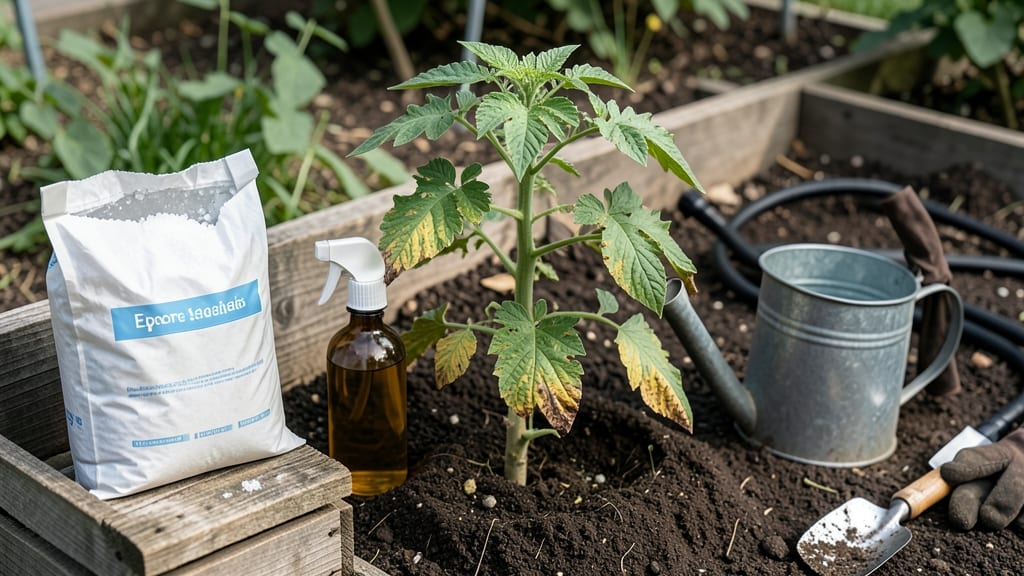
Magnesium for plant growth plays a crucial role in activating chlorophyll production, which directly powers photosynthesis and supports robust development. When plants lack magnesium, you'll notice yellowing between leaf veins, slower growth, and weaker stems, often fixable quickly with Epsom salt or magnesium-rich soil amendments.
This mineral acts as the central atom in chlorophyll molecules, meaning it's the key player in converting sunlight into energy for your plants. 🌱 Without enough magnesium, photosynthesis slows down, leading to those classic yellow patches between veins—a clear sign your plants are struggling.
I've seen gardeners fix this within days by mixing a teaspoon of Epsom salt in a gallon of water and spraying it on leaves, but always test on a small area first to avoid overdoing it.
For long-term solutions, consider adding magnesium-rich fertilizers or organic options like dolomitic lime to your soil. The key is balance—too much magnesium can block other nutrients, so always follow package instructions and monitor your plants' response.
This is especially important for heavy feeders like tomatoes and peppers that demand more magnesium as they grow.
💡 In This Article
- How Magnesium Fuels Photosynthesis and Plant Development
- Fast Magnesium Correction Methods for Houseplants and Gardens
How magnesium fuels photosynthesis and plant development
Magnesium sits at the heart of chlorophyll molecules, acting as the central atom that binds with nitrogen to form the porphyrin ring—the very structure that absorbs sunlight. This isn't just a supporting role: magnesium's positive charge stabilizes the chlorophyll molecule, allowing it to efficiently capture light energy during photosynthesis.
Without sufficient magnesium, plants can't produce enough chlorophyll, leading to that classic interveinal chlorosis where leaves turn yellow between green veins. 🌿 The process begins when magnesium ions (Mg²⁺) bind to chlorophyll's center, creating a perfect environment for light absorption in the 400-700 nm spectrum.
Beyond chlorophyll, magnesium activates over 300 enzymatic reactions in plants, including those that convert carbon dioxide into glucose during the Calvin cycle. This enzyme activation is crucial for energy production and nutrient transport throughout the plant.
When magnesium levels drop below 0.2% of dry plant weight, these processes slow dramatically, causing stunted growth and weakened stems. You'll often see this in older leaves first because magnesium is mobile within the plant—it gets "recycled" from older to younger leaves when supplies are low.
Deficiencies create a cascading effect: reduced photosynthesis means less energy for root development, flower production, and fruit formation. For example, magnesium-deficient tomatoes may develop yellowing between veins while still producing green stems—a clear sign the plant can't support its own growth.
The visual symptoms often appear as bronzing or purpling on leaf edges in severe cases, particularly in plants like citrus or grapes that require higher magnesium levels. 🍅
Interestingly, magnesium also plays a role in phosphorus metabolism, helping plants utilize this essential nutrient more efficiently. When magnesium is scarce, phosphorus often accumulates in the roots rather than being transported to growing shoots and leaves.
This nutrient imbalance can manifest as dark green or purple stems and undersides of leaves, even while the leaf surfaces appear yellow. The interplay between these nutrients explains why magnesium deficiencies often mimic phosphorus shortages at first glance.
For houseplants like ferns or peace lilies, magnesium deficiency symptoms appear as yellowing fronds or drooping leaves, while in garden vegetables like peppers, you might notice curled leaves and poor fruit set.
The key difference between magnesium deficiency and other nutrient issues is that these yellow patches never cross the veins—they stay neatly contained between them. This distinctive pattern helps gardeners quickly identify the problem before it spreads.
What most people don't realize is that magnesium's role extends to stress tolerance. Plants with adequate magnesium levels recover faster from drought, cold snaps, and even pest damage because their energy production systems remain robust.
This is why magnesium-rich fertilizers often include instructions for use during stress periods like transplanting or extreme weather conditions. The mineral helps maintain cellular integrity when other nutrients might become less available.