
Planting
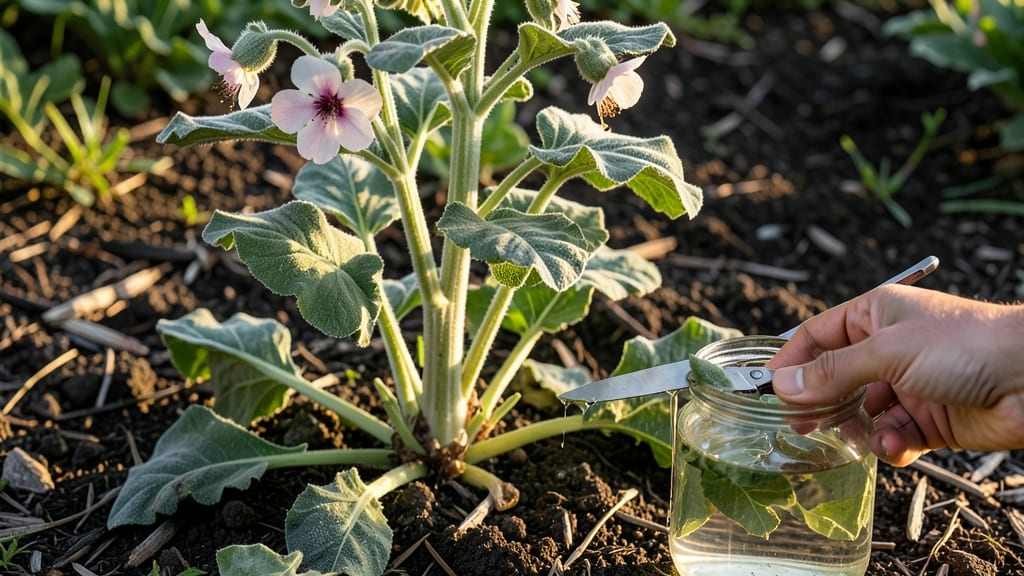
The marsh mallow plant (Althaea officinalis) is edible when properly identified, with its tender leaves, young shoots, and cooked roots used in teas, soups, and traditional remedies. Always verify the plant before harvesting to avoid toxic look-alikes.
The marsh mallow plant's edibility hinges on proper preparation—its roots contain natural mucilage that must be cooked to remove sliminess and potential irritants. 🌿 While the leaves and flowers can be eaten raw in salads or steeped for tea, the roots are traditionally boiled into a syrup or dried for medicinal use.
Many foragers overlook the plant's flowers, which add a delicate flavor to infusions and desserts.
Historically, this plant was prized for its soothing properties, often used to treat sore throats and digestive issues. Modern chefs sometimes incorporate it into gourmet dishes, though commercial marshmallows use processed ingredients. Always harvest sustainably—never take entire roots from the wild, as the plant relies on them for regrowth.
💡 In This Article
- Identifying Edible Marsh Mallow Plant Parts
- Traditional and Modern Culinary Uses of Marsh Mallow
Identifying edible marsh mallow plant parts
The marsh mallow (Althaea officinalis) has three primary edible components: its leaves, young shoots, and roots, each requiring different preparation methods. The leaves, which are broad and slightly fuzzy with a pale green hue, can be harvested fresh or dried for teas.
Their texture is soft and slightly velvety when young, similar to spinach but more delicate. 🌿 The roots, on the other hand, contain high levels of mucilage—a natural polysaccharide that becomes slimy when raw and must be cooked to 140-160°F to neutralize its texture and potential irritants.
Identifying the plant correctly is critical, as toxic look-alikes like hemlock or water hemlock can be deadly. Marsh mallow leaves grow in a rosette pattern close to the ground, with hairy stems and white to pink flowers that bloom from June to September.
The roots are thick and fleshy, often growing up to 2 feet long, with a pale beige exterior and white interior. Always cross-reference with a field guide or consult an expert before harvesting, especially in areas with invasive species.
Harvesting sustainably ensures the plant's longevity. For roots, dig carefully with a spade, leaving at least one-third of the root system intact to allow regrowth. Leaves and shoots should be picked in the morning after dew has evaporated, when their flavor is most concentrated.
Avoid harvesting from roadsides or polluted areas, as plants absorb heavy metals like lead and cadmium through their roots. 🌱 Once collected, roots should be peeled, sliced into ¼-inch pieces, and either boiled or dried for storage.
The flowers, often overlooked, are also edible and add a mild, slightly sweet flavor to dishes. They bloom in clusters and can be used fresh in salads or dried for infusions.
When preparing roots for culinary use, boiling them for 20-30 minutes reduces the mucilage significantly, creating a texture similar to potato when mashed. This process also removes any residual toxins, making them safe for consumption in soups or stews.
Storage methods vary by part: dried leaves and flowers keep for up to 1 year in airtight containers, while cooked roots can be frozen for 6 months or dried and stored as a powder.
The mucilage in dried roots can be reconstituted with water to create a natural thickening agent, much like cornstarch but with a subtle herbal note. This versatility makes marsh mallow a valuable addition to both traditional and modern kitchens.
One common mistake is assuming all parts of the plant are safe raw. While leaves and flowers are generally safe in moderation, raw roots can cause mild stomach upset due to their high mucilage content. Always cook roots thoroughly to avoid discomfort, especially for those with sensitive digestive systems. 💫