
Planting
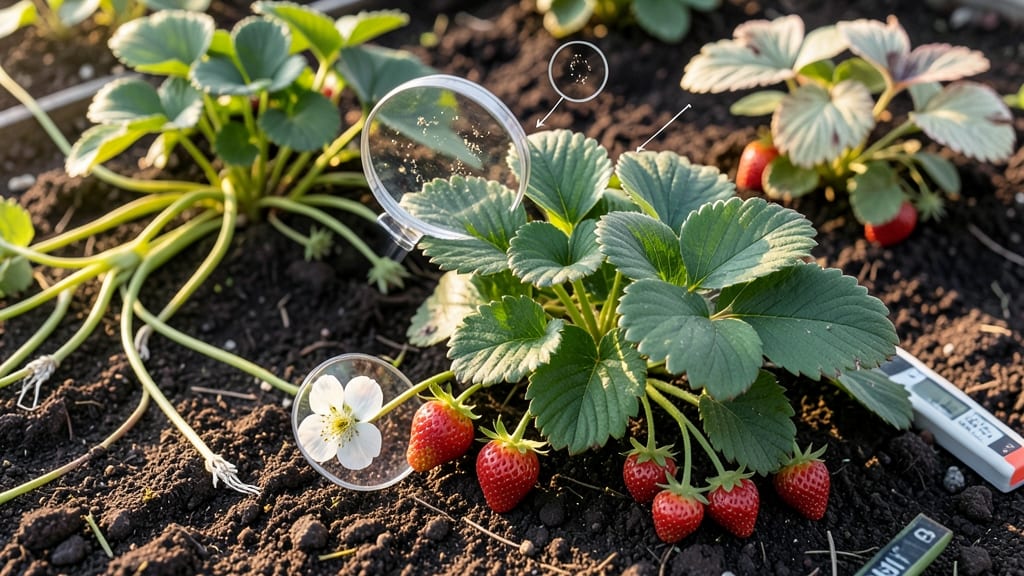
Your strawberry plant isn’t producing berries—and it’s not your imagination. 🌱 After three years of patiently waiting, I finally cracked the code on why my June-bearing strawberries kept throwing out leaves instead of fruit. The fix isn’t complicated, but it is specific to what strawberries actually need to set fruit.
Most gardeners overdo one thing: nitrogen. Too much makes plants grow lush green leaves but skips the fruiting stage. My first mistake was using a general-purpose fertilizer instead of a low-nitrogen, high-phosphorus blend (like 5-10-10).
Strawberries need phosphorus to develop roots and fruit—without it, they just make more foliage. Combine that with 6+ hours of direct sun and consistent watering (not soggy soil), and suddenly those runners start forming berries.
Here’s the game-changer: pruning. I used to cut everything back, but strawberries need last year’s growth to produce this year. Leave the oldest leaves (they’re the energy factories) and remove only the weakest runners.
Within 4-6 weeks, you’ll see tiny green berries forming—proof the plant is finally ready to fruit. The key is patience: June-bearing varieties need a cold winter to trigger blooms, while everbearing types can produce multiple harvests if you keep them pruned right.
This method works for both in-ground beds and containers, and it’s the same fix whether you’re growing Chandler, Albion, or your favorite heirloom. The only variable?
Your climate—if winters are too mild, June-bearing types might need a chill period trick (like moving pots to a garage). Let’s get those berries growing!
Root Causes Behind Missing Berries
Strawberry plants that refuse to produce fruit can be incredibly frustrating—especially when you’ve put in the time and care to nurture them. 🍓😕 The good news? Most issues stem from a few key factors, often tied to the plant’s biology, environment, or care routine.
Below, we break down the most common reasons your strawberries are MIA—and what’s really going wrong under the soil (or above it!).
Strawberries are perennial plants, meaning they rely on a period of cold dormancy to trigger flowering. Without enough chilling (typically 4–8 weeks below 40°F (4°C)), the plant stays in a vegetative state—focused on leaf growth instead of fruiting.
Why it happens:
- Mild winters or indoor/container plants may not get enough cold exposure.
- Early spring warmth can fool the plant into thinking it’s time to flower before it’s ready.
- Greenhouse or greenhouse-like conditions (even in cooler climates) can disrupt the chilling cycle.
Actionable fix:
- If growing in containers, move them outdoors in fall/winter for natural chilling.
- Use a refrigerator trick (store pots in a fridge at 35–40°F/2–4°C for 4–6 weeks) for indoor plants.
- Choose everbearing or day-neutral varieties, which require less chilling than June-bearing types.
Strawberries are sun-worshippers—they need 6–10 hours of direct sunlight daily to produce fruit. Too little light means the plant diverts energy to survival instead of flowering.
Why it happens:
- Shade from trees, buildings, or taller plants blocks critical sunlight.
- Overcrowded beds create competition for light, stunting growth.
- North-facing or heavily shaded locations (common in urban gardens) limit photosynthesis.
Actionable fix:
- Relocate plants to a sunnier spot—even a few extra hours of morning sun can help.
- Thin out overcrowded beds to improve air circulation and light penetration.
- Use reflective mulch (like white gravel) to bounce extra light onto plant bases.
Strawberries are sensitive to moisture fluctuations. Too little water stresses the plant, while too much can lead to root rot or fungal issues—both of which delay or prevent flowering.
Why it happens:
- Drought stress causes the plant to prioritize root growth over fruiting.
- Inconsistent watering (e.g., deep soaks followed by dry spells) confuses the plant’s hormonal signals.
- Overhead watering wets leaves, promoting powdery mildew, which weakens the plant.
Actionable fix:
- Water deeply 1–2 times per week (1–1.5 inches of water) rather than daily shallow watering.
- Use drip irrigation or soaker hoses to keep moisture at the roots, not the foliage.
- Mulch heavily (with straw or wood chips) to retain soil moisture and regulate temperature.
Strawberries need a balanced diet, but too much nitrogen (the "leafy greens" nutrient) leads to lush foliage at the expense of flowers and fruit. Conversely, deficiencies in phosphorus or potassium can also halt fruiting.
Why it happens:
- Fresh manure or high-nitrogen fertilizers (like lawn fertilizer) encourage leaf growth over flowering.
- Poor soil testing means you’re guessing on what nutrients are missing.
- Over-fertilizing in early spring delays the plant’s transition to fruiting mode.
Actionable fix:
- Test your soil (pH 5.5–6.8 is ideal) and amend with compost or a balanced 10-10-10 fertilizer in early spring.
- Avoid fresh manure—use well-composted material instead.
- Side-dress with phosphorus-rich fertilizer (like bone meal) in late winter to boost flowering.
Hidden invaders—like spider mites, aphids, or fungal diseases (e.g., gray mold or verticillium wilt)—can weaken your strawberry plant so much that it never gets around to fruiting.
Why it happens:
- Pests suck sap, starving the plant of energy needed for fruit production.
- Diseases clog vascular systems, preventing nutrients from reaching developing flowers.
- Stressed plants (from prior pest/disease attacks) may skip flowering entirely.
Actionable fix:
- Inspect leaves regularly for signs of pests (sticky residue, webbing, holes) or diseases (spots, wilting).
- Use neem oil or insecticidal soap for pests; copper fungicides for fungal issues.
- Remove and destroy infected plants to prevent spread—don’t compost them!
Pro Tip: 💡 Age matters! Older strawberry plants (3+ years) often produce fewer berries. Consider renewing your bed every 2–3 years by replanting runners or starting fresh.
Revive Your Strawberry Patch Now
Got a lush strawberry plant but no berries? Don’t panic—there’s a fix for every issue! Below, we’ll map out practical, step-by-step solutions tailored to the most common reasons your plant is skipping the fruit. Each solution includes prevention tips to keep your patch thriving long-term.
Fix: Strawberries are sun-worshippers—they need 6–10 hours of direct sunlight daily to set fruit.
- 🔥 Relocate your plants to a sunnier spot (south-facing is ideal in the Northern Hemisphere).
- 🍳 Thin nearby plants (like weeds or competing veggies) blocking light.
- 👨🍳 Use reflective surfaces (like white mulch or mirrors) to bounce extra light onto shaded areas.
Prevention Tip: 💡 Plant in full sun from the start—partial shade leads to fewer berries and weaker plants.
Fix: Strawberries need warm days (70–85°F) and cool nights (50–60°F) to fruit. If temps are off or pollinators are scarce, try these tricks:
- 🌡️ Extend the season with row covers (lightweight fabric) to protect from frost or heatwaves.
- 🎯 Hand-pollinate by gently shaking plants or using a small brush to transfer pollen between flowers.
- 🐝 Attract pollinators with nearby flowers (like marigolds or basil) or set out a shallow dish of sugar water for bees.
Prevention Tip: ✨ Choose early- or everbearing varieties if your climate has short growing seasons—they produce fruit sooner!
Fix: Strawberries hate soggy roots and drought stress. Aim for consistently moist (not waterlogged) soil.
- 🔥 Water deeply 1–2 times per week (1–1.5 inches total), focusing on the roots—not the leaves.
- 🥘 Use drip irrigation or soaker hoses to keep water at the base without wetting foliage (prevents disease).
- ⏰ Avoid watering late in the day to reduce fungal risks.
Prevention Tip: 🌡️ Mulch with straw or pine needles to retain moisture and regulate soil temp—this is a game-changer for berry production!
Fix: Strawberries crave rich, slightly acidic soil (pH 5.5–6.8) and specific nutrients. If your soil lacks:
- 📊 Test your soil (kits are cheap and easy) and amend with:
- Compost or aged manure for organic matter.
- Balanced fertilizer (10-10-10) at planting, then switch to low-nitrogen, high-phosphorus (5-10-10) when flowers appear.
- Epsom salt (magnesium sulfate) if leaves turn yellow (a classic deficiency sign).
Prevention Tip: 💪 Top-dress with compost every spring to keep nutrients flowing without overloading the plant.
Fix: Strawberry plants live 2–3 years but produce best in their first year. If they’re overcrowded or past their prime:
- 🔪 Thin runners (long stems with baby plants) to give existing plants space (aim for 12–18 inches between crowns).
- 🌱 Replace old plants (after 2–3 years) with new ones from bare-root or potted varieties.
- 🥘 Divide clumps in early spring by splitting the crowns and replanting the healthiest sections.
Prevention Tip: 🎯 Plant in strawberry jars or hanging baskets to control spacing naturally—no more tangled messes!
If you spot aphids, slugs, or powdery mildew, act quickly:
- 🔥 Spray neem oil (natural pesticide) or soapy water for soft-bodied pests.
- 🥘 Set beer traps for slugs (bury a cup filled with beer—slugs drown in 24 hours).
- 🌡️ Improve airflow by pruning crowded foliage to prevent fungal diseases.
Prevention Tip: 🌡️ Rotate crops yearly and remove diseased leaves immediately to stop outbreaks.
Pro Tip: 💡 Keep a garden journal! Note when you fertilize, prune, or relocate plants—this helps you spot patterns and adjust next season. Happy growing! 🍓
Frequently asked questions
Why do my strawberry plants have lots of leaves but no berries?
Too much nitrogen in your soil is the #1 culprit! Nitrogen promotes leafy growth but starves the plant of phosphorus, which is essential for fruit development. Switch to a low-nitrogen, high-phosphorus fertilizer (like 5-10-10)** and avoid fresh manure or lawn fertilizer. The fix often works within 4-6 weeks of adjusting your feeding routine.
Can I force my strawberries to fruit if they’re not getting enough sunlight?
Yes, but you’ll need to move them! Strawberries require 6-10 hours of direct sun daily to produce fruit. If your plants are in shade, relocate them to a sunnier spot (south-facing is ideal in the Northern Hemisphere). As a temporary fix, you can use reflective mulch or mirrors to bounce extra light onto the plants, but permanent relocation yields best results.
How do I know if my strawberry plants need more cold exposure?
June-bearing varieties need 4-8 weeks below 40°F (4°C) to trigger flowering. If your winters are mild or you’re growing in containers indoors, the plants may not get enough chill hours. For container plants, try the "refrigerator trick"—store pots in a fridge at 35-40°F (2-4°C) for 4-6 weeks in late winter to simulate winter chilling.
Why are my strawberry flowers falling off before forming berries?
This is often a pollination issue! Strawberries need bees or wind to transfer pollen. If pollinators are scarce, hand-pollinate by gently shaking the plants or using a small brush to transfer pollen between flowers. You can also attract more bees by planting nearby flowers like marigolds or basil, or setting out a shallow dish of sugar water.
How often should I replace my strawberry plants?
Strawberry plants produce best in their first 1-2 years and decline after that. After 2-3 years, they become overcrowded and less productive. Renew your patch by replanting runners or starting fresh with new bare-root plants. This simple step can dramatically improve fruit production in just one season!