
Planting
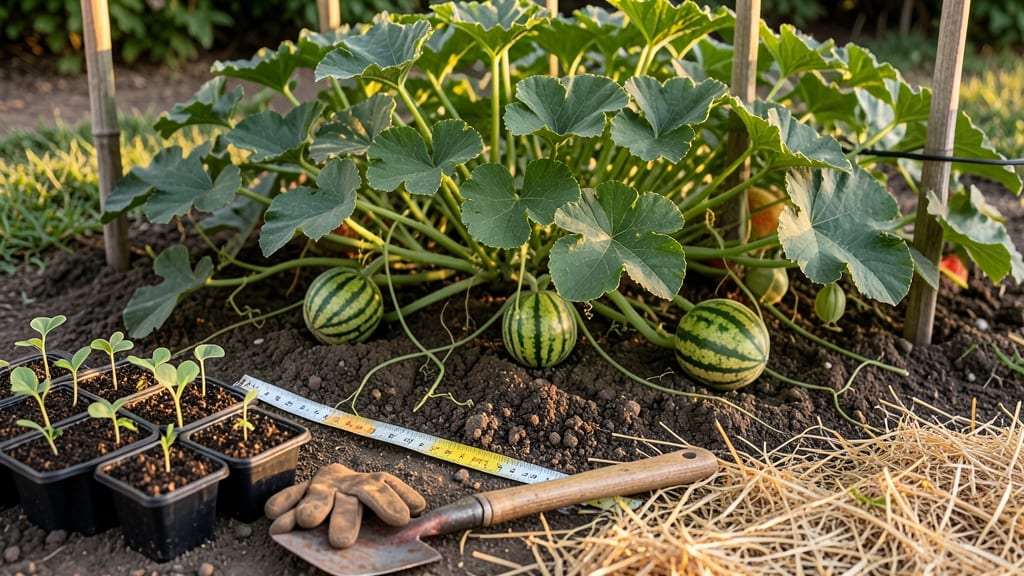
How far apart to plant watermelon plants is the key to unlocking a bountiful harvest—crowding steals their growth energy and shrinks your yield, so aim for 18 to 36 inches between vines to give those sprawling 🍉 runners the space they need to thrive.
Struggling with sprawling watermelon vines that crowd each other or fail to produce? The secret to a thriving watermelon patch starts with proper spacing—this simple adjustment can mean the difference between a few small fruits and a bountiful harvest.
Most gardeners overlook how much watermelons need to stretch out, thinking they’ll just fill in the gaps. But when roots and vines tangle, you get stunted growth, poor fruit development, and even more pests sneaking in.
Below, I’ll break down the exact spacing by variety, how to fix overcrowded patches, and pro tips for trellising so your vines climb instead of sprawl—because the right setup turns a messy corner of the garden into a high-yielding powerhouse.

Optimal watermelon plant spacing by variety type: vining vs. bush types
Watermelon plants come in two main types—vining varieties and bush varieties—and each requires different spacing to thrive. Getting this right ensures strong vine growth, better airflow, and larger fruit production.
I’ve learned from years of trial-and-error that proper spacing isn’t just about giving plants room to stretch; it’s about preventing diseases like powdery mildew and maximizing sunlight exposure for sweeter fruit. Let’s break down the exact measurements you need for each type.
For traditional vining watermelons (like Sugar Baby or Crimson Sweet), you’ll need to plan for sprawling vines that can spread 6–10 feet in all directions.
These varieties need 18–36 inches between plants to avoid competition, while bush varieties (such as Bush Champion or Sugar Bush) stay more compact and can handle 12–24 inches apart.
Both types also require 5–7 feet between rows to allow for easy movement and airflow, which is critical for preventing fungal issues.
Here’s the key difference: vining types need more space because their long, rambling vines compete aggressively for nutrients and sunlight. Bush types, on the other hand, are bred to stay contained, making them ideal for smaller gardens or containers.
If you’re short on space, bush varieties are your best bet—but don’t skimp on row spacing, or you’ll risk poor fruit development.
One mistake I see often is planting watermelons too close together, which leads to small, underdeveloped fruit and increased disease risk. Overcrowding also makes it harder to spot pests early or harvest fruit efficiently.
Proper spacing isn’t just about the numbers; it’s about creating an environment where your watermelons can thrive from seed to harvest.
Let’s dive into the exact spacing guidelines for each type, so you can plan your garden layout with confidence.
When planning your watermelon patch, start by sketching out your garden layout. Vining varieties need the most space, so if you’re working with a small plot, consider bush types like Sugar Bush or Bush Early Red.
These varieties produce smaller but high-quality fruit without taking over your garden. For vining types, use trellises or hills to manage their growth and save space.
Another tip I’ve picked up is to plant watermelons in hills—mounds of soil about 6–8 inches tall—to improve drainage and airflow at the base of the plant.
This simple trick reduces the risk of root rot and fungal diseases, which are common in crowded or poorly drained soil. Hills also make it easier to harvest fruit without bending over as much, which is a game-changer if you’re dealing with a large patch.
If you’re growing multiple rows, leave at least 5 feet between rows to allow for easy access and proper airflow. This spacing also gives you room to weed between rows without disturbing the plants.
I’ve found that mulching around watermelon plants with straw or black plastic helps retain moisture, suppress weeds, and keep fruit off the soil—which reduces the risk of rot and pests.
For container gardening, bush varieties are your best bet. Use large pots (at least 5 gallons) and plant one bush variety per container with 12–18 inches of spacing between plants. If you’re growing
Common spacing mistakes that kill watermelon yields (and how to fix them)
Watermelon vines can spread aggressively, but many gardeners accidentally sabotage their harvest by planting too close—or too far apart. I’ve seen crowded patches produce only small, misshapen fruit, while over-spaced plants waste garden real estate. The key is balance: enough room for vines to sprawl without competing for resources.
Overcrowding is the most common mistake. When plants are too close, they compete for sunlight and nutrients, leading to yellowing leaves and powdery mildew. I’ve even seen vines strangle each other in tight spaces, reducing yields by 50% or more. The fix? Start by assessing your current spacing.
How far apart to plant watermelon plants?
- Vining types: 18–36 inches apart in rows 5–7 feet apart
- Bush types: 12–24 inches apart in rows 3–5 feet apart
Signs you’re overcrowded: Yellow leaves, powdery mildew, or vines twisting toward each other.
Fix it now: Thin plants or transplant extras to a new bed.
If your watermelons are already planted too close, don’t panic. You can retrofit your patch by carefully transplanting excess plants to a new area. Gently dig up seedlings (with roots intact) and replant them in a well-drained spot with full sun exposure.
Mulch heavily to protect roots during the transition.
Under-spacing is another silent yield-killer. When plants have too much room, they waste energy searching for each other, leading to poor fruit set and uneven ripening. I’ve seen gardens where watermelons ripened at different rates because vines couldn’t pollinate effectively.
The solution? Add a companion plant like beans or marigolds between rows to fill gaps naturally.
For vertical gardens, trellising watermelons can save space while improving airflow. Use a strong trellis or cage (at least 4 feet tall) to support vines. This works best for smaller varieties like ‘Sugar Baby’ or ‘Tiny Tim,’ but even standard types benefit from partial elevation to reduce soil-borne diseases.
Pro tip: Mark your rows with stakes or flags to avoid future crowding. I use colored plant ties to label each plant’s variety and spacing needs. This small step saves hours of troubleshooting later—and ensures every vine gets the room it deserves to produce juicy, bountiful watermelons.