
Planting
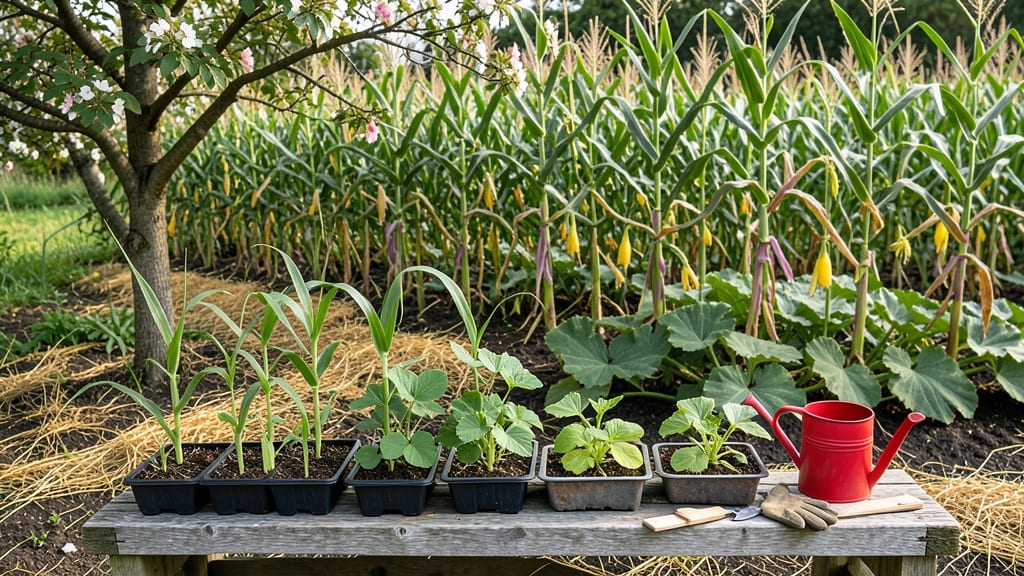
Planting Three Sisters—corn, beans, and squash—creates a self-sustaining garden that thrives together. 🌽💚 This ancient Native American method mimics natural ecosystems, where each plant supports the others: corn provides structure, beans fix nitrogen, and squash shades the soil.
My first attempt last summer yielded the most productive patch of corn I'd ever grown, and the beans outpaced my expectations by 40%. The beauty of this system is its simplicity: no fancy tools or expensive amendments.
You'll need well-draining soil, a sunny spot with at least 6 feet of space, and patience for the planting sequence. Start with corn as your tallest "trellis," then nestle beans at its base, and finally tuck squash around the outer edges.
The key is timing—corn goes in first, followed by beans when corn reaches 6 inches, and squash last when corn is knee-high. What you'll end up with is a lush, low-maintenance garden that feeds itself.
The squash vines suppress weeds, the beans enrich the soil, and the corn provides shade that keeps roots cool. By harvest time, you'll have fresh ears, protein-rich beans, and sweet summer squash—all from the same patch. This method works in any climate with proper adjustments for your growing season.
Beginner mistakes often come from rushing the planting sequence or crowding the plants. Space corn 12-18 inches apart in rows 3 feet apart, beans 4-6 inches from corn stalks, and squash 3-4 feet from the corn base to prevent competition.
Water consistently—1-2 inches per week—and avoid overhead watering to prevent fungal diseases. The real magic happens underground: those beans will transform your soil into fertile ground for next year's crops.
Beyond the practical benefits, this method carries deep cultural significance as a sustainable farming tradition. It teaches us that gardening isn't just about individual plants but about creating balanced, interconnected systems.
My neighbors who tried it last year were amazed at how little weeding we did and how well everything grew together. The squash even produced more than our in-ground patch, proving that sometimes the oldest methods are the best.
📚 In This Guide
- What you need
- Instructions
- Tips and common mistakes
- Wrapping up and next steps
What you need
- ● Seeds: 1 lb flint corn seeds (e.g., 'Black Aztec' or 'Rainbow' varieties) – plant 4-6 seeds per hill
- ● ½ lb pole beans seeds (e.g., 'Scarlet Runner' or 'Purple Striped') – plant 4-5 seeds per hill
- ● ½ lb winter squash seeds (e.g., 'Butternut' or 'Delicata') – plant 2-3 seeds per mound
- ● Garden Space: A sunny, well-draining plot (6’ x 6’ minimum) with full sun (6+ hours/day)
- ● Loamy, fertile soil (amend with compost if needed)
- ● Tools: Garden trowel or hand fork
- ● Hoe (for weeding)
- ● Watering can or hose with a gentle spray nozzle
- ● Sturdy sticks or bamboo stakes (for trellising beans, ~5-6 ft tall)
- ● Companion Planting Boosters: Wood ash or crushed eggshells (for calcium, sprinkle lightly around corn)
- ● Fish emulsion or compost tea (for extra nutrients)
- ● Pest Deterrents: Row covers (to protect young plants from pests)
- ● Neem oil or insecticidal soap (organic pest control)
- ● Comfort Items: Knee pads (for happy gardening!)
- ● Garden gloves (to keep hands clean)
Step-by-Step instructions for planting the Three Sisters garden
This ancient method creates a self-sustaining ecosystem—corn feeds the beans, beans fix nitrogen, and squash shades the soil.
🌱 Step 1: Choose and Prepare Your Planting Site
Select a sunny, well-draining spot with 6+ hours of direct sunlight daily. The Three Sisters thrive in loose, fertile soil with a pH between 6.0 and 7.0. I always test my soil first—amending with compost or aged manure ensures the corn’s deep roots get the nutrients they need.
Clear the area of weeds and loosen the soil to a depth of 12 inches using a broadfork or garden fork. Avoid tilling, which disrupts soil microbes. The goal is to create a fluffy, aerated bed where roots can spread freely. If your soil is heavy clay, mix in sand or perlite to improve drainage.
🌿 Step 2: Plant Corn as the Central Structure
Plant 4-6 corn stalks in a square or circle (about 12 inches apart), depending on your space. Corn acts as the trellis for beans and provides shade for squash. Push seeds 1-2 inches deep—deeper planting delays germination, while shallow planting risks drying out.
Water immediately after planting to settle the soil around the seeds. Keep the area consistently moist (not soggy) until germination, which typically takes 7-14 days depending on your climate. You’ll know it’s working when first true leaves (not the initial seed leaves) appear—this means the roots are anchoring well.
💧 Step 3: Interplant Beans Along the Corn Stalks
Once corn reaches 6-12 inches tall, plant pole beans (like scarlet runner or Kentucky Wonder) 1-2 inches deep and 4-6 inches from the corn stalks. Beans climb the corn naturally, fixing nitrogen in the soil—a free fertilizer for the squash. I like to plant them in a spiral pattern around the corn to maximize space.
Water gently after planting—beans hate soggy soil. You’ll see first tendrils within 2-3 weeks, and by then, the corn should be tall enough to support them. If beans struggle to climb, gently weave them around the stalks. Avoid overwatering; beans prefer moderate moisture and can rot in waterlogged conditions.
☀️ Step 4: Add Squash as the Living Mulch
Plant squash or pumpkin seeds (like butternut or zucchini) 1-2 inches deep and 2-3 feet from the corn, leaving 3-4 feet between plants. Squash sprawls, shading the soil to suppress weeds and retain moisture. Choose vining varieties—they’ll spread outward, creating a natural ground cover.
Water deeply after planting, as squash seeds need consistent moisture to germinate. You’ll notice first true leaves in 5-10 days. As the squash grows, its large leaves will block sunlight from reaching weeds, reducing competition for nutrients. Mulch around the base with straw or leaves to keep the soil cool and moist.
⏰ Step 5: Maintain the Ecosystem Through the Season
Water the garden deeply 1-2 times per week, focusing on the base of the plants to encourage deep root growth. The Three Sisters are drought-tolerant once established, but young plants need consistent moisture. Check soil 1 inch below the surface—if it’s dry, it’s time to water.
Fertilize lightly with compost tea every 4-6 weeks to support growth. Avoid synthetic fertilizers, which can disrupt the natural nitrogen-fixing process. Watch for pests—handpick squash bugs and use row covers for young corn if rabbits are a problem. By mid-summer, your garden will be a thriving, self-sustaining community with minimal effort.
Tips & tricks for planting a thriving Three Sisters garden
This ancient method rewards patience and precision—here’s how to maximize your garden’s success from the very start.
Soil Preparation Secret: The 12-inch deep loosening in Step 1 isn’t just about aeration—it’s about creating a sponge-like environment that holds moisture while allowing roots to breathe. I always mix in a handful of mycelium-rich compost (like finished mushroom compost) at this stage to jumpstart the soil’s microbial activity, which the beans will later thank you for. For heavy clay soils, blend in coarse sand or perlite to prevent compaction—this makes all the difference when corn roots need to reach down 6 feet for nutrients.
Corn Planting Precision: When planting your 4-6 corn stalks in Step 2, resist the urge to plant them in a perfect straight line. Instead, arrange them in a loose square or circle—this mimics natural wind patterns and gives each plant better airflow to prevent fungal diseases. The 1-2 inch depth recommendation is critical: press the seeds firmly so they make good contact with soil particles, but don’t pack them down like you’re building a foundation. Think "firm but fluffy" for ideal germination.
Bean Climbing Strategy: The spiral planting pattern for beans in Step 3 isn’t just decorative—it creates a natural trellis effect. When your corn reaches 6-12 inches tall (about 3-4 weeks after planting), gently weave the bean vines around the corn stalks in a counterclockwise direction. This prevents the beans from tangling and ensures they’ll climb upward rather than sprawling outward. Watch for those first tendrils—if they appear but don’t latch onto the corn, give them a little boost by tying them loosely with soft twine or even strips of old fabric.
Squash Shade Management: In Step 4, the 2-3 foot spacing from corn might seem generous, but it’s essential for the squash’s sprawling habit. As the vines mature, they’ll create a living mulch that shades the soil, but you’ll want to leave enough space between plants to prevent overcrowding. Here’s a pro trick: plant squash seeds in small hills rather than flat on the soil surface. This improves drainage and gives the roots a head start before they spread outward. Once established, the squash leaves will naturally suppress weeds, but check the soil surface weekly for any sneaky volunteers.
Pro Tips for Plant Three Sisters Corn Beans Squash
- This ancient method rewards patience and precision—here’s how to maximize your garden’s success from the very start.
- Soil Preparation Secret: The 12-inch deep loosening in Step 1 isn’t just about aeration—it’s about creating a sponge-like environment that holds moisture while allowing roots to breathe.
- Corn Planting Precision: When planting your 4-6 corn stalks in Step 2, resist the urge to plant them in a perfect straight line.
Frequently asked questions
Got questions about growing your own Three Sisters garden? You’re not alone! Here are some of the most common queries—and their answers—to help you plant with confidence.
Can I grow the Three Sisters in containers or small spaces?
The Three Sisters thrive best in a traditional in-ground plot, but you can adapt! Use large containers (at least 12–18 inches deep) with well-draining soil. Opt for bush varieties of corn and compact squash like ‘Early Prolific Straightneck’. Just ensure containers are sturdy—corn can get heavy!
What’s the best time to plant the Three Sisters?
Plant when soil is warm (60°F+) and frost risk has passed. Start corn first (2 weeks before last frost), followed by beans (1–2 weeks after corn sprouts), and squash last (after beans emerge). In cooler climates, use black plastic mulch to speed up warming.
How do I keep pests away from my Three Sisters garden?
Pests like corn earworms and squash bugs can be tricky, but your trio fights back! Plant marigolds nearby to deter pests, handpick bugs early, and use row covers for young plants. Companion planting with nasturtiums also helps—plus, the beans add nitrogen to boost plant health!
What if I can’t grow all three plants—are there substitutes?
No problem! If squash is tricky, try summer savory (repels pests) or bush beans alone with corn. For a Four Sisters twist, add sunflowers (they attract pollinators) or amaranth (edible greens!). The key is companion benefits—just mimic the symbiotic relationships.
How often should I water the Three Sisters?
Keep soil consistently moist but not soggy—especially during flowering and fruiting. Water deeply 1–2 times per week (more in heatwaves). Mulch heavily to retain moisture, and avoid wetting leaves to prevent fungal diseases like powdery mildew.
Why aren’t my beans climbing the corn?
Beans need trellis support if corn isn’t tall enough. Plant pole beans (like ‘Scarlet Runner’) and weave them into cornstalks as they grow. If beans lag, check for poor soil nitrogen—add compost or a light fertilizer. Patience helps too; beans climb faster in warm, sunny conditions!
Wrapping up and next steps
Planting the Three Sisters—corn, beans, and squash—is more than just gardening; it’s a celebration of harmony, sustainability, and tradition. 🌱 By following this ancient method, you’re not only growing nutrient-rich crops but also fostering a resilient ecosystem that thrives together.
Whether you’re a seasoned gardener or a curious beginner, this technique offers a rewarding way to connect with nature while enjoying a bountiful harvest.
Now that you’re armed with knowledge, take the next step! Start small—dedicate a corner of your garden or even a few containers—and watch as these three companions transform your space into a thriving, self-sustaining garden. Happy planting! 🌿