
Plants
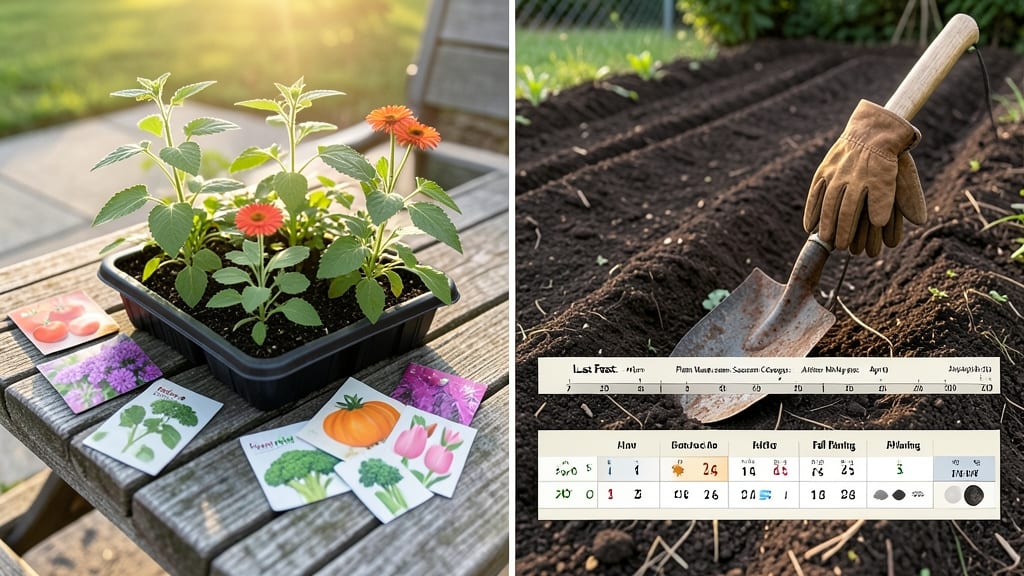
To plant in Missouri, time your crops by hardiness zone: sow cool-season vegetables like lettuce and peas 4-6 weeks before your last frost (typically late February to early April), and plant warm-season crops like tomatoes and peppers after the last frost (mid-April to early May). Always verify your local frost dates for accuracy.
Missouri's planting timeline shifts dramatically between its northern and southern regions, thanks to variations in hardiness zones and microclimates. 🌱 For example, St. Louis (zone 6a) typically sees its last spring frost around April 15, while the bootheel (zone 7a) can be frost-free by March 20.
The key is checking your exact zone on the USDA map—this determines whether you'll plant kale in February or wait until March. Even a few miles can mean weeks of difference in your garden's start date.
Pro tip: Use local frost date averages as guidelines, not rules. I always monitor the National Weather Service for 5-day forecasts in late March to adjust my planting schedule.
For instance, if you're in zone 5b (like northern Missouri), you might need to delay warm-season crops until early May to avoid surprise frosts. The Missouri Botanical Garden's planting calendar is my go-to resource for these adjustments.
💡 In This Article
- Missouri Frost Dates by Hardiness Zone
- Best Planting Calendar for Missouri Gardens
Missouri frost dates by hardiness zone
Missouri's frost dates are shaped by a mix of latitude, elevation, and local geography.
The state spans USDA hardiness zones 5b through 7a, meaning northern regions like St. Louis (zone 6a) typically experience their last spring frost around April 15, while southern areas like the bootheel (zone 7a) can reach frost-free conditions by March 20.
This variation occurs because colder air settles in low-lying areas, while higher elevations (like the Ozarks) often warm up faster due to increased solar exposure.
The science behind frost timing involves radiational cooling—clear nights allow heat to escape rapidly, creating frost pockets.
Urban areas like Kansas City (also zone 6a) may experience 2-3°F warmer minimum temperatures than rural areas just 10 miles away due to the urban heat island effect. 🌡️ For example, while the average last frost in Columbia (zone 6b) is April 1, nearby rural farms might see frosts linger until April 10.
This is why gardeners should verify their exact location using the USDA Plant Hardiness Zone Map—even a 5-mile difference can shift planting windows by 1-2 weeks.
Elevation plays a surprising role too. In the Ozark Mountains, areas above 1,000 feet often see their last frost 5-7 days earlier than valley regions because cold air sinks.
This creates microclimates where you might plant warm-season crops like eggplants (which need 70°F+ soil) a week sooner in higher elevations than in nearby flatlands.
The Missouri Department of Agriculture tracks these variations annually, and their data shows that St. Louis County averages 34 frost days per year, while Dade County (in the Ozarks) sees only 28.
To find your precise frost dates, start with the USDA Interactive Map to confirm your zone, then cross-reference with local National Weather Service frost records.
For instance, the Missouri Botanical Garden publishes annual frost date reports showing that southeast Missouri (zone 7a) has a 90% chance of being frost-free by March 15, while northwest Missouri (zone 5b) only reaches that probability by April 20.
This data helps explain why gardeners in Cape Girardeau can plant spinach in early February, while those in St. Joseph must wait until mid-March.
What most gardeners overlook is how soil temperature lags behind air temperature. Even if the air reaches 50°F by day, soil may stay below 45°F—critical for warm-season crops like squash seeds, which need 60°F+ soil to germinate.
This is why I always use a soil thermometer in early spring; in St. Louis, I’ve seen 10°F differences between air and soil temps on the same day. Planting too early based on air temp alone can lead to rotten seeds or stunted seedlings.
For those in transition zones (like zone 6a/6b borders), I recommend the "10-day rule": wait until you’ve seen 10 consecutive days above 50°F before planting tomatoes or peppers.
This accounts for late frosts that can still occur in May—for example, Kansas City recorded a 28°F frost on May 10, 2019, catching many gardeners off guard. 🌱 The Missouri State Climate Center’s frost probability charts are invaluable for these edge cases.